Discover how conversational AI gives you deeper insights into a candidate's problem-solving abilities, communication skills, and cultural fit, revealing what traditional documents miss so you can hire with confidence.
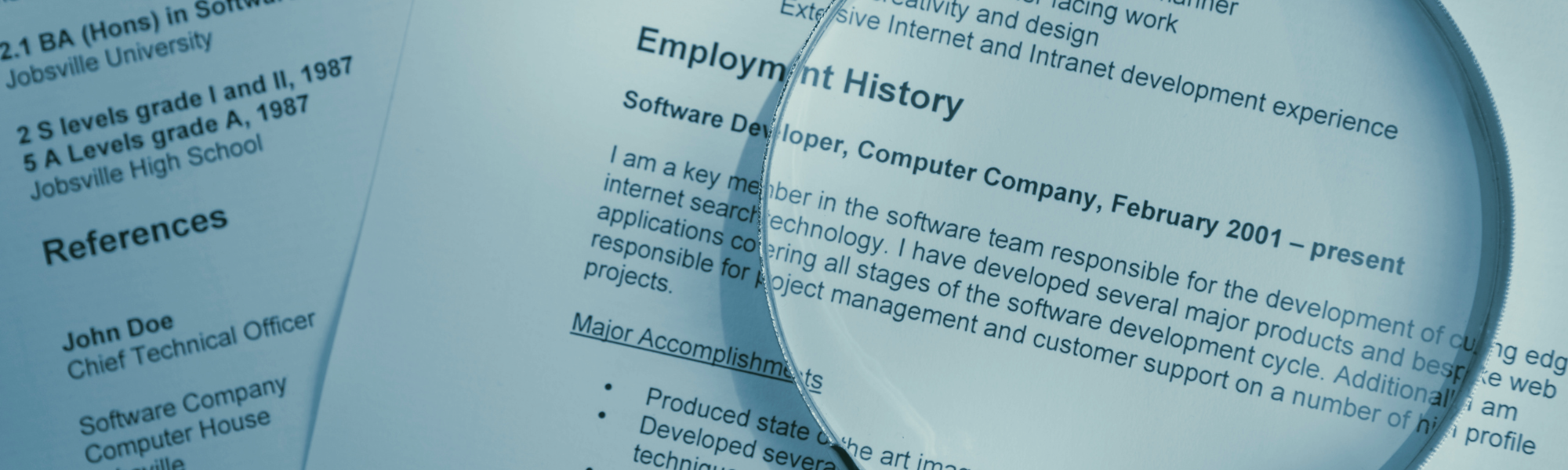
The resume has been the cornerstone of hiring for over a century. It is a familiar document, easy to file, and seemingly objective, but every experienced hiring manager knows: the best resume does not always belong to the best candidate.
A polished resume tells you what someone has done. Conversational screening reveals how they think, how they solve problems, and whether they can actually do what they claim. The difference matters more than most organizations realize.
Resumes are backward-looking documents, and in this modern era most are optimized for keyword matching. They list credentials, job titles, and accomplishments, but they cannot demonstrate competence. A candidate might have "5 years of customer service experience" on paper, but that tells you nothing about how they handle an angry customer at 11 p.m. on a Friday.
Traditional resume screening assumes credentials equal capability. That is why organizations hire candidates with impressive backgrounds who flame out in the first 90 days. The resume looked perfect. The performance was not.
Conversational screening flips this dynamic. Instead of inferring capability from credentials, it assesses capability directly through structured dialogue that mirrors actual job challenges.
When you ask a candidate to describe how they would handle a specific scenario, their response reveals their thought process in real time. Do they ask clarifying questions? Do they consider multiple stakeholders? Can they explain their reasoning?
A manufacturing supervisor might list "team leadership" on their resume. A conversational assessment asks: "Your shift is short-staffed, production is behind schedule, and two team members are in conflict. Walk me through your next hour." The quality of their response tells you whether they can actually lead under pressure or just held the title.
Resumes describe what someone did. Conversation reveals how they did it and why they made specific choices. When a candidate explains how they resolved a compliance issue, you learn whether they understand the underlying principles or simply followed a checklist someone else created.
This distinction separates candidates who can adapt to your environment from those who can only replicate their previous one. Healthcare organizations don't need someone who knows how their last facility's protocols worked. They need someone who understands infection control principles and can apply them to new situations.
Every job posting lists "strong communication skills." Every resume claims them. Conversational screening actually tests them. Can the candidate explain complex information clearly? Do they listen and respond appropriately? Can they adjust their communication style for different audiences?
For customer service positions, patient-facing roles, or any job requiring stakeholder management, these are not nice-to-have soft skills. They are core job competencies that directly impact outcomes. You cannot assess them from a resume.
A candidate's resume tells you where they have worked. Conversation reveals what they value. When you ask why they left their last position or what they are looking for in their next role, the answer illuminates their priorities, motivations, and likely tenure with your organization.
This matters for retention. Hiring someone with perfect credentials who wants remote flexibility into a role requiring on-site presence guarantees turnover. The mismatch was predictable. The resume just did not reveal it.
Credentials matter. A software engineer needs to code. An electrician needs to understand wiring. An accountant needs to understand GAAP. But credentials only establish a baseline. They do not differentiate among qualified candidates or predict job performance.
Traditional screening stops at credential verification: Does the candidate have the degree, certification, or years of experience the job requires? Check the box, move them forward. This approach works fine when you have five qualified applicants. It fails when you have 500.
Skills validation goes deeper. It assesses whether candidates can actually perform the job's core functions at the level your organization requires.
Credential verification: "Do you have three years of project management experience?"
Skills validation: "Your project is two weeks from deadline, one key team member just went on medical leave, and a major stakeholder changed a core requirement. Walk me through your next 48 hours."
Credential verification: "Are you proficient in Python?"
Skills validation: "Explain how you would optimize a database query that's causing performance issues. What would you check first and why?"
Credential verification: "Do you have CNA certification?"
Skills validation: "You notice a patient's vital signs have changed since your last check. What specific indicators concern you, and what's your immediate response?"
The credential question gets you a yes or no answer. The skills question gets you a window into how the candidate actually works.
Conversational screening can probe multiple levels of competency in a single exchange. When a candidate answers a scenario question, follow-up questions can explore their reasoning, test the boundaries of their knowledge, and assess their ability to handle ambiguity.
A candidate for a financial analyst role might confidently explain how to build a discounted cash flow model. Ask them how they would adjust their approach during a period of unusual market volatility, and you learn whether they understand the underlying principles or memorized a formula.
This adaptive questioning is impossible with resume screening and impractical in early-stage human interviews. This is where AI-powered conversational assessment creates significant value.
Human resume screening suffers from cognitive bias, fatigue, and inconsistency. The same resume reviewed by the same person at different times can receive different evaluations. Different screeners apply different standards. Candidates with similar qualifications receive different outcomes based on who reviews their application and when.
Conversational AI screening applies identical assessment criteria to every candidate. It asks the same core questions, evaluates responses against the same rubric, and documents every interaction. This consistency improves both quality and defensibility.
When a candidate asks why they were not selected, you can point to specific assessment results rather than subjective judgment calls. When regulatory agencies ask about your hiring process, you have detailed documentation of what you evaluated and why.
Organizations that implement conversational screening consistently report similar results: they interview fewer candidates but make better hires faster.
The screening process filters more effectively because it assesses actual capabilities rather than proxies. Hiring managers spend their time with candidates who can demonstrably do the job rather than candidates who claim they can. Time to fill drops because fewer interview rounds are needed to identify the right person.
Quality of hire improves because the assessment aligns with actual job requirements. When you screen for the skills and behavioral competencies the job demands, you hire people who succeed in the role. First-year turnover decreases. Manager satisfaction with new hires increases.
None of this eliminates human judgment from hiring. Conversational screening handles the volume problem, the consistency problem, and the initial capability assessment. It creates space for recruiters and hiring managers to focus on what humans do best: evaluating cultural fit, discussing career trajectory, negotiating offers, and making final selection decisions.
The goal is not to remove humans from hiring. It is to ensure humans spend their time on candidates worth interviewing rather than sorting through hundreds of resumes hoping to find them.
The resume is not disappearing. It remains useful for basic information gathering and employment verification. But treating it as the primary assessment tool for candidate capability is increasingly indefensible.
When technology can conduct structured behavioral interviews at scale, verify skills through scenario-based assessment, and provide consistent evaluation across all applicants, the question is not whether to use conversational screening. It is why you would continue making hiring decisions based on documents that cannot tell you what you actually need to know.
The best candidates are not always the ones with the best resumes. They are the ones who can do the job. Conversational screening helps you find them.
Ready to see how conversational screening can transform your hiring process? Schedule a demo to learn how Talent Pronto's AI-powered hiring assistant Anna evaluates candidates 24/7 against your specific requirements.

Talent Pronto is an AI-powered hiring platform built around Anna, our intelligent AI that conducts 24/7 conversational screening, evaluates candidates against specific job requirements and compliance needs, and schedules interviews. Run everything on the Talent Pronto ATS, our all-in-one applicant tracking system with a branded careers site and Anna built in, or keep your existing ATS and let Anna integrate with Greenhouse, Ashby, iCIMS, Jobvite, Lever, Oracle, and more. Either way, we help organizations reduce time-to-hire and build stronger teams.