Manufacturing organizations that are winning the talent war aren't adding more recruiters. They're using AI-augmented hiring to move faster on every applicant while delivering a higher-quality shortlist that hiring managers can trust.
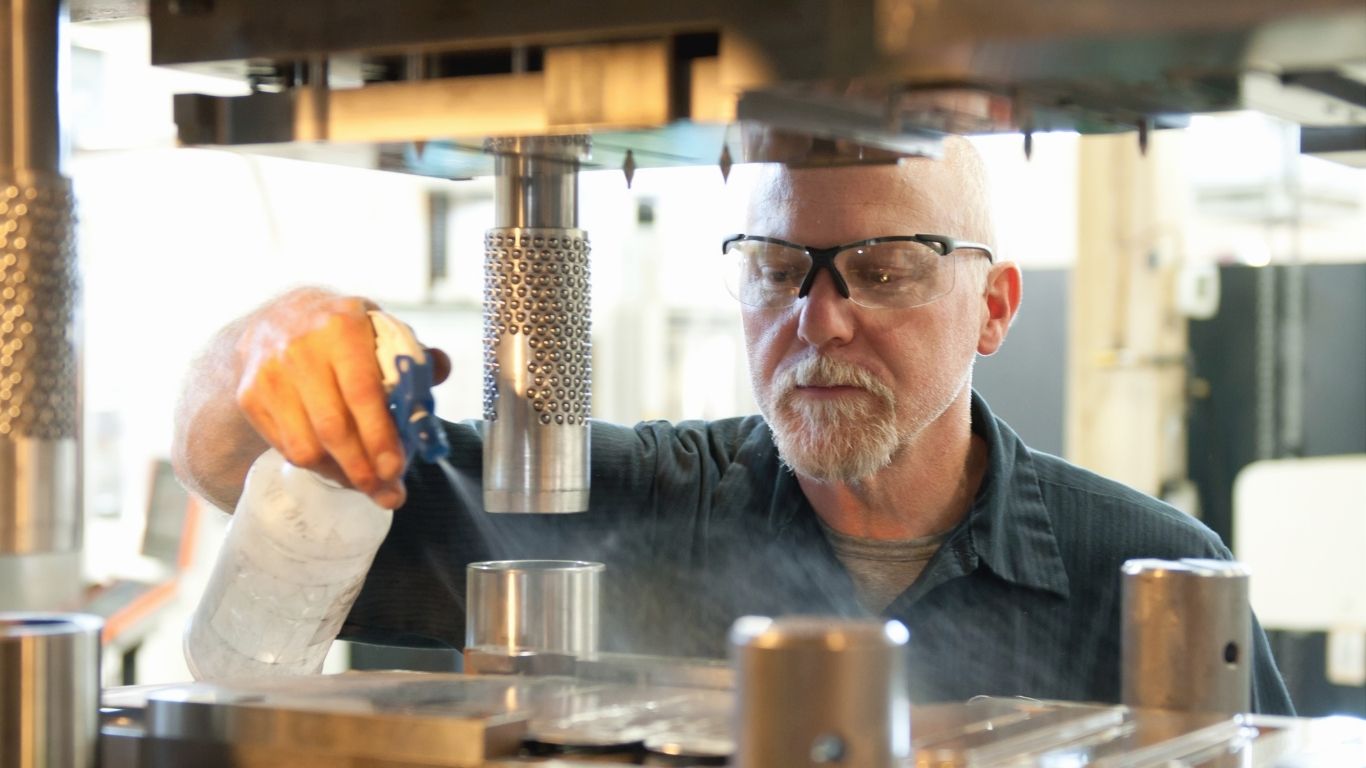
In manufacturing, an open position isn't an abstraction. It shows up immediately: in overtime costs, in production targets that slip, in the pressure placed on everyone else on the floor. The urgency to fill roles is constant, and the consequences of filling them with the wrong person are just as immediate.
That pressure creates a trap that many manufacturing HR teams know well: hire fast to keep the line moving, and you end up with turnover that costs you more time and money than the vacancy would have. The answer isn't to slow down. It's to get better information faster.
The volume challenge compounds the problem. A posting for a production associate, a quality technician, or a materials handler can draw hundreds of applications within days. A skilled trades role or shift supervisor position may attract a smaller but still unmanageable pool of candidates with widely varying backgrounds. Your HR team doesn't have the bandwidth to screen them all carefully, and your operations managers don't have time to run first-round conversations on top of their production responsibilities.
The standard hiring playbook was designed for office environments with flexible timelines. Manufacturing hiring has neither.
A production floor isn't a resume-friendly environment, and many strong candidates won't have one at all. Whether someone comes in with a detailed work history or walks through the door with years of hands-on experience and nothing written down, a document-based filter won't tell you whether they can follow a multi-step work instruction without supervision, maintain focus through a full shift, respond correctly when a process goes out of spec, or bring the kind of reliability and safety mindset that manufacturing environments demand. Yet screening by credentials and work history remains the default, which systematically filters out qualified candidates before anyone speaks to them.
When an open position is holding up production, the instinct is to hire the first available body. That instinct is understandable and expensive. Poor attendance, safety incidents, and early attrition are disproportionately concentrated in hires that were made under time pressure without adequate screening. Replacing a production associate who leaves in the first 90 days costs significantly more than the vacancy would have.
Manufacturing organizations often hire across multiple shifts and multiple facilities. When screening is handled informally by different supervisors or managers, candidates are evaluated on different standards with no consistent baseline. The result is uneven workforce quality across locations, and no clear way to understand why some facilities retain people better than others.
The people best positioned to evaluate whether a candidate will succeed on the floor are your experienced supervisors and operations leads. They're also the people who can least afford to spend their time on phone screens. Pulling a shift supervisor off the floor for recruiting interviews is a direct cost to production, and it's one that rarely appears in any hiring budget.
Turnover in manufacturing is expensive in ways that are easy to underestimate. Direct replacement costs (job posting, screening time, onboarding, training) are the visible part. The less visible costs include reduced line efficiency during the ramp period, the supervisory time required to onboard a new hire, and the safety exposure that comes with someone who doesn't yet know the job well.
SHRM estimates that a bad hire can cost 50 to 60 percent of that employee's annual salary. In high-turnover environments, those costs accumulate fast. A facility that replaces 30 percent of its production workforce annually is absorbing a significant and largely preventable expense.
The goal is not just faster hiring. It is more consistent hiring, with enough information at the screening stage to make a confident decision before the offer goes out.
AI-augmented hiring doesn't replace your supervisors' judgment about who belongs on the floor. It ensures that judgment is applied to a well-screened shortlist rather than a stack of applications sorted by credentials and work history.
Instead of relying on keyword filters and document-based screening, an AI interviewer conducts structured, conversational interviews with every single applicant, including those who apply without a resume. Every candidate gets a fair opportunity based on how they actually think and communicate, not on whether they submitted a formatted work history. Your team gets a complete, consistent picture of the full pool before committing a single hour to in-person conversations.
Every candidate receives the same carefully designed set of questions, rooted in the STAR framework (Situation, Task, Action, Result), built around what actually predicts success in manufacturing environments. For a production associate, that means questions about following procedures, working safely, and handling monotony and physical demands over a full shift. For a quality technician, questions about catching and escalating defects under production pressure. The interview reflects what the job actually asks of people, not generic behavioral prompts lifted from a template.
Reliability, safety mindset, ability to follow instructions, and composure when something goes wrong are the qualities that separate strong manufacturing employees from costly ones. These don't surface in a document review and rarely come through in a short phone screen. Structured AI interviews are designed to draw them out consistently, giving you a clearer picture of each candidate before they ever set foot on the floor.
In most manufacturing hiring processes, candidates are screened out before anyone actually speaks to them, based on what they submitted, or didn't submit, on an application. With AI interviewing, every candidate gets a structured conversation on their own schedule, whether they came in with a detailed work history or no resume at all. The person who's worked in a warehouse for eight years and knows exactly what the job requires gets the same opportunity as someone with a polished application. So does the candidate walking in with relevant skills and nothing written down.
Whether you're hiring for a day shift at one facility or a night shift at another, every candidate is evaluated on the same questions and the same criteria. That consistency makes it possible to compare candidates fairly and to understand, over time, which screening criteria actually predict retention and performance in your environment.
AI hiring tools vary in how well they translate to operations-focused environments. These capabilities matter most.
A form-based screening tool is not an interview. Candidates applying for production and trades roles should experience a real conversation that draws out how they think and communicate, not a checklist they fill out on their phone. Look for a system that conducts natural, adaptive conversations and follows up when an answer needs more depth.
A CNC machinist and a shipping coordinator require very different interviews. So do a maintenance technician and a production supervisor. Your platform should let you build role-specific interviews that reflect the actual requirements of each position and the specific environment of each facility.
The output of an AI interview should be a prioritized shortlist with structured scoring across the dimensions that matter: reliability indicators, safety orientation, relevant experience, and communication. Your supervisors and HR team should be able to review a shortlist and make a confident call without spending hours on additional screening.
When a role needs to be filled quickly, your hiring process needs to match that urgency. A platform that moves candidates from application to shortlist in days rather than weeks keeps you from losing qualified applicants to other employers while also reducing the pressure to hire the first available body.
Manufacturing hiring operates under pressures that most industries don't face. Open positions have an immediate operational cost. Turnover is visible on the floor and in the financials. And the people who understand the job best are the ones who can least afford to spend their time running first-round screens.
AI-augmented hiring addresses all three. Every applicant gets a fair, structured interview. Your operations managers and HR team receive a complete, calibrated shortlist before they invest time in in-person conversations. The result is a faster process, lower turnover costs, and hires that are more likely to stay.
Faster time-to-fill: Screen every applicant without pulling supervisors off the floor or overloading your HR team during peak hiring periods.
Lower turnover costs: Better screening at the front end means fewer early departures, less rework, and less time spent refilling the same positions.
Better candidate quality: Structured behavioral interviews surface candidates with the reliability, safety mindset, and work ethic that actually predict success on the floor, not just the ones with the most polished applications.
Operations time protected: Return the hours your supervisors and operations leads currently spend on first-round screening to production, training, and floor management.
Consistent standards across your operation: Whether you're hiring for one facility or ten, every candidate is evaluated on the same criteria so workforce quality doesn't vary by site or shift.
Manufacturing organizations that are building smarter hiring processes aren't the ones with the most recruiters. They're the ones who figured out how to screen faster and more consistently without adding to the burden on their operations teams.
AI-augmented interviewing is how you get there.

Talent Pronto is an AI-powered hiring platform built around Anna, our intelligent AI that conducts 24/7 conversational screening, evaluates candidates against specific job requirements and compliance needs, and schedules interviews. Run everything on the Talent Pronto ATS, our all-in-one applicant tracking system with a branded careers site and Anna built in, or keep your existing ATS and let Anna integrate with Greenhouse, Ashby, iCIMS, Jobvite, Lever, Oracle, and more. Either way, we help organizations reduce time-to-hire and build stronger teams.