Master your hiring with our top 8 compliance interview questions. Get sample answers, scoring rubrics, and red flags to hire top compliance talent.
Your hiring team is probably doing this right now. Screening resumes, lining up interviews, and relying on polished answers that sound compliant without proving much. That approach breaks down fast in regulated environments. One weak hire can mishandle confidential data, miss an escalation, document the wrong thing, or stay silent when leadership pushes for a shortcut.
A single compliance misstep can lead to millions in fines, irreparable brand damage, and legal battles. Yet standard interview questions rarely reveal whether a candidate will spot risk early, document it correctly, and act when the pressure rises. Strong compliance interview questions have to test judgment, evidence, and discipline, not just confidence.
This guide gives you a practical hiring toolkit. You'll get eight compliance interview questions, plus a framework for what a strong answer sounds like, what red flags to flag immediately, and how to score responses consistently. That matters if you want a defensible process instead of gut-feel hiring. It also matters if you want to scale structured screening through Talent Pronto so every applicant gets the same rigor. If your broader objective includes preventing insider risk with compliance, your interview design has to do more than check boxes.
A manager gets a clean interview, a confident candidate, and a polished resume. Thirty days later, that hire ignores a reporting breach, keeps it informal, and turns a containable issue into an audit problem. This question helps you prevent that mistake.
Use it to test whether the candidate can spot risk early, classify it correctly, document facts, escalate through the right channel, and push remediation to completion. The U.S. Department of Justice makes clear that effective compliance programs depend on whether issues are detected, investigated, escalated, and remediated in practice, not just written into policy (DOJ guidance on evaluating corporate compliance programs).
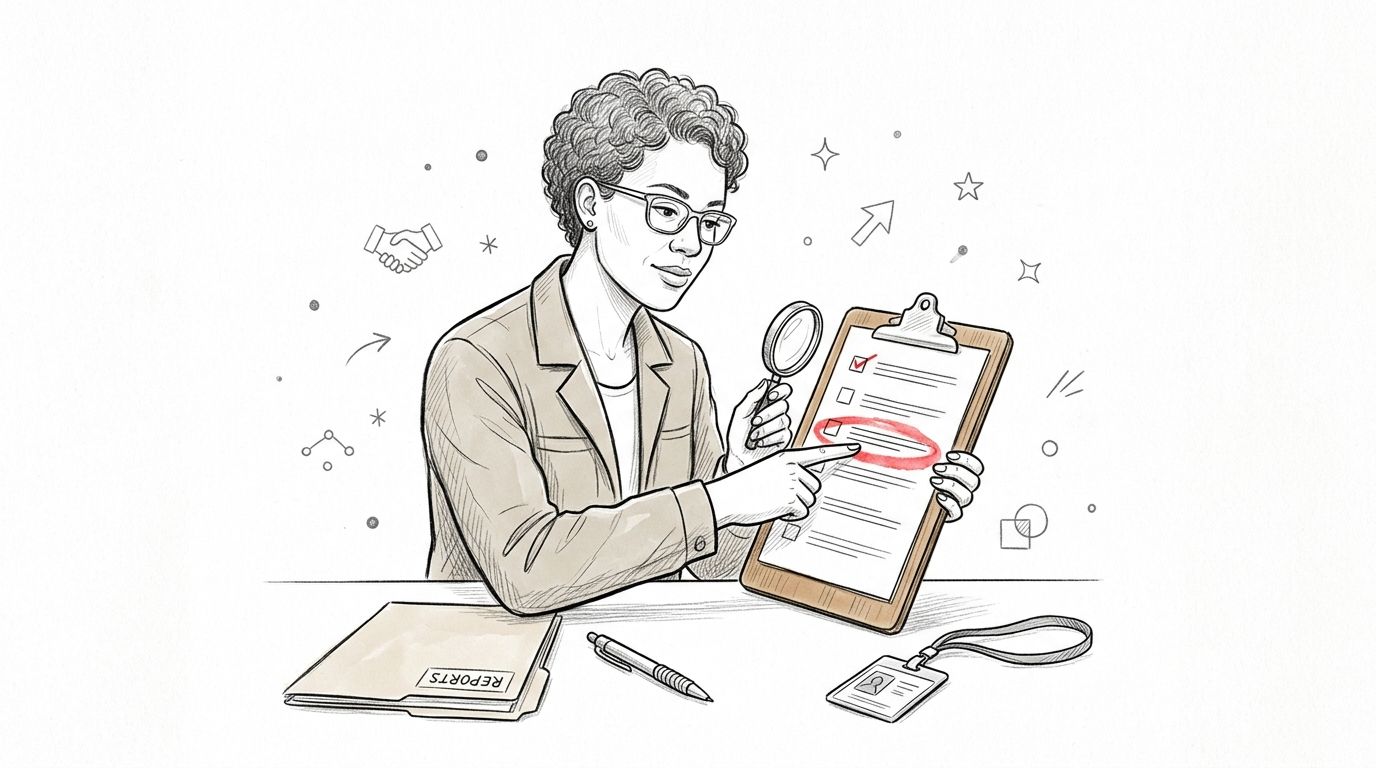
A strong answer is concrete and industry-specific. In healthcare, the candidate may describe unauthorized access to patient records. In pharma, they may catch a deviation from storage or labeling controls. In manufacturing or security-sensitive environments, they may identify skipped checks, incomplete logs, or gaps that affect meeting ISO 27001 obligations.
Listen for ownership first. Candidates who personally handled the issue can explain what they saw, what standard was at risk, what they did in sequence, who they notified, and what changed afterward.
Score the answer against these five points:
Cut through polished storytelling. If they skip documentation, the answer is weak. If they say they handled it discreetly to protect the team, the answer is worse.
“I noticed repeated access to patient files by employees who were not involved in the patient's care. I reviewed the access logs, confirmed the pattern against role permissions, documented the incidents, and reported them to the privacy officer. I then worked with IT and department leadership to tighten access controls and refresh staff guidance. We also added a monthly access review so the issue would be caught faster if it happened again.”
That answer works because it shows detection, verification, escalation, remediation, and a control improvement. It also gives you enough detail to probe. Ask what documentation they kept, how quickly they escalated, and whether they faced resistance.
Use a structured rubric instead of gut feel. That improves consistency and supports the kind of bias-resistant structured interview process you need for compliance hiring.
This question belongs in a full hiring toolkit, not a loose list of prompts. Pair it with a standard follow-up set, a scoring rubric, and documented red flags so every interviewer grades the same evidence the same way. That is how you reduce hiring risk before the employee ever gets access to systems, records, or regulated workflows.
If a candidate waits for someone else to brief them, you're hiring lag, not judgment. Regulations change, guidance evolves, and enforcement priorities shift. The right candidate already has a system for tracking updates and translating them into day-to-day practice.
This is also where you spot the difference between passive compliance and active compliance. Serious candidates talk about formal updates, trade publications, regulator alerts, internal counsel briefings, certification maintenance, and peer discussion. Weak candidates say they “read articles when needed.”
Ask for one recent rule change or policy update they had to learn and apply. Then ask what they did with the information.
A good answer might mention reviewing regulator updates, participating in training, comparing changes to internal policy, and briefing stakeholders. If they've worked in healthcare, they may talk about patient privacy or reporting obligations. In manufacturing, they may describe safety or environmental requirements. In any sector, they should show how they move from awareness to action.
Use structured evaluation here too. If your panel wants consistency, tie this question to a bias-resistant rubric and a documented screening workflow. That's the same discipline behind reducing interview bias in structured screening. For security-heavy environments, this mindset also aligns with meeting ISO 27001 obligations.
Candidates who stay current usually teach others. Candidates who don't usually wait to be corrected.
One more thing. In projected 2025 to 2026 hiring trends, regulated industries are moving toward dynamic, AI-driven screening, and a 2024 SHRM report cited in industry commentary states that 68% of regulated industries are using AI for initial screening while 92% of interview prep resources remain static (BarkerGilmore discussion of compliance interview trends). Hiring managers should test for real-time thinking, not memorized talking points.
A compliance hire can sound polished and still create audit risk. This question exposes the difference fast. If the candidate has managed controlled records, they will describe what they documented, how they kept records accurate, who could access them, how changes were tracked, and what happened when something was missing.
Use this question for any role tied to audits, privacy, quality, safety, clinical operations, procurement, or regulated reporting. Poor documentation creates real exposure. You cannot prove a control happened if the record is incomplete, altered without explanation, or impossible to retrieve.
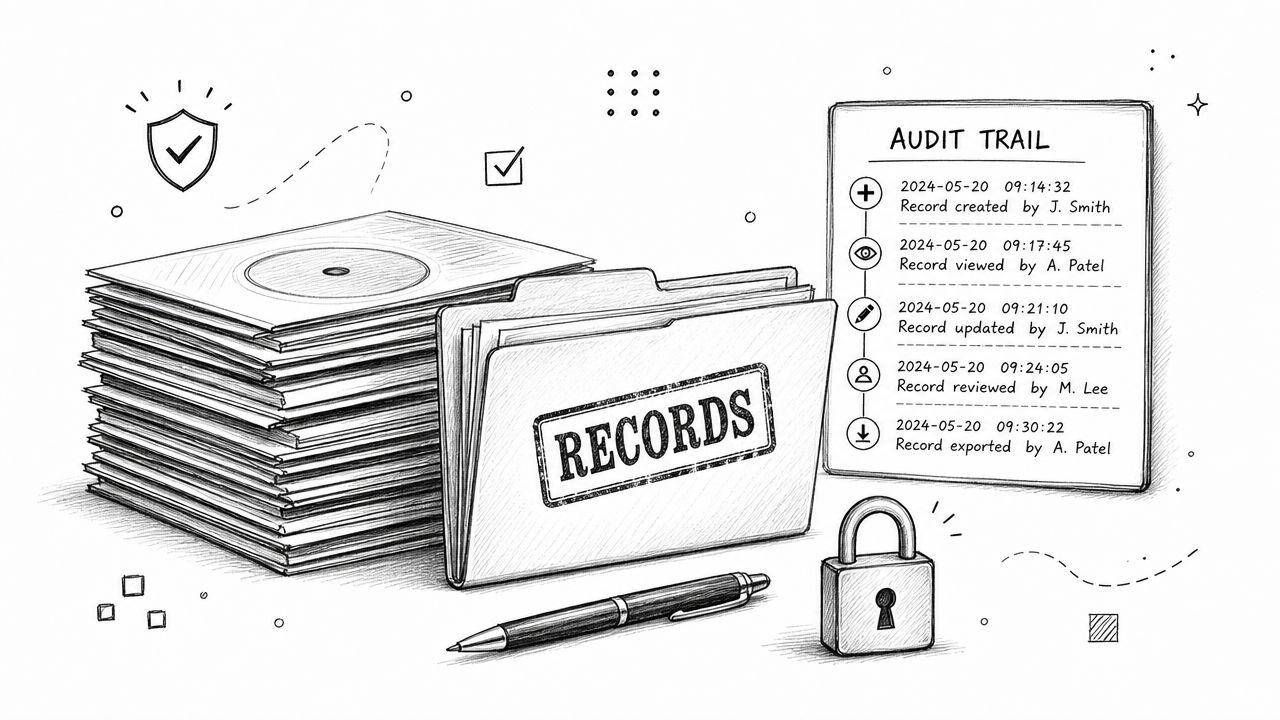
Ask for specifics. “What records did you own?” “What made a record complete?” “How were corrections handled?” “Who approved changes?” “What was your retention process?” “How did you prepare documentation for an audit or investigation?” Candidates with real experience answer with examples, controls, and consequences. Weak candidates hide behind software names.
Software familiarity is secondary. Ownership is the test. A candidate saying they used Workday, Epic, Veeva, SharePoint, or SAP tells you almost nothing unless they explain the work they performed inside those systems. Strong answers include version control, approval workflows, access restrictions, audit trails, exception logs, CAPA support, retention schedules, and evidence preservation.
Good documentation practice also supports risk assessment and management review. The U.S. Department of Justice states that an effective compliance program should be evaluated in part by whether it is adequately documented and whether the company can access and use that information in practice (DOJ guidance on evaluating corporate compliance programs). That is the standard your interview process should test.
Sample strong answer: “I managed privacy incident files and access review records in a controlled repository. My job was to confirm each file had the required evidence, date stamps, approvals, and retention tags before internal review or audit. If a record needed correction, I documented the reason, kept the original history intact, and routed the update through the approved workflow. During one audit, I found missing approval evidence in a batch of records, traced the gap to a handoff failure, corrected the files that could be remediated, and logged the exception for the rest.”
Score it the same way every time. That is how you reduce hiring risk and make this question useful inside a structured screening workflow or a platform like Talent Pronto.
Red flags are clear. Watch for casual comments about backdating, replacing old files without preserving history, shared credentials, undocumented corrections, missing approval records, or an inability to explain who had authority to edit controlled documents.
If you want hiring consistency, require interviewers to capture evidence under the same fields every time: record types handled, systems used, controls applied, error handling, retention knowledge, and audit readiness. That turns a common interview question into a practical screening tool instead of a vague conversation prompt.
A policy fails the moment a team signs the attestation and keeps making the same mistake. That is why this question matters. You are not hiring someone to schedule annual modules. You are hiring someone who can turn rules into repeatable behavior, spot where training breaks down, and prove the team changed what it did afterward.
This question is especially useful for managers, compliance leads, privacy officers, quality staff, and any candidate expected to influence day-to-day decisions across teams.
Strong candidates describe a system, not a session. They should explain who they trained, how they adapted the material, how they tracked completion, how they tested understanding, and what they changed after incidents, audit findings, or repeated errors. If they cannot connect training to actual behavior on the floor, the answer is weak.
The best answers show that the candidate treated training as an operational control. They can explain how they adjusted examples for different audiences, such as executives, clinicians, plant staff, or contractors. They can also explain what happened after the training. Did reporting improve? Did documentation errors drop? Did managers get follow-up coaching? Did repeat issues trigger retraining or process changes?
Keep your interview structured. Use the same evaluation fields every time, especially if you are building a fair and repeatable process through structured hiring practices that reduce bias or a screening platform like Talent Pronto. This question gets much more useful when every interviewer records evidence against the same criteria instead of relying on vague impressions.
Ask follow-ups like these:
Training works only if employees apply the rule correctly after the session.
“I owned annual and incident-based compliance training for a multi-site operations team. I broke the content into role-specific modules because supervisors, frontline staff, and contractors faced different risks. We tracked completion in the LMS, but I did not treat completion as success. I added short knowledge checks, reviewed incident reports for repeat themes, and met with department managers when teams kept missing the same control. In one case, high completion rates did not fix documentation errors, so I revised the training with real examples from our workflow and required supervisor sign-off on post-training observations. Error rates dropped, and we kept that reinforcement step in place for new hires.”
That answer gives you something to score. It covers ownership, audience design, measurement, follow-up, and managerial reinforcement. It also shows judgment. The candidate did not hide behind attendance data.
Red flags are easy to spot. The candidate treats attendance as proof of compliance. They cannot explain how training differed by audience. They have no method for checking retention. They blame employees for repeated mistakes without examining whether the training, workflow, or manager follow-through failed.
Use this question as part of a full hiring toolkit, not a standalone prompt. Capture the same evidence fields for every candidate: audience, delivery method, completion tracking, knowledge checks, behavior metrics, reinforcement plan, and examples of corrective action. That is how you turn a routine interview question into a practical scoring tool that de-risks compliance hiring.
The regulator is on site at 8:00 a.m. Documents are missing, business leaders are improvising answers, and nobody can explain who owns remediation. That is the hiring failure this question is supposed to prevent.
Use this prompt to find out whether the candidate can run an audit in a controlled way. You need evidence of preparation, document discipline, stakeholder management, response quality, and follow-through after findings. If the candidate gives you a polished summary with no specifics, keep pressing until you can map what they specifically did.
A credible answer should cover the audit scope, what triggered it, how requests were triaged, which records were pulled, who was involved, how issues were escalated, and how corrective actions were tracked to closure. “We passed” is not an answer. “I owned the request log, prepared evidence, coordinated SMEs, answered follow-up questions, and drove remediation on two findings” is an answer you can score.
Here's a training resource you can share internally before calibrating your panel:
Strong candidates describe an audit as an operating process, not a fire drill. They explain how they organized requests, validated records before submission, kept responses consistent across teams, and documented commitments made to auditors or inspectors. They also show judgment. They know when to answer directly, when to confirm facts first, and when to escalate legal or regulatory risk.
Push for sequence. Ask, “What happened first?” Then ask, “What did you personally own?” Good candidates can walk you through the timeline without drifting into vague team language.
“I supported a scheduled regulatory inspection in a healthcare setting. I built the request tracker, matched each request to an owner, reviewed documentation for completeness, and flagged gaps before submission. During the inspection, I coordinated daily check-ins with operations, legal, and quality so responses stayed accurate and consistent. We received two findings related to documentation controls. I helped write the corrective action plan, assigned deadlines, tracked closure evidence, and updated the SOP so the same issue would not repeat.”
That answer gives you something to evaluate. It shows ownership, control over evidence, cross-functional coordination, and post-audit discipline.
A defensive candidate is a risk. So is one who talks about “passing” but cannot explain findings, root causes, or corrective actions. Watch for candidates who blame auditors, overstate their role, or confuse document collection with audit management.
This question works best inside a structured hiring system. Capture the same fields for every candidate: audit type, scope, personal ownership, evidence handling, stakeholder coordination, findings, remediation steps, and process changes made afterward. That is how you turn a common interview prompt into a repeatable scoring tool. Teams that want documented, consistent evaluations should build that workflow into their security and compliance support for fair hiring process.
This question tests whether the candidate understands the rules that protect sensitive information, not just the acronyms. In healthcare, that may be patient confidentiality and minimum necessary access. In pharma and biotech, it may involve clinical data handling. In tech or multi-state operations, it may include consumer privacy and internal access governance.
Strong candidates explain principles, controls, and response obligations in plain language. They should know what data is sensitive, who should have access, what logging or monitoring matters, and what happens if something goes wrong.
Ask them to explain one privacy rule they've had to apply and one security control they've had to work with. Good answers mention role-based access, encryption, access reviews, secure transmission, breach escalation, or documented approval processes.
Then test judgment. Ask, “If a manager wants broader access for convenience, what do you do?” or “What happens after you suspect unauthorized disclosure?” The candidate should center legal duty, least-privilege access, and escalation.
For roles that involve screening, fairness, or regulated people data, your process should reflect the same standards you expect from the hire. Talent teams can reinforce that by using documented evaluation and security and compliance support for fair hiring.
If a candidate can't explain who gets access, why they get access, and how misuse is escalated, they don't understand privacy in a way that protects your organization.
A good example is a hospital candidate who explains the minimum necessary principle, role-based permissions, and audit logs. A weak one says privacy is “mostly common sense.”
This question reveals whether the candidate sees compliance as reactive or operational. Strong people in this space don't just spot failures. They redesign workflows, remove ambiguity, and make the compliant path easier to follow.
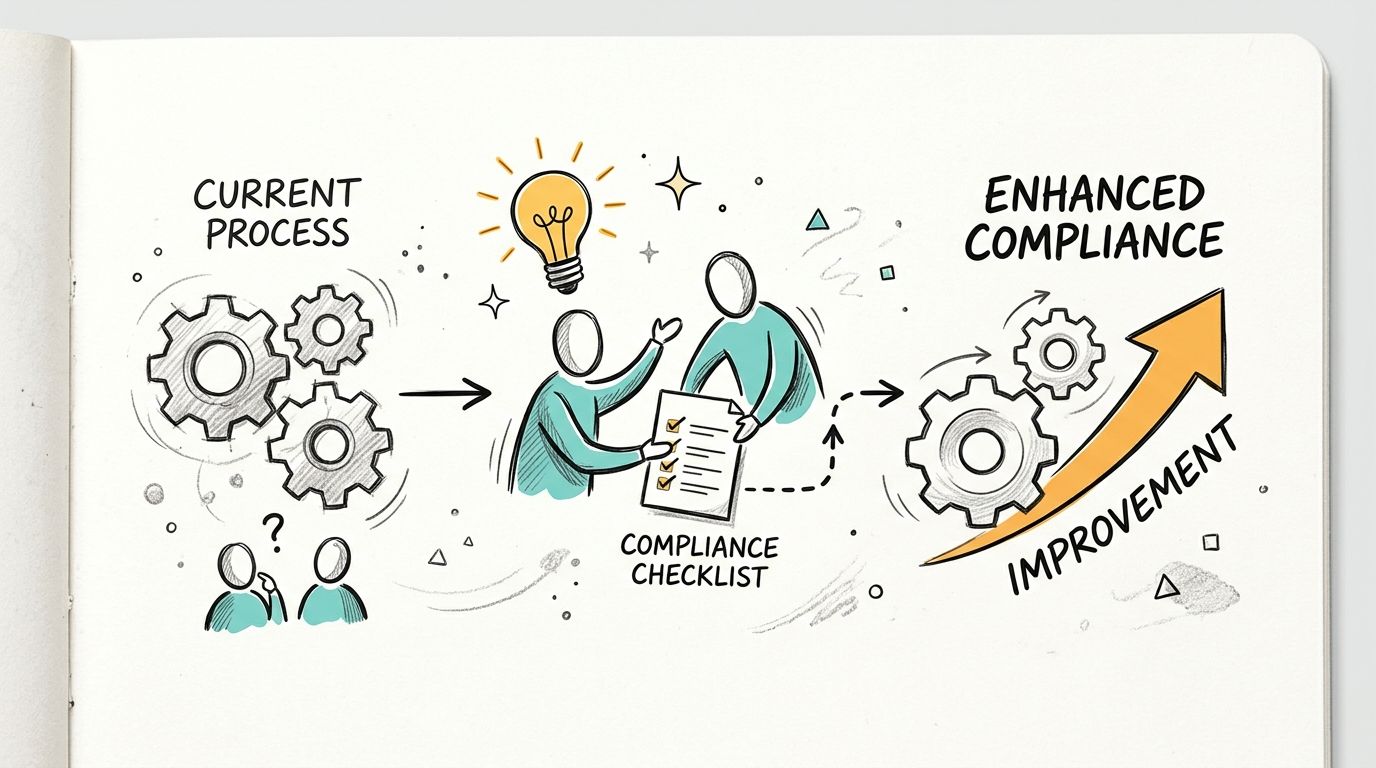
Ask for a before-and-after story. Maybe a healthcare coordinator tightened consent documentation, a manufacturing specialist improved audit prep, or a hospital risk manager improved incident reporting. The point isn't the title. The point is whether they can trace a line from problem to control improvement to sustained adoption.
Process improvement answers should include the original failure point, what they changed, who they involved, and how they knew it worked. You're listening for systems thinking. Did they update a checklist, fix approvals, revise handoffs, clarify ownership, or strengthen documentation?
A strong reply might sound like this: “We kept seeing incomplete training records before internal reviews, so I introduced a standard completion check, assigned ownership by department, and added a follow-up workflow for missing documents.” That answer shows design, not just effort.
One cultural warning belongs here. Hiring guides often ignore whether the organization allows compliance improvements to endure. A 2025 LinkedIn analysis of 50,000 compliance officer exit interviews found that 41% of departures were tied to an “inability to enforce policy against executive leadership” (LinkedIn analysis cited in compliance interview commentary). Ask candidates what happened when their improvement met resistance. Their answer will tell you how they influence without surrendering standards.
The red flag is fake improvement language. If they can't name the broken step, they probably didn't improve it.
In these moments, many candidates expose their real operating principles. Every regulated business faces moments when speed, revenue, staffing shortages, patient flow, production schedules, or executive pressure collide with compliance obligations. You need to know whether the candidate treats compliance as a floor or a bargaining chip.
Ask for a real example first. Then give a live scenario. A product release is waiting on incomplete documentation. A hospital unit wants a shortcut on access controls. A manager asks them to delay reporting until after quarter-end. Watch how they reason in real time.
Good candidates prioritize risk, document decisions, escalate conflicts, and look for lawful alternatives. Weak candidates sound collaborative right up to the point where they accept the shortcut.
A useful follow-up is, “Who did you involve, and what did you say?” That forces them to show communication skill, not just principle. It also tells you whether they understand chain of command and accountability.
When candidates prepare for senior compliance roles, they're often asked what they'd achieve in the first 30 days. Good answers start with a clear written brief from senior management, then listening, observation, and cross-functional collaboration before action planning (first-30-days guidance from compliance leadership video). Another interview coaching source makes the same point differently. Candidates should give practical examples tied to the role, such as managing a violation, developing a compliance program, or training employees, instead of making broad claims (first-30-days compliance interview advice). That mindset applies here too. Under pressure, serious candidates ground decisions in role clarity, documented priorities, and escalation.
One final screen. Ask what they'd research before joining your company. Candidates who mention public filings, annual statements, press releases, competitor context, and the SEC's EDGAR database are showing the kind of due diligence that strong compliance hires already practice (Rutherford Search compliance interview advice).
| Question | Implementation complexity 🔄 | Resource requirements ⚡ | Expected outcomes 📊 | Ideal use cases 💡 | Key advantages ⭐ |
|---|---|---|---|---|---|
| Describe a Time You Identified a Compliance Violation in Your Previous Role | Moderate, requires follow-up to verify details | Low, single-question, interviewer skill needed | High, shows integrity, escalation, accountability | Regulated sectors (healthcare, pharma, government) | Distinguishes real-world experience; STAR-friendly |
| How Do You Stay Current With Changing Regulations and Compliance Requirements? | Low, straightforward, behavioral | Medium, may require validation of certifications/memberships | Medium–High, indicates proactivity and adaptability | Roles needing up-to-date knowledge (risk, QA, privacy) | Identifies continuous learners and knowledge sources |
| Tell Us About Your Experience With Compliance Documentation and Record-Keeping | Medium, technical specifics and examples needed | Medium, may require system names or artifacts | High, signals audit readiness and procedural rigor | Documentation-heavy roles (QA, clinical, regulatory) | Assesses hands-on systems knowledge; immediate impact |
| Describe Your Experience With Compliance Training and How You've Helped Ensure Team Compliance | Medium–High, evaluates training design and delivery | Medium, may ask for metrics, materials, completion tracking | High, demonstrates culture-building and knowledge transfer | Senior/training/supervisory positions | Identifies multipliers who improve team compliance |
| Walk Us Through How You've Handled a Compliance Audit or Inspection | High, high-stakes, timeline and outcomes matter | Medium–High, needs scope, findings, remediation detail | Very High, proves remediation, resilience, audit management | Audit-readiness roles (managers, directors) | Validates real-world audit handling and outcomes |
| Explain Your Understanding of Data Privacy and Security Compliance in Your Industry | Medium–High, technical and regulatory nuance | Medium, may require standard/regulation references | High, reveals technical controls and risk mitigation | IT, privacy officer, clinical data, SaaS roles | Tests specific regulatory knowledge and implementation |
| Tell Us About a Time You Identified Process Improvements That Enhanced Compliance | Medium, needs metrics and change-management detail | Low–Medium, examples and outcome data preferred | High, shows efficiency gains and sustained improvement | Operations, process improvement, QA roles | Identifies proactive problem-solvers and innovators |
| How Do You Balance Competing Priorities When Faced With a Compliance Deadline and Operational Pressures? | Medium, situational judgment and ethics evaluation | Low, behavioral probing sufficient | High, reveals principled decision-making under pressure | Leadership, operations, supervisory roles | Tests commitment to compliance integrity vs shortcuts |
Asking strong compliance interview questions is the easy part. Asking them the same way, every time, with the same scoring logic, across every recruiter and hiring manager, is often where execution falls short. That inconsistency creates risk. It leads to uneven evaluations, undocumented decisions, and interviews that reward polish over evidence.
A better process uses structured prompts, required follow-ups, and a visible rubric. For each of the eight questions above, define what a high-quality answer must include. Require interviewers to record evidence, not impressions. If the candidate claims they improved a process, the panel should document what changed, how they influenced others, and what proof they gave. If the candidate says they handled a violation, the panel should record the escalation path, documentation steps, and corrective action.
That structure matters even more in organizations hiring across multiple sites, shifts, or business units. Healthcare systems, pharma companies, manufacturers, government teams, and high-growth tech employers all face the same basic problem. Too many applicants. Too little time. Too much room for inconsistency. Talent Pronto helps solve that by turning your compliance interview questions into an automated conversational screening flow that every applicant can complete on a consistent basis.
Its AI assistant, Anna, can engage candidates at any hour, ask behavioral and technical questions, and generate structured scorecards tied to role-specific criteria. That means your team doesn't have to depend on recruiter memory or unstructured phone screens to identify candidates who understand audits, privacy, documentation, training, and escalation. You keep control over decisions. The system standardizes the early evidence collection.
That's the practical path to de-risking hiring. Build the rubric once. Ask the same compliance interview questions every time. Capture comparable answers. Review candidates against documented standards. If you're serious about trustworthy hiring, stop relying on instinct and start designing a process that can stand up to scrutiny. That's better for fairness, better for auditability, and better for business. It also pairs well with broader hiring diligence, including personal background check advice.
Talent Pronto helps employers turn compliance hiring from a subjective interview exercise into a structured, scalable screening process. If you want every applicant evaluated against the same compliance standards, explore Talent Pronto to build role-specific question flows, apply consistent scoring rubrics, and produce clear scorecards your hiring team can use.

Talent Pronto is an AI-powered hiring platform built around Anna, our intelligent AI that conducts 24/7 conversational screening, evaluates candidates against specific job requirements and compliance needs, and schedules interviews. Run everything on the Talent Pronto ATS, our all-in-one applicant tracking system with a branded careers site and Anna built in, or keep your existing ATS and let Anna integrate with Greenhouse, Ashby, iCIMS, Jobvite, Lever, Oracle, and more. Either way, we help organizations reduce time-to-hire and build stronger teams.