Unlock your HR strategy with our guide on what is people analytics. Learn to use data for better hiring, retention, and performance, with real-world examples.
For decades, many critical HR decisions were made based on intuition and experience. Think of it like a seasoned ship captain navigating by the stars (impressive, but not always precise). People analytics is the modern-day equivalent of giving that captain a full suite of GPS, sonar, and weather-mapping technology. It’s about replacing guesswork with evidence.
Healthcare and Manufacturing: Improving Safety and Retention
At its heart, people analytics is the practice of using data to understand and improve every part of the employee experience. It pulls raw, often disconnected information from application forms, performance reviews, engagement surveys, and more, and turns it into a clear, actionable story about your workforce. This allows leaders to move from a reactive stance to a strategic one, answering critical business questions with confidence.
This data-driven discipline, also known as HR or workforce analytics, isn't just a trend; it's quickly becoming the standard. We're seeing a massive shift in the industry. By 2026, it's expected that over 73% of organizations worldwide will have embedded AI-powered analytics into their HR functions. This isn't just about fancy tools; it's about getting real results.
For example, data from the HR Research Institute shows that 53% of HR professionals are now using analytics to flag employees who might be at risk of leaving, while 47% use it to predict which new hires have the best chance of becoming top performers. The goal isn't to automate human judgment, but to empower it with objective proof. You can learn more about these people analytics findings and how they are reshaping modern HR.
This shift from subjective choices to objective insights is fundamental. Every leader grapples with tough questions: Which candidate will truly thrive here in the long run? Why is turnover so high in that one department? Are we paying our people competitively? People analytics provides the framework to finally answer these questions with data, not just a hunch.
People analytics is the systematic collection and analysis of employee data to create actionable insights. By examining patterns across hiring, performance, and retention, HR leaders get a clear, evidence-based picture of what’s really happening in their organization.
The real magic happens when you start connecting the dots. It’s about finding the story hidden in the numbers: a story that might reveal why your top sales team is burning out or why a particular recruiting source consistently delivers future leaders.
This process generally breaks down into a few key activities:
The table below illustrates how this changes the game, contrasting the old way of doing things with the new, data-informed approach.
| Area | Traditional HR Approach (Intuition-Based) | People Analytics Approach (Data-Driven) |
|---|---|---|
| Hiring | Relies on interviewer's "gut feeling" and resume keywords. | Uses predictive models to identify traits of successful past hires and screens for those attributes. |
| Retention | Conducts exit interviews after an employee resigns. | Analyzes engagement and performance data to proactively identify and support at-risk employees. |
| Performance | Annual reviews based on manager's subjective observations. | Continuous feedback supported by objective performance metrics and peer data. |
| Compensation | Uses broad market surveys and internal salary bands. | Analyzes pay equity and links compensation directly to performance, skill, and business impact. |
This comparison makes it clear: people analytics isn't about diminishing the human element of HR. It's about augmenting it, allowing professionals to focus their expertise on strategic initiatives backed by solid evidence.
At its core, this field depends on rigorous analytical methods. It all starts with getting to know your data inside and out. For anyone looking to understand the foundational techniques involved, exploring what is EDA is an excellent starting point.
People analytics isn't a one-shot deal; it's a process that builds on itself in distinct stages. Think of it like a detective solving a complex case. You start by gathering clues, then figure out what they mean, predict the culprit's next move, and finally, decide how to stop them. Each layer of analysis reveals more of the story, moving from basic observation to real strategic action.
The journey always starts with Descriptive Analytics, which answers the most fundamental question: “What happened?” This is your starting point, where raw data is organized and visualized to show you what’s going on. For example, a descriptive report might flag a sudden 15% spike in employee turnover last quarter. That's a clear signal that something has changed.
This diagram illustrates how people analytics pulls from different sources to create actionable business intelligence.
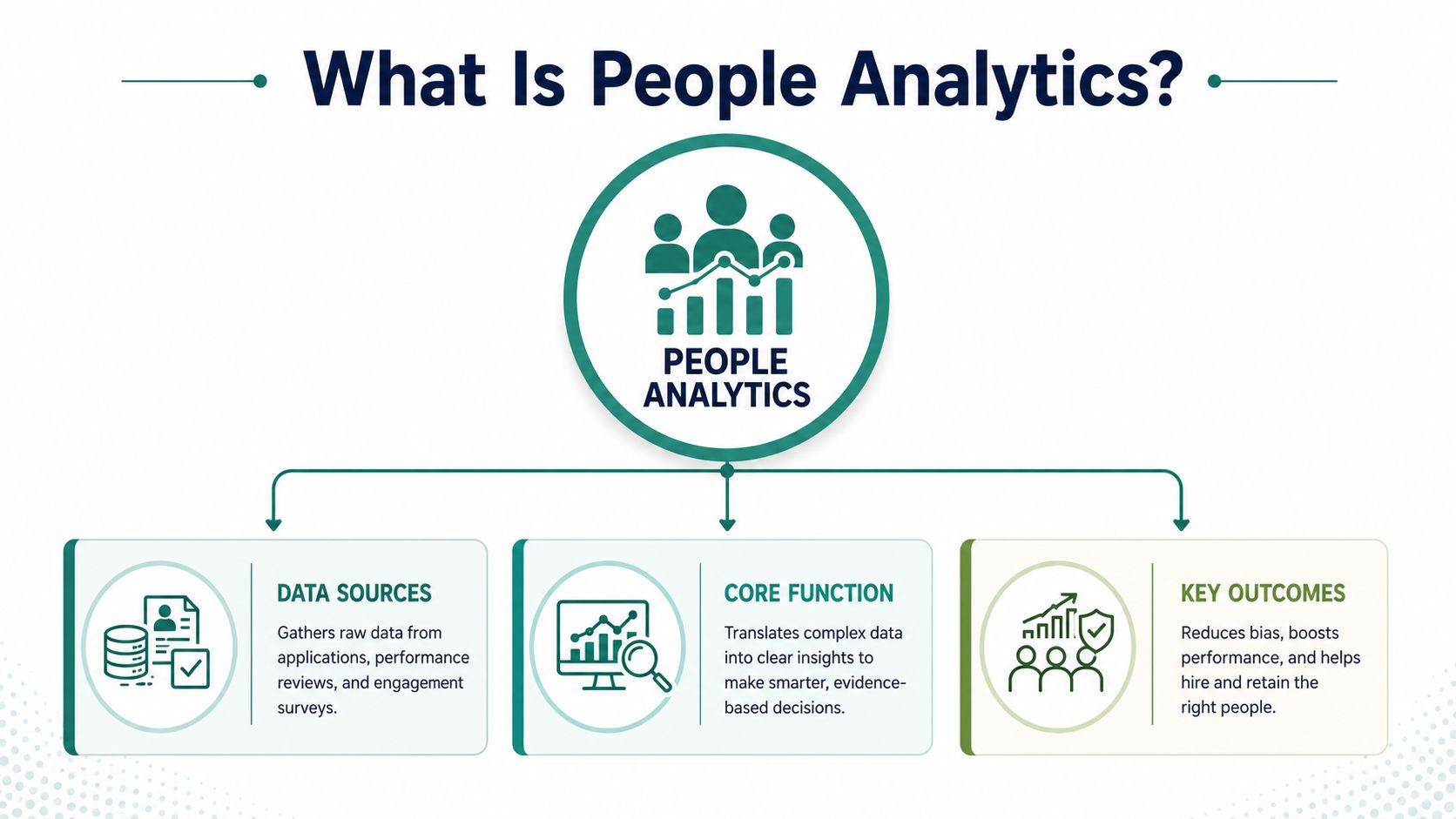
As you can see, the whole point is to translate disconnected data from things like performance reviews and engagement surveys into clear, evidence-based decisions that actually improve hiring and retention.
Once you know what happened, the next question is obvious. This brings us to Diagnostic Analytics, which asks: “Why did it happen?” This is where you roll up your sleeves and drill down into the data to find the root causes behind the trends you spotted.
Let's stick with our turnover example. A good diagnostic analysis might reveal that the spike wasn’t spread evenly across the company. Instead, it was concentrated entirely within the engineering department. Digging into exit surveys, you find the common themes: frustration with outdated tech and a lack of clear career paths. Suddenly, you've gone from a vague, company-wide problem to a specific, localized issue.
With a solid grasp of the past and present, you can start looking ahead. Predictive Analytics uses statistical models and historical data to answer the question: “What is likely to happen next?” This is where things get really interesting, as it helps you anticipate challenges before they become full-blown crises.
By analyzing patterns in performance ratings, engagement scores, and employee tenure, predictive models can forecast future attrition rates. This allows leaders to see which high-performing employees are at the greatest risk of leaving in the next six months.
This forecasting ability is a true turning point. It helps HR shift from simply reacting to resignation letters to proactively identifying flight risks and stepping in to help. This gives managers a critical window to intervene and address an employee's concerns before they've even started looking elsewhere.
Finally, we arrive at the most advanced layer: Prescriptive Analytics. It moves beyond forecasting to tell you, “What should we do about it?” This stage pulls insights from all the previous layers to recommend specific, data-backed actions to get the outcome you want.
Following our example, after predicting a high attrition risk in engineering, a prescriptive model might recommend a few clear actions:
By moving through these four layers, an organization can turn simple data points into a powerful strategic roadmap. This progression is the key to understanding what people analytics is all about and how it drives real, meaningful change.
Anyone who's worked in recruiting knows the feeling: staring at a mountain of resumes for one open position. It's a grind. Sifting through hundreds of applications manually isn't just slow; it's also where unconscious bias can easily creep in, leading to inconsistent evaluations. People analytics flips this script entirely by injecting data and objectivity right from the start.
Instead of relying on a recruiter’s gut instinct from a 30-second resume scan, a data-driven approach uses technology to give every single applicant a fair, consistent look. Think of it as an AI-powered assistant working around the clock, engaging with every person who applies.
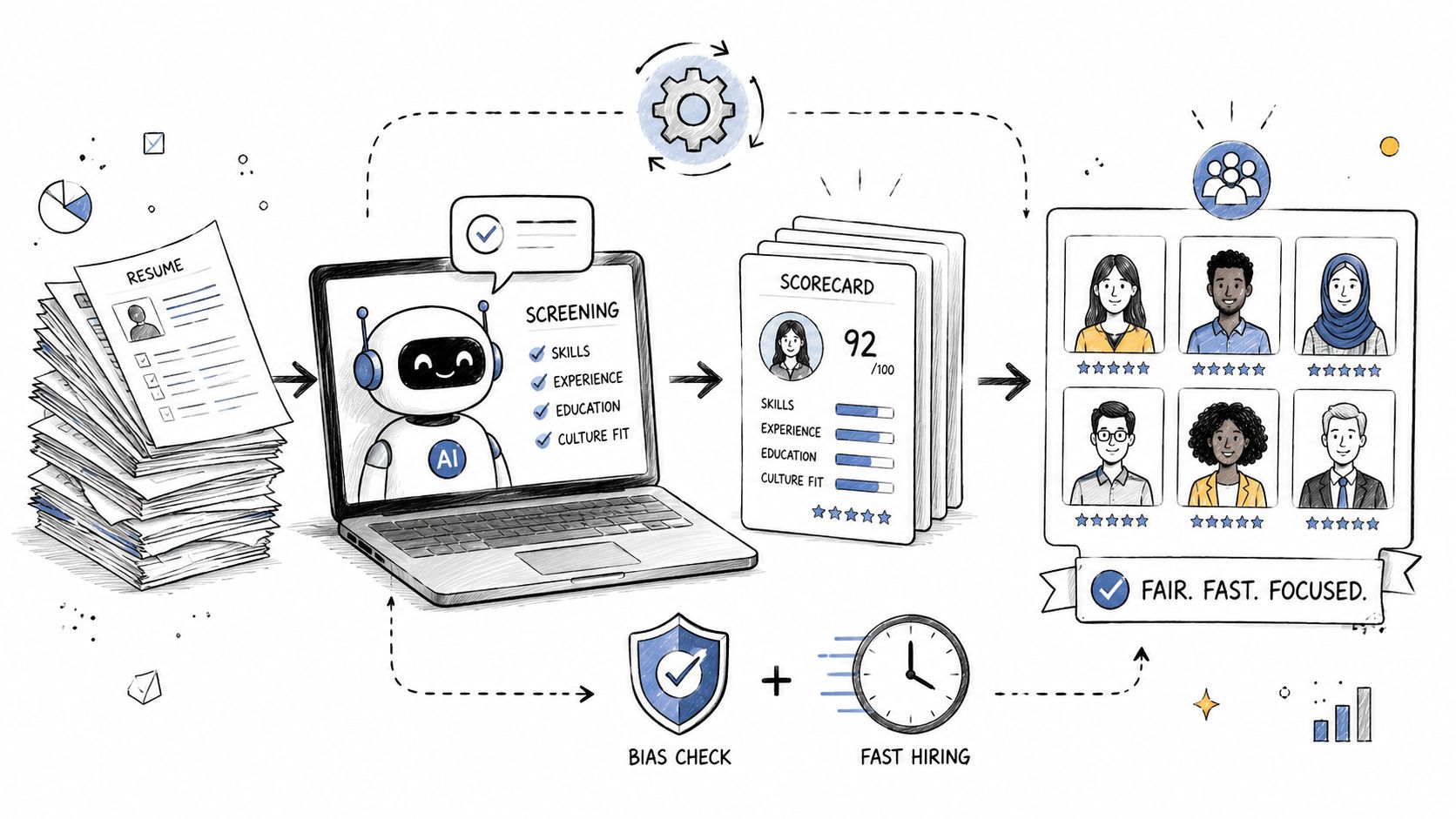
These tools don't just chat; they ask targeted, role-specific questions to build structured, unbiased scorecards. This replaces the old, messy way of doing things where different recruiters might ask different questions and arrive at subjective conclusions. The result is a far more equitable and efficient process for everyone.
The impact here is huge. By using analytics, companies can now screen enormous applicant pools with a speed and accuracy we could only dream of a decade ago. It’s not uncommon to see these methods cut down manual review time by up to 60%.
Back in 2024, an estimated 82% of large companies in North America and Europe were already using conversational AI to screen candidates. These systems engage every applicant 24/7, asking specific behavioral and technical questions to generate those all-important structured scorecards. This allows hiring teams to compare candidates on a truly level playing field, which goes a long way in reducing bias.
This data-first approach does more than just speed things up; it improves the quality and fairness of your entire hiring function. When you establish standard criteria from the get-go, you naturally begin to build a stronger, more diverse talent pipeline.
So, how does this actually work? It’s important to understand that modern AI screening tools are much more sophisticated than simple keyword scanners. They're designed to assess experience, probe for specific behavioral traits, and score responses against a carefully designed, fair rubric.
This shift from manual screening to structured, data-driven evaluation is a core component of what people analytics is. It's about moving from subjective impressions to objective evidence to find the best possible candidate for the role.
This method brings a few key advantages to the hiring process:
By applying analytics to the top of the funnel, organizations can fill roles faster, lower hiring costs, and build a more talented and diverse workforce. To get a better sense of the technology, you can explore how AI resume screening works in practice. Ultimately, this model makes every hiring decision more informed, equitable, and aligned with your business goals.
It’s easy to think of people analytics as a high-tech toy for Silicon Valley giants, but that’s a common misconception. In reality, it’s a powerful, practical tool being used everywhere, from the hospital ward to the factory floor, to solve very real business problems.
The true value of people analytics isn't found in abstract theories. It comes to life when you see how it’s applied in the trenches to make a tangible difference.
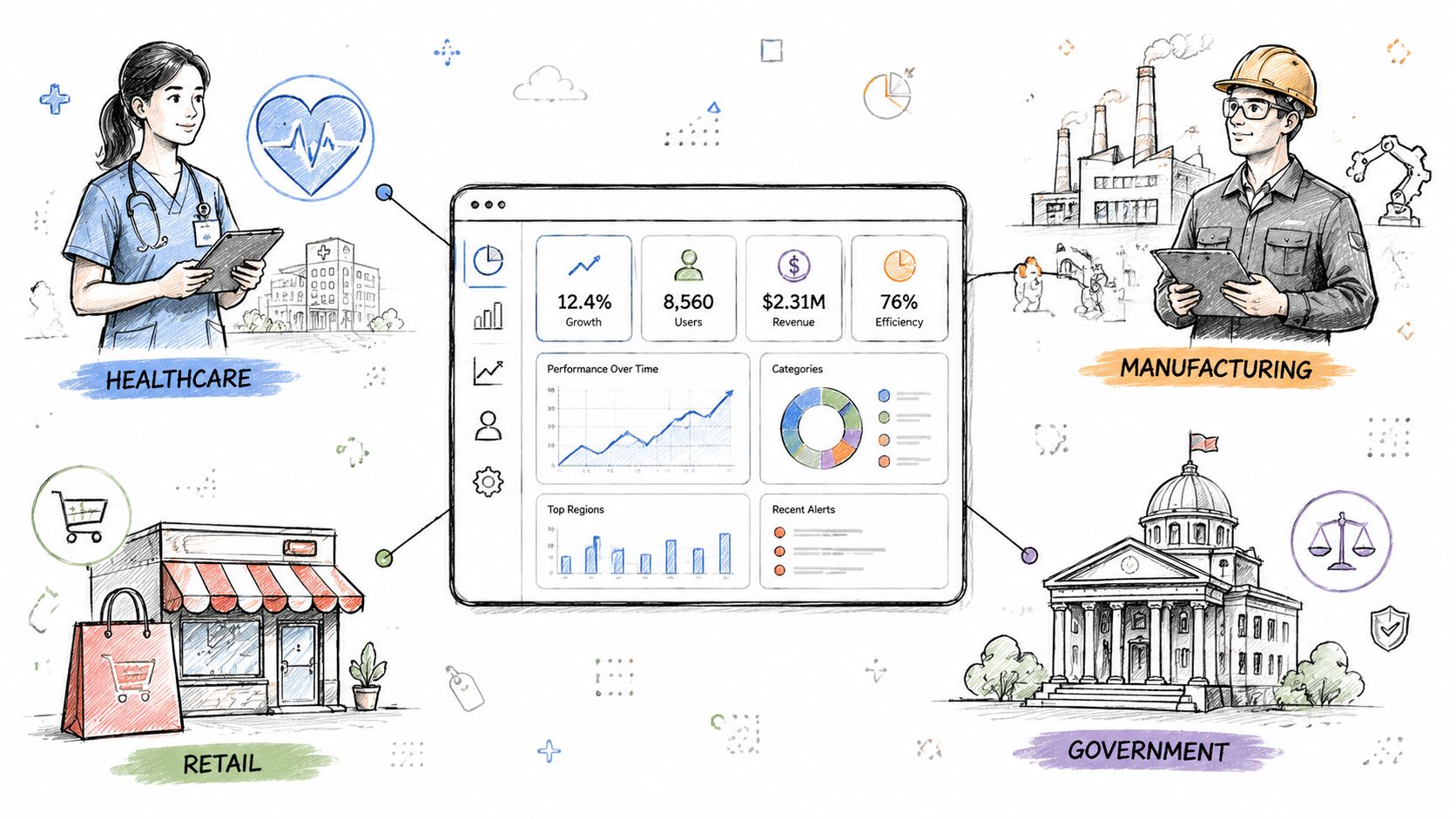
In healthcare, data analytics has become essential for maintaining operational stability and ensuring quality patient care. Hospitals are tackling nurse burnout, a huge factor in staff shortages, by analyzing scheduling data and employee feedback. This helps them spot teams with dangerously high overtime hours or flagging engagement, allowing leaders to step in with support before they lose valuable, experienced nurses.
Manufacturing floors are using a similar playbook to boost frontline safety and keep skilled workers on the job. By cross-referencing incident reports with training records and shift schedules, they can pinpoint the subtle warning signs that often precede accidents. This lets them fine-tune workflows or deliver targeted safety training exactly where it's needed most, preventing injuries and holding onto their best people.
The real magic of people analytics is its ability to connect a clear business problem (like nurse burnout or factory accidents) to a data-driven solution and a measurable result.
The retail world revolves around the constant ebb and flow of seasonal demand. Here, people analytics is the key to mastering staffing. By looking at historical sales data alongside staffing levels, retailers can accurately forecast exactly how many people they'll need for the holiday rush or a big summer sale. It’s how they deliver great service without wasting money on an overstaffed floor.
Government agencies, meanwhile, are turning to analytics to build workforces that are not only more effective but also more equitable. By using structured screening processes and data-backed assessments, they can cultivate diverse talent pipelines that truly represent the communities they serve. Adopting this data-first approach brings a new level of fairness and accountability to public sector hiring.
The bottom-line impact is undeniable. In healthcare, where staffing gaps lead to over $16 billion in annual costs, analytics has helped slash nurse turnover by 22% by revealing the root causes of why they leave. And when organizations in government and tech use uniform, data-driven criteria for hiring, bias can plummet by up to 35%. You can discover more about these strategic HR insights and see how they are put into practice.
These examples make one thing perfectly clear: no matter the industry, a smart approach to people data is one of the most powerful tools a business can have.
Jumping into people analytics can feel overwhelming, but a practical, step-by-step approach makes all the difference. The journey doesn't start with fancy software or massive data sets. It starts with a simple, clear business question. What problem are you actually trying to solve?
Before you even think about technology, you need to get your leadership on board. The best way to do this is to speak their language: bottom-line impact. Show them exactly how HR data connects to business outcomes. For instance, you could demonstrate how reducing turnover in a critical department by just 5% saves thousands of dollars, or how speeding up the hiring process directly contributes to revenue.
With your leaders' support, you can shift your focus to the technical groundwork. Your company is already sitting on a goldmine of information; it's just spread out across different systems. Your first real task is to bring it all together.
Start by creating a map of where your most important people data lives. In most organizations, this will include:
Connecting these disparate systems is what gives you a single, cohesive view of the entire employee journey, from their initial application to their most recent performance review. Getting this right is crucial, and you can learn more about how these pieces fit together by exploring the components of a modern HR tech stack.
Don't try to boil the ocean. The most successful people analytics initiatives I've seen all began with one focused pilot project. Pick a single, high-impact area where you can score a quick win. A fantastic place to start is by optimizing the hiring funnel for a role that's either high-volume or notoriously hard to fill.
Your first project should be a clear win that showcases the power of data. By proving the concept on a smaller scale, you build the momentum and credibility needed for broader adoption.
Think of this pilot as your blueprint for the future. As you measure its success, you’ll be building a powerful internal case study that justifies more investment. The goal is to build a data-driven HR function one step at a time, ensuring every move is grounded in tangible results.
Of course, none of this matters if your data is unreliable. For long-term success, you have to maintain high data quality. It's essential to set up thorough monitoring for your data systems, a practice experts explain when they answer the question of what is data observability. This keeps your insights sharp and trustworthy as your program grows.
So, you've built a solid people analytics program, but getting the leadership team on board feels like an uphill battle. When they start asking about return on investment, it’s easy to get stuck. If you want to convince your CFO that this is a non-negotiable part of the business, you have to talk about the one thing they care about most: money.
The secret is to stop framing people analytics as an HR cost center and start presenting it as a powerful engine for profitability. It’s all about connecting your insights to concrete business outcomes. The good news? The math is often much simpler than you’d expect. By focusing on a few high-impact areas, you can build a business case that’s impossible to ignore.
The clearest way to show the value of your work is to let the numbers do the talking. Start by putting a dollar amount on the improvements you’re making in areas every executive understands.
Here are three straightforward calculations to get you started:
When you start translating HR wins into dollars and cents, the conversation shifts. Suddenly, you’re not just talking about creating a better workplace; you’re talking about building a healthier, more profitable business.
This simple change in approach makes all the difference. You’re no longer just an HR leader asking for a budget. You're a strategic partner presenting a data-backed plan to boost the bottom line. That’s how you prove that people analytics isn't just a nice-to-have, but a must-have.
Making the switch to a data-driven HR strategy is a big step, and it's completely normal for leaders to have questions. In fact, most of the conversations I have on this topic circle back to a few key concerns: privacy, cost, and just how much we should trust the technology.
Let's clear the air on what people analytics is, and what it isn’t.
A question that comes up immediately is about data privacy and ethics. It’s a sensitive area. How can you possibly analyze employee data while respecting their privacy? The key is focusing on the forest, not the trees. People analytics is about identifying broad trends across large groups by using aggregated and anonymized data. We’re not zooming in on individuals; we’re looking for patterns that help us build better, fairer systems for everyone.
Another big one: Does AI replace human judgment in HR? Absolutely not. A better way to think about it is as a co-pilot. The analytics provide objective, data-backed insights, but a human is always in the driver's seat making the final call on hiring, promotions, and strategy. The goal isn’t to replace our intuition, but to back it up with solid evidence.
Beyond the big-picture questions, leaders often want to know about the practical side of getting started.
At the end of the day, people analytics is just a tool to help us make smarter and more equitable decisions. When it’s implemented correctly, it strengthens the entire organization. A huge part of that is ensuring you're building fair processes from the ground up, which you can read more about in our guide to creating fair hiring practices.
Ready to transform your hiring with data-driven insights? Talent Pronto uses conversational AI to screen every applicant fairly and consistently, giving your team the structured data needed to make the best decisions. Learn how it works.

Talent Pronto is an AI-powered hiring platform built around Anna, our intelligent AI that conducts 24/7 conversational screening, evaluates candidates against specific job requirements and compliance needs, and schedules interviews. Run everything on the Talent Pronto ATS, our all-in-one applicant tracking system with a branded careers site and Anna built in, or keep your existing ATS and let Anna integrate with Greenhouse, Ashby, iCIMS, Jobvite, Lever, Oracle, and more. Either way, we help organizations reduce time-to-hire and build stronger teams.