Discover 2026's top 10 tech recruiting platforms. We compare features, pros, cons, and use cases to help you find the right hiring tools for your team.
You're probably in the same spot most hiring leaders hit once growth picks up. Open roles are multiplying, recruiters are buried in inbox triage, hiring managers want better candidates faster, and the tools that looked fine at ten hires a quarter are now slowing everything down. Generic job boards and manual screening don't just waste time. They create uneven evaluations, delayed follow-up, and candidate drop-off at the exact moment strong people have other options.
That's why tech recruiting platforms matter more than ever in 2026. The global online recruitment market is projected at USD 15.14 billion in 2025, with growth to USD 63.16 billion by 2035, largely because teams are shifting screening, resume parsing, and scheduling into software. In practice, that shift is less about chasing AI for its own sake and more about getting recruiters out of admin loops so they can spend time where judgment matters.
The best platform for your team depends on what's breaking today. Some companies need high-volume screening and scheduling. Some need structured interviews and governance. Others need stronger top-of-funnel sourcing for hard technical roles. If you're also tightening risk controls, it's worth reviewing your process for employer social media checks alongside your recruiting stack.
This guide gets straight to the tools. These are the platforms I'd shortlist depending on company stage, hiring volume, role mix, and how much process rigor your team can realistically absorb.
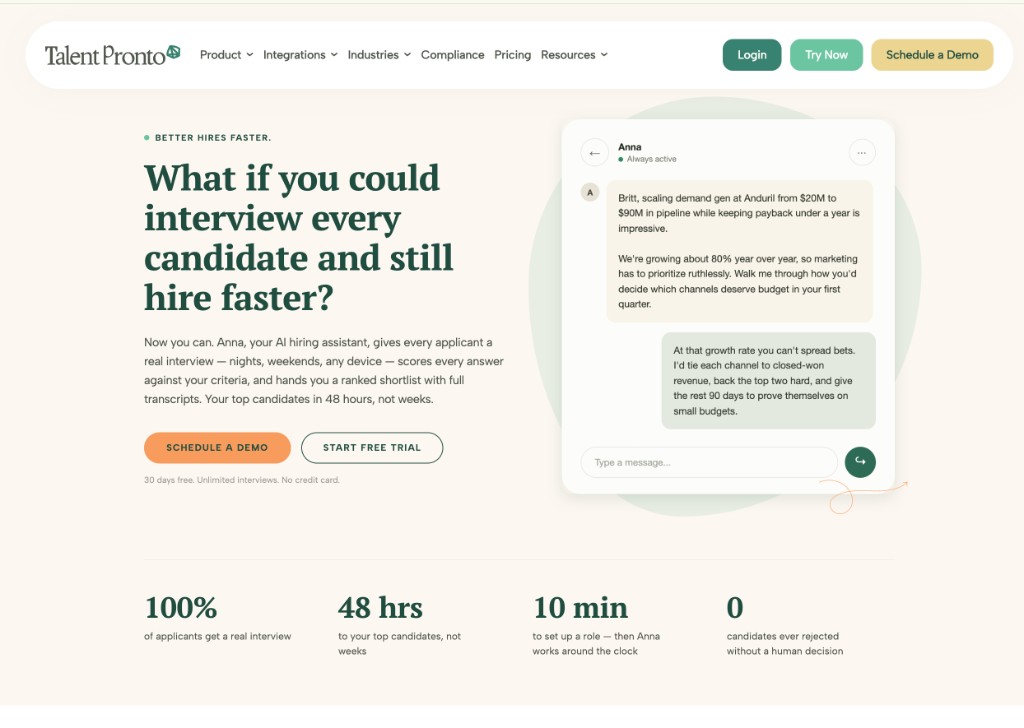
If your bottleneck is figuring out who is actually worth a human conversation, start here. Talent Pronto is built for the part of tech hiring that usually breaks first: early screening at volume. When a role draws hundreds of applicants, the teams that win are the ones that respond fast, ask consistent questions, and surface real signal before recruiters burn a week on resume triage.
Anna, Talent Pronto's AI hiring assistant, runs real screening conversations over web and mobile. She evaluates technical skills, soft skills, and culture fit, then returns structured scorecards your team can compare side by side. That is the difference between another intake form and a system that interviews every applicant so your recruiters only meet the people who clear the bar.
“In engineering hiring, the biggest challenge is separating candidates who can actually do the job from those who just look good on paper. Talent Pronto's AI interviews candidates on technical skills, soft skills, and culture fit, so hiring teams can spend their time on the people worth talking to instead of sorting through hundreds of resumes.”
– Andrew Myers, VP of Engineering, Instant
Most recruiting platforms help you organize candidates. Talent Pronto helps you qualify them. Anna can screen around the clock, answer candidate questions from employer-provided information, and move qualified people into scheduling or handoff without waiting for a recruiter to clear their inbox. For lean tech teams and high-volume roles, that shifts recruiting work from triage to judgment.
It also holds up outside pure software hiring. Many tools in this category were built for venture-backed engineering orgs with clean ATS workflows. Talent Pronto works across tech, healthcare, manufacturing, hospitality, government, and professional services, where screening often has to combine role depth, behavioral signal, and compliance-related checks in one conversation.
Practical rule: If recruiters spend most of the day deciding who deserves a first conversation, the problem sits in screening operations, not sourcing.
Implementation is another advantage. Teams that need fast time to value usually do better with focused screening automation than with a year-long ATS overhaul. If you are mapping where screening should sit in the broader stack, this HR tech stack framework is a useful way to separate what belongs inside the ATS from what should sit beside it.
Pricing is quote-based, and results depend on setup quality. Define the role clearly, calibrate the rubric, and Anna scales a strong process. Leave knockout criteria vague, and you will scale noise instead.
Explore Talent Pronto at talentpronto.ai.
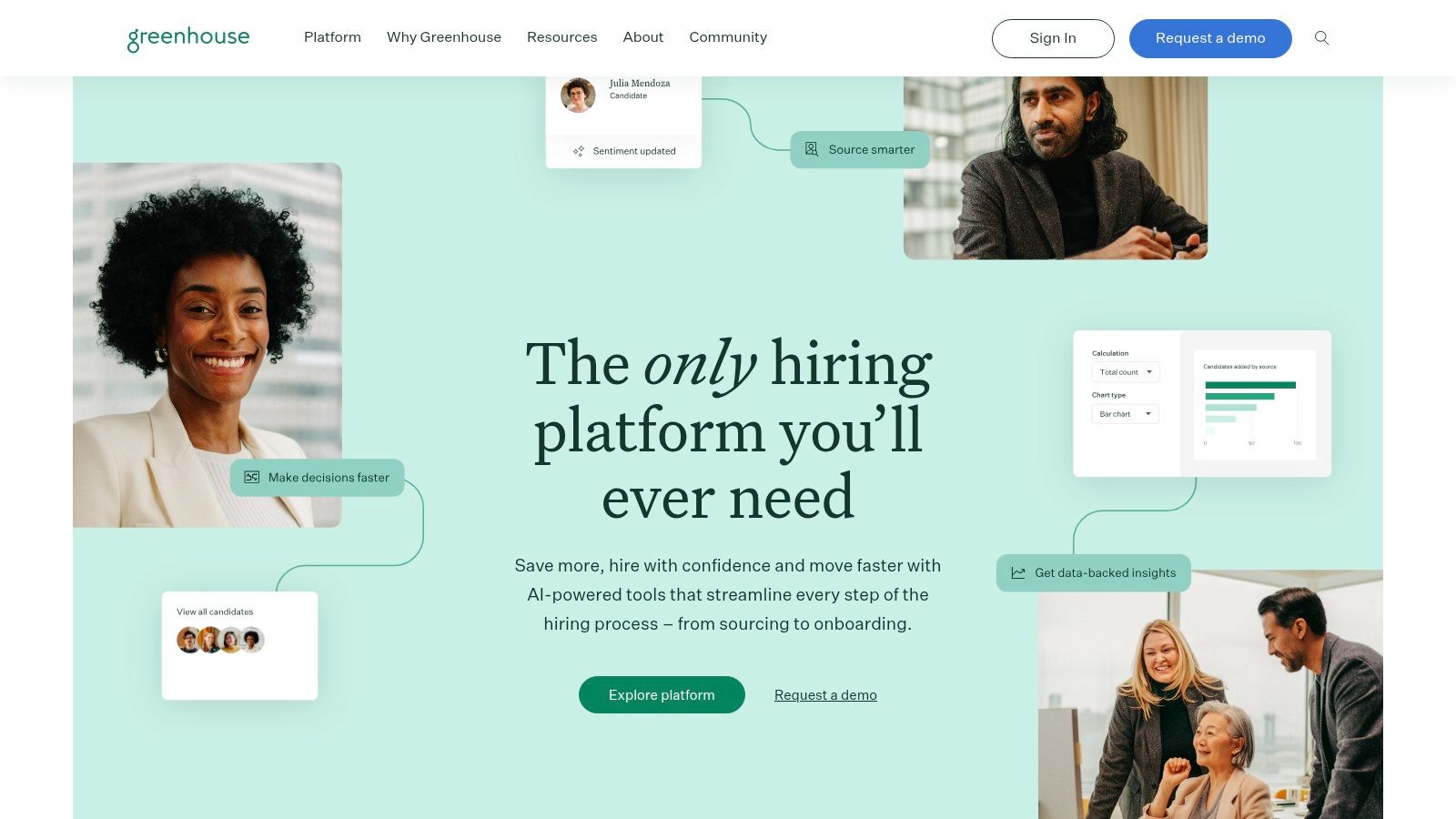
Greenhouse is the ATS a lot of companies already have, and for structured process it still holds up. Interview kits, scorecards, workflow controls, and a mature integration ecosystem help larger teams keep hiring consistent across departments. If what you need is a system of record with governance, Greenhouse can do that job.
What it is not is a modern screening layer. Greenhouse was built around the ATS model of the early 2010s. It organizes applicants well. It does not interview them. There is no native conversational screening, so early funnel work still lands on recruiters, forms, or a separate tool you bolt on.
Greenhouse is strongest when auditability and interviewer discipline matter more than speed-to-first-conversation. Hiring managers get clearer kits, leadership gets cleaner reporting, and recruiting ops can enforce a repeatable process.
Setup is the usual complaint. Greenhouse is big and clunky to configure. Getting stages, scorecards, permissions, and interviewer kits right often means weeks of enablement, not a quick rollout. Smaller teams regularly buy more process than they will use, then spend months fighting the admin surface.
It also shows its age. The product was built roughly 15 years ago around resume pipelines and structured interviews, not always-on AI conversations. If your bottleneck is qualifying hundreds of applicants before a human ever talks to them, Greenhouse alone will not solve that. You will need something like Talent Pronto sitting beside it for conversational screening.
Greenhouse is a solid system of record. It is a weak answer if your real problem is early screening at volume.
Pricing is quote-based and often hard to justify for smaller teams. If inconsistent process is your only pain, Greenhouse can help. If speed and conversational screening are the pain, look elsewhere first.
Find Greenhouse at Greenhouse recruiting software.
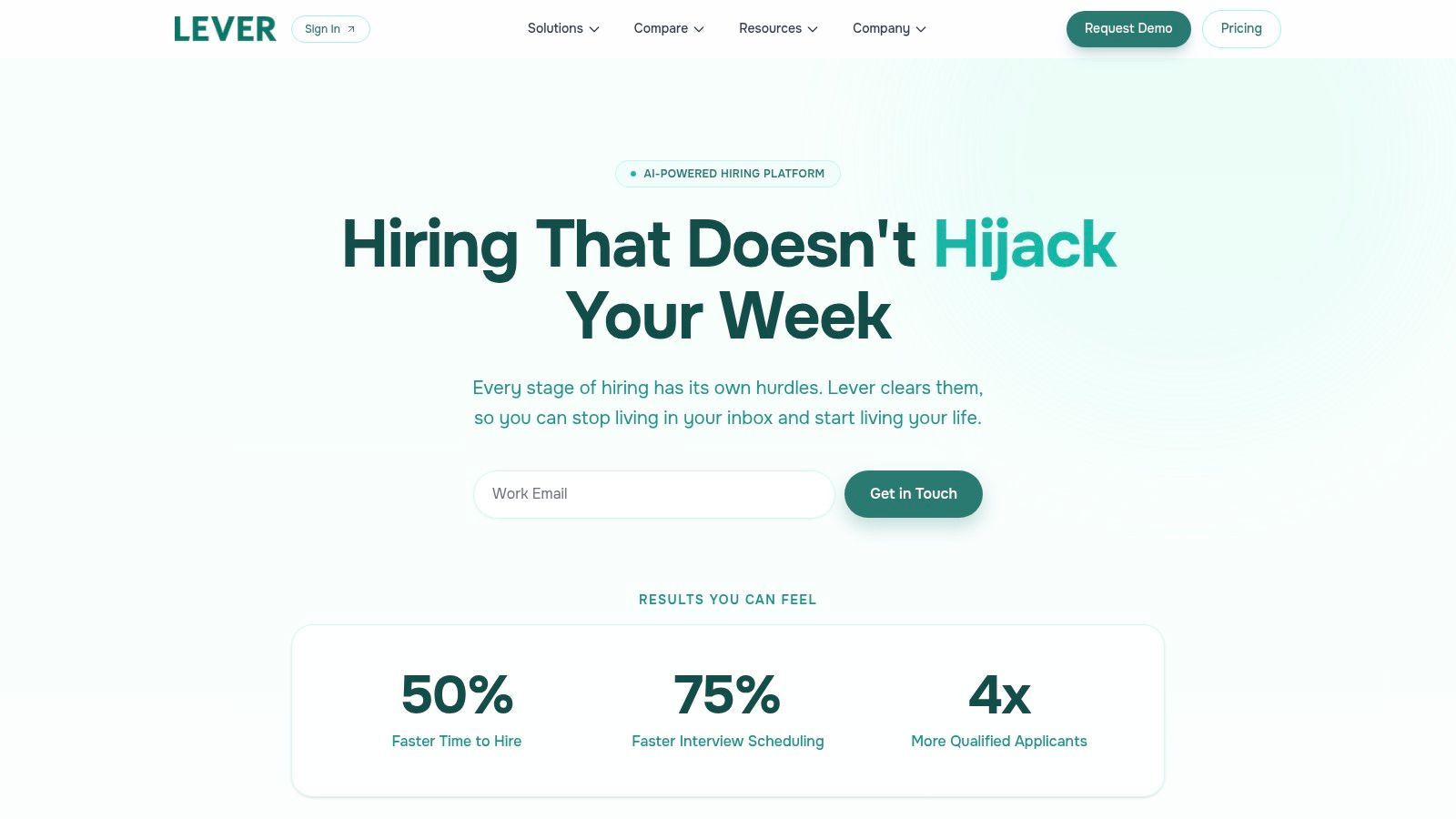
LeverTRM is for teams that don't want sourcing and applicant tracking split across separate systems. Its biggest appeal is that ATS and CRM live together, so recruiters can source, nurture, schedule, and convert candidates in one workflow instead of stitching updates across tools.
That matters most when your hiring motion depends on sustained relationship-building, not just processing inbound applicants. Tech companies hiring engineers, product managers, or data talent often need repeated outreach and long-tail nurture. Lever was built for that reality.
The CRM side is the story here. Sequencing, follow-ups, job distribution, and candidate nurture are native parts of the platform, which reduces tool sprawl and gives recruiters a better historical view of every relationship.
A lot of teams underestimate the operational benefit of that consolidation. The broader IT recruitment market is projected at USD 214.05 billion in 2026, reaching USD 416.26 billion by 2035, and that scale is one reason unified systems keep gaining traction. The more technical hiring you do, the harder it gets to manage pipelines in disconnected point solutions.
The downside is familiar. Pricing is customized, and more advanced reporting or automation often requires admin attention. If your team lacks an owner for configuration and analytics, Lever can become underused.
You can explore it at LeverTRM by Lever.
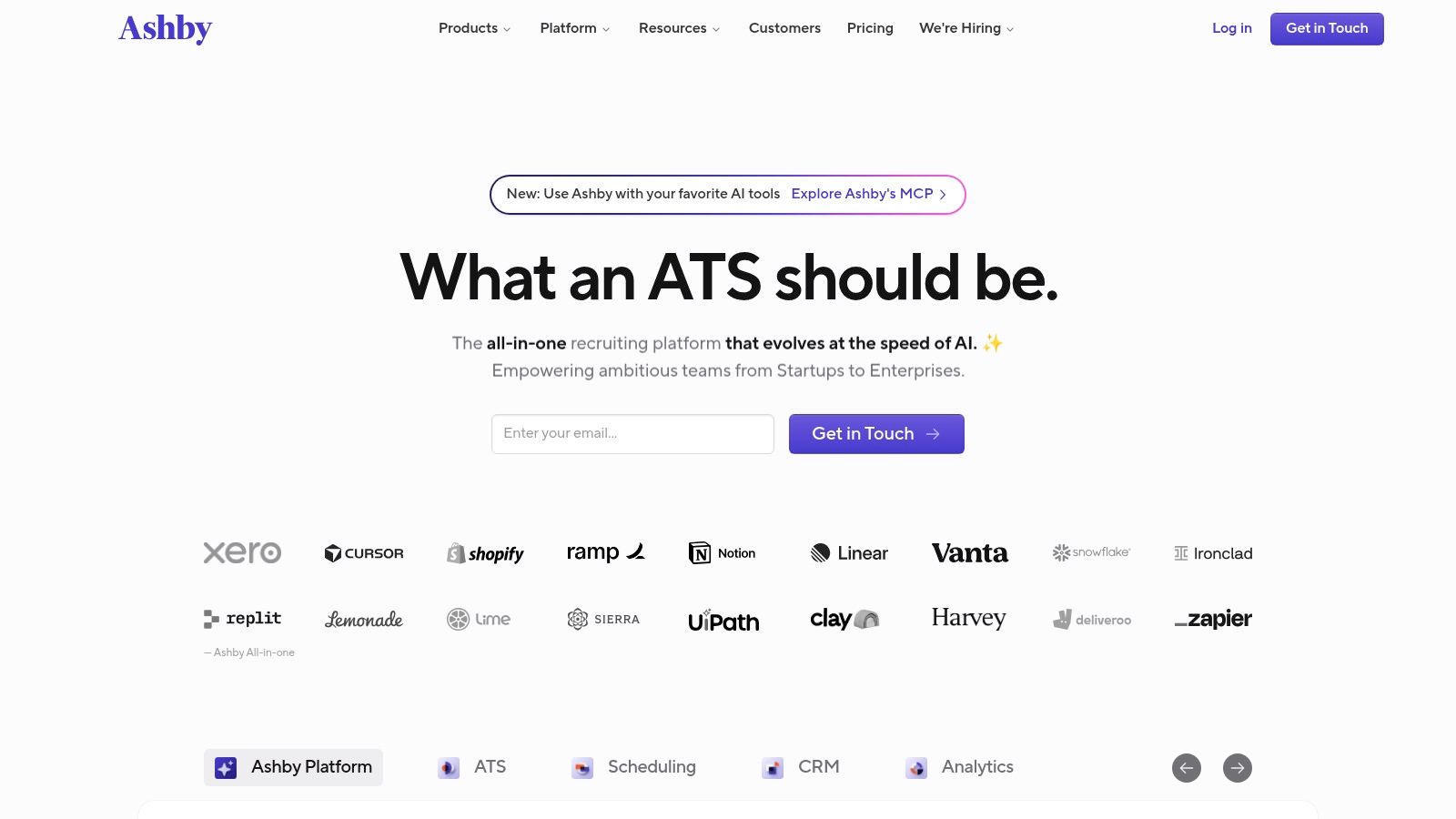
Ashby is a popular modern ATS for startups and growth-stage companies, and for good reason on the surface. It packages applicant tracking, structured interviews, scheduling, and analytics in a cleaner interface than older enterprise systems. If you are moving off spreadsheets or a bare-bones ATS, Ashby can feel like a real upgrade.
That said, it is still an ATS. It helps you organize candidates and run a process. It does not replace the early interview. There is no native conversational screening, so when volume spikes, recruiters are still doing first-pass triage, chasing calendars, and relying on forms or a separate product to qualify people before a human conversation.
Analytics are Ashby's strongest card. Lean teams without a dedicated recruiting ops person get useful dashboards out of the box, and Ashby also sells analytics as a standalone product. Scheduling and self-booking help cut some coordination drag.
If you already run Ashby and need a real screening layer on top, Talent Pronto's Ashby integration is the cleaner path than trying to stretch the ATS into something it is not.
Ashby's marketing story is "modern ATS without the baggage." In practice, you still inherit ATS problems: setup and stage design take work, reporting only helps after you have clean process data, and pricing climbs as seats and add-ons stack up. It is lighter than Greenhouse, but it is not lightweight when you are trying to interview every applicant at volume.
Ashby is a nicer system of record for scaling startups. It is not a screening engine.
Pricing is quote-based and can get expensive as the team grows. Useful as a core ATS. Incomplete if your real bottleneck is qualifying applicants before they hit a recruiter's calendar.
See the platform at Ashby recruiting software.
Hired isn't an ATS. It's a marketplace, and that distinction matters. You use Hired when your internal system of record is fine but your top of funnel for technical roles needs help now. The platform focuses on engineering, data, product, and design talent, with employer search, matching, messaging, and upfront salary expectations built into the experience.
That transparency around compensation is more useful than it sounds. A lot of wasted recruiter effort happens after a strong first conversation, when compensation misalignment finally surfaces. Hired helps reduce that friction earlier.
Hired works best as a supplement, not a full-stack replacement. For teams that already have an ATS and process they trust, a curated candidate marketplace can shorten the path to qualified conversations for hard-to-fill roles.
The weakness is just as clear. If you're hiring broadly across operations, customer support, healthcare, manufacturing, or non-technical functions, Hired becomes much less central. It's a focused tool for a focused problem.
Pricing varies and isn't fully public, so cost modeling takes a call. Explore it at Hired talent marketplace.
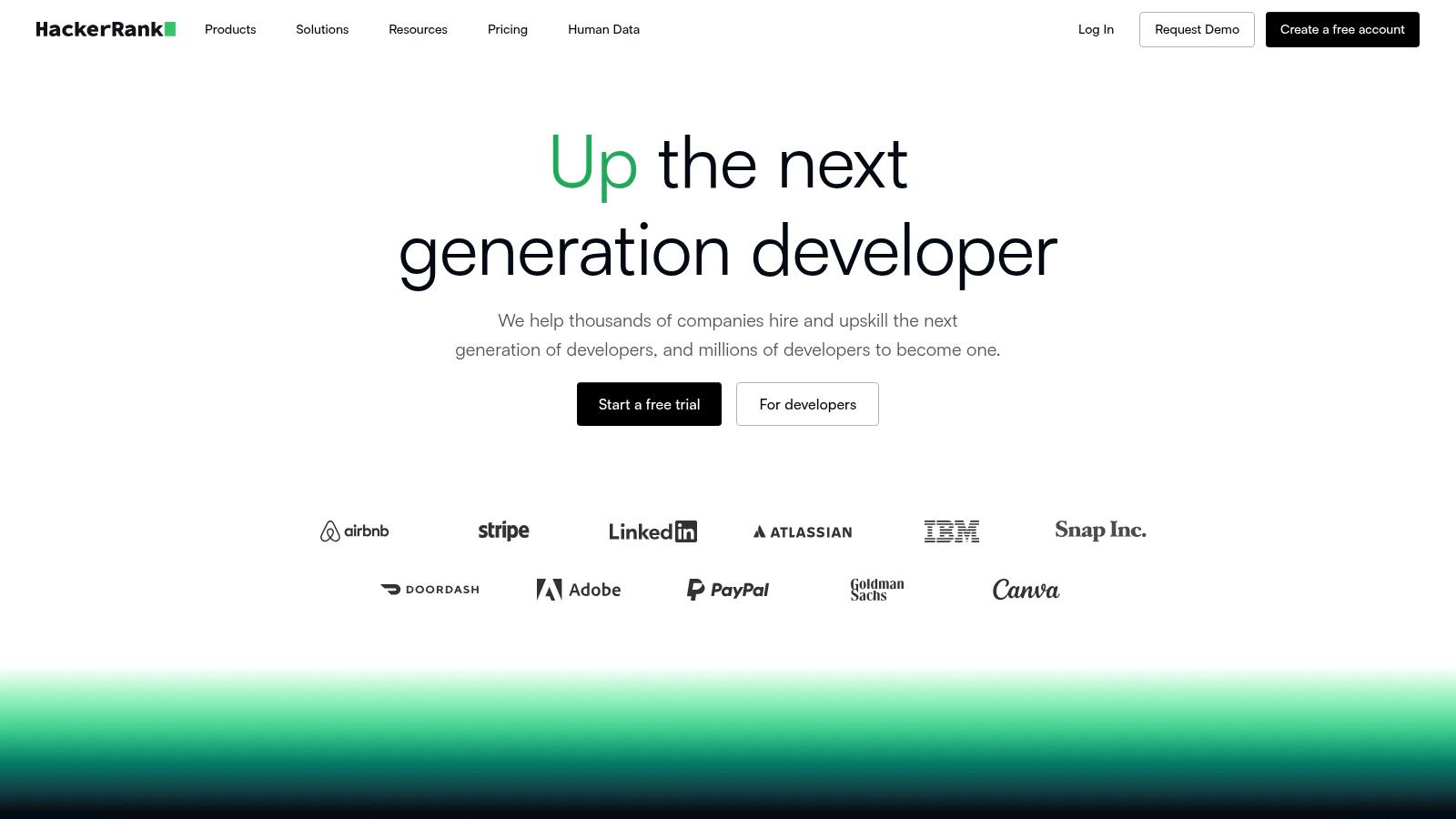
HackerRank solves a narrow but important problem. It helps teams evaluate technical skills in a more consistent way than ad hoc resume review or unstructured engineer screens. For engineering and data hiring, that standardization is often the difference between a fair process and a noisy one.
The platform offers role-based assessments, a large question library, code playback, plagiarism checks, standardized scoring, and a collaborative live interview environment. If your internal technical screens vary wildly by interviewer, HackerRank can bring order quickly.
HackerRank is strongest at the screening step. It reduces interviewer load by giving teams an early skills signal before engineers spend time in live conversations. That's especially valuable when requisition volume spikes or the hiring team is already stretched.
For teams building take-homes or live screens, a vetted bank of technical interview questions helps avoid the common mistake of turning every assessment into a test-writing exercise.
There is a real caution here. The underserved question in many tech recruiting platforms is bias in AI or automated scoring. Existing guidance often skips the nuance that AI-driven scoring can perpetuate bias if not calibrated, while human-led outreach can outperform purely automated approaches in engagement. That doesn't make HackerRank a bad choice. It means your rubric design and review practices still matter.
Find it at HackerRank developer skills platform.
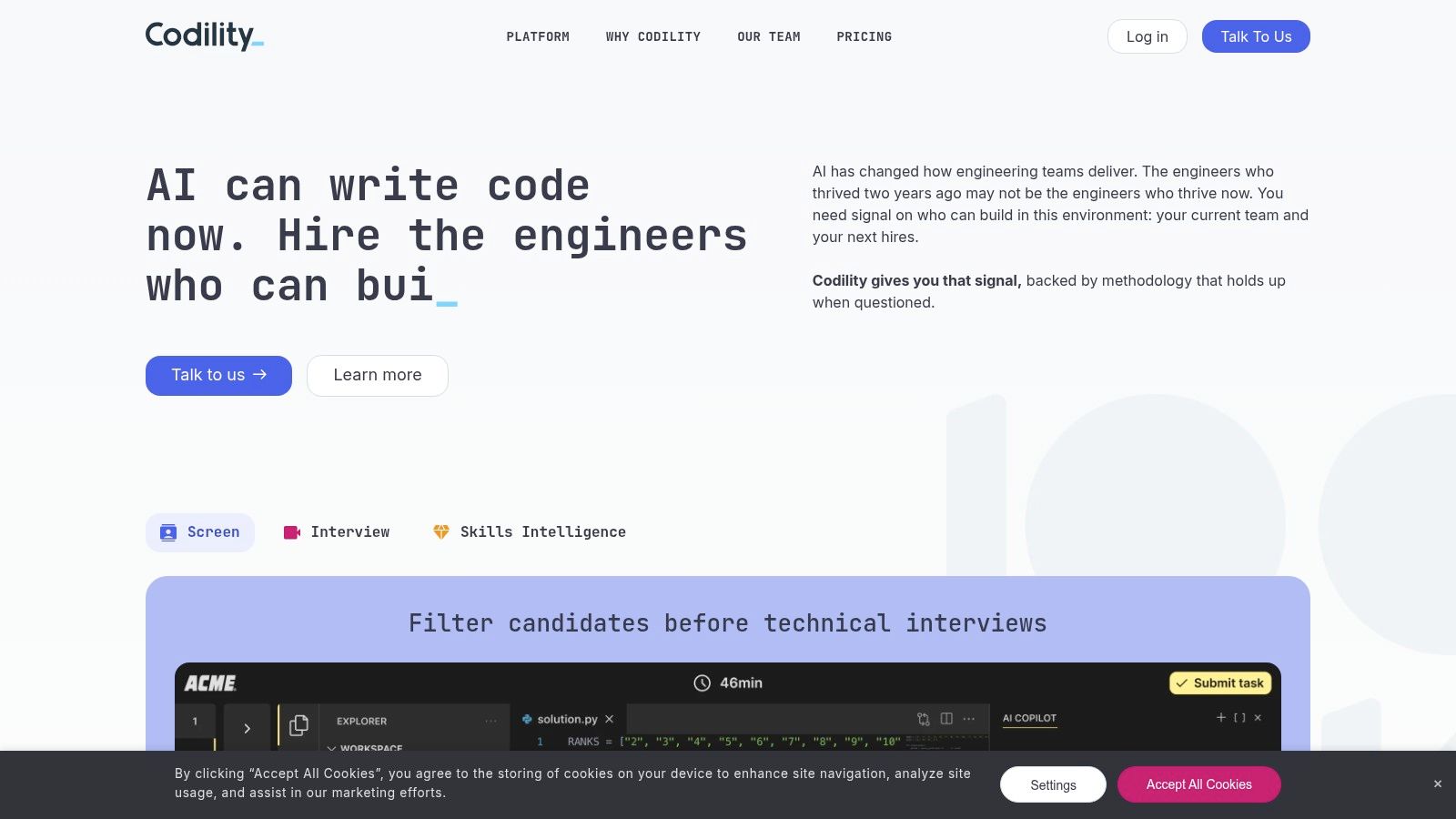
Codility sits in a similar category to HackerRank, but buyers often choose it for slightly different reasons. It's a mature technical assessment platform with coding tests, take-home tasks, virtual interviews, analytics, and enterprise-minded security and compliance positioning.
If your legal, security, or procurement teams scrutinize every vendor, Codility tends to play well in that environment. It also gives hiring teams flexibility to tailor assessments more closely to the role.
Codility works best when you need a configurable assessment layer that plugs into an existing recruiting stack. It's not trying to own sourcing, ATS workflows, or candidate nurture. It's trying to make technical evaluation more reliable and easier to administer.
The biggest mistake I see with tools in this category is over-customization. User-created tasks can be excellent, but they can also be poorly calibrated, too long, or unrelated to the actual job. When that happens, candidate experience drops fast.
Pricing is mostly quote-based. See Codility technical hiring platform.
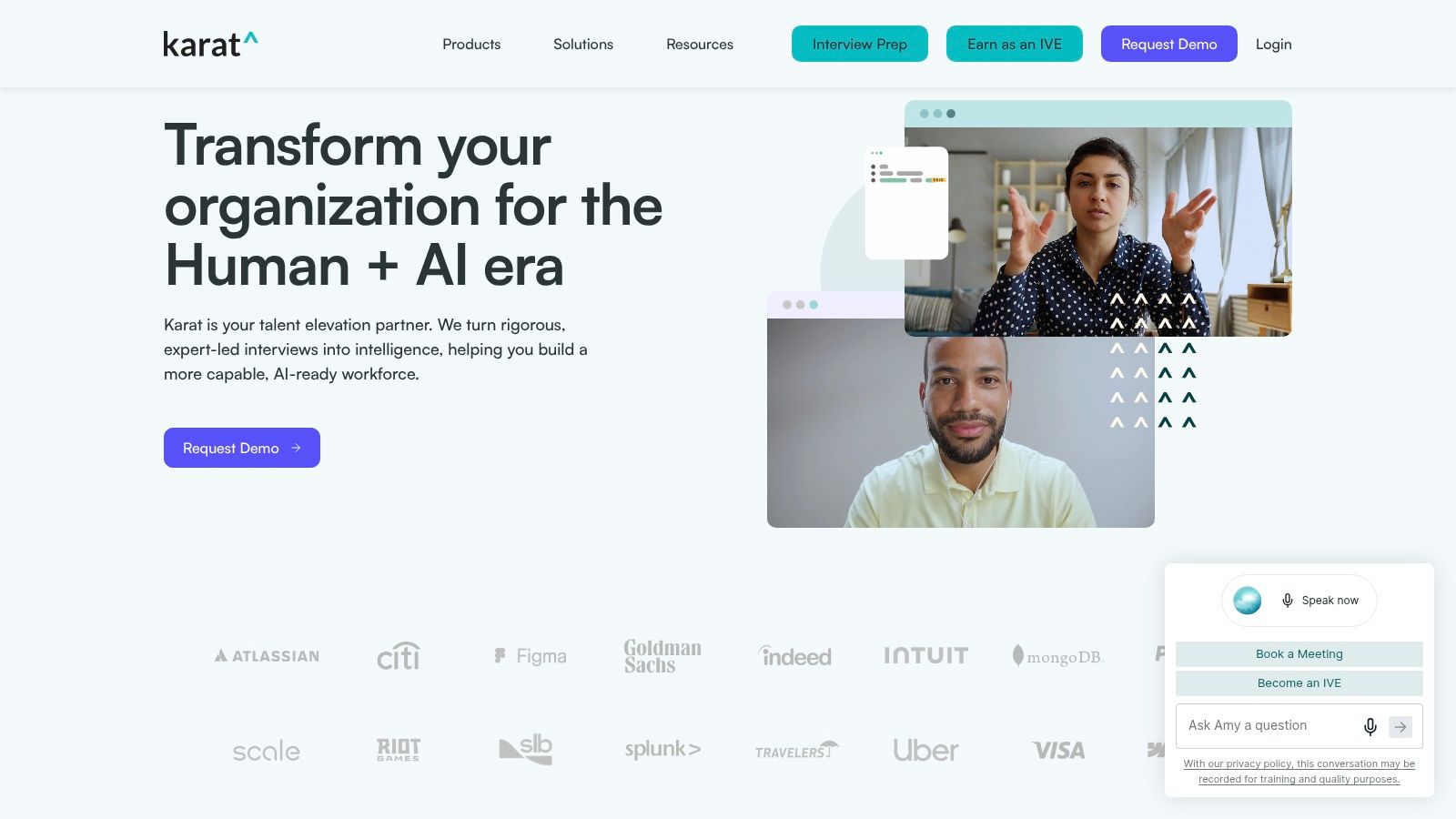
Karat is different from most of the list because it's a service-heavy model, not just software. The pitch is straightforward. Instead of asking your own engineers to run every early technical interview, Karat supplies trained interview engineers who conduct structured live interviews and return calibrated scoring.
That model is valuable when internal engineering time is expensive, interview quality is inconsistent, or candidate volume outpaces interviewer capacity. It's one of the few options that directly addresses the hidden cost of tying senior developers up in repetitive screens.
Karat is often the right answer when interview consistency matters more than internal ownership of every screen. Candidates usually get a more guided, human experience than they do in a fully automated test-only flow, and hiring managers get structured evaluations rather than a pile of subjective notes.
If your strongest engineers are spending too much time on first-round screens, the real cost isn't just recruiter delay. It's lost engineering capacity.
The trade-off is cost. Karat's services model can be premium-priced, so it's not ideal for small teams with occasional hiring. Learn more at Karat interviewing platform.
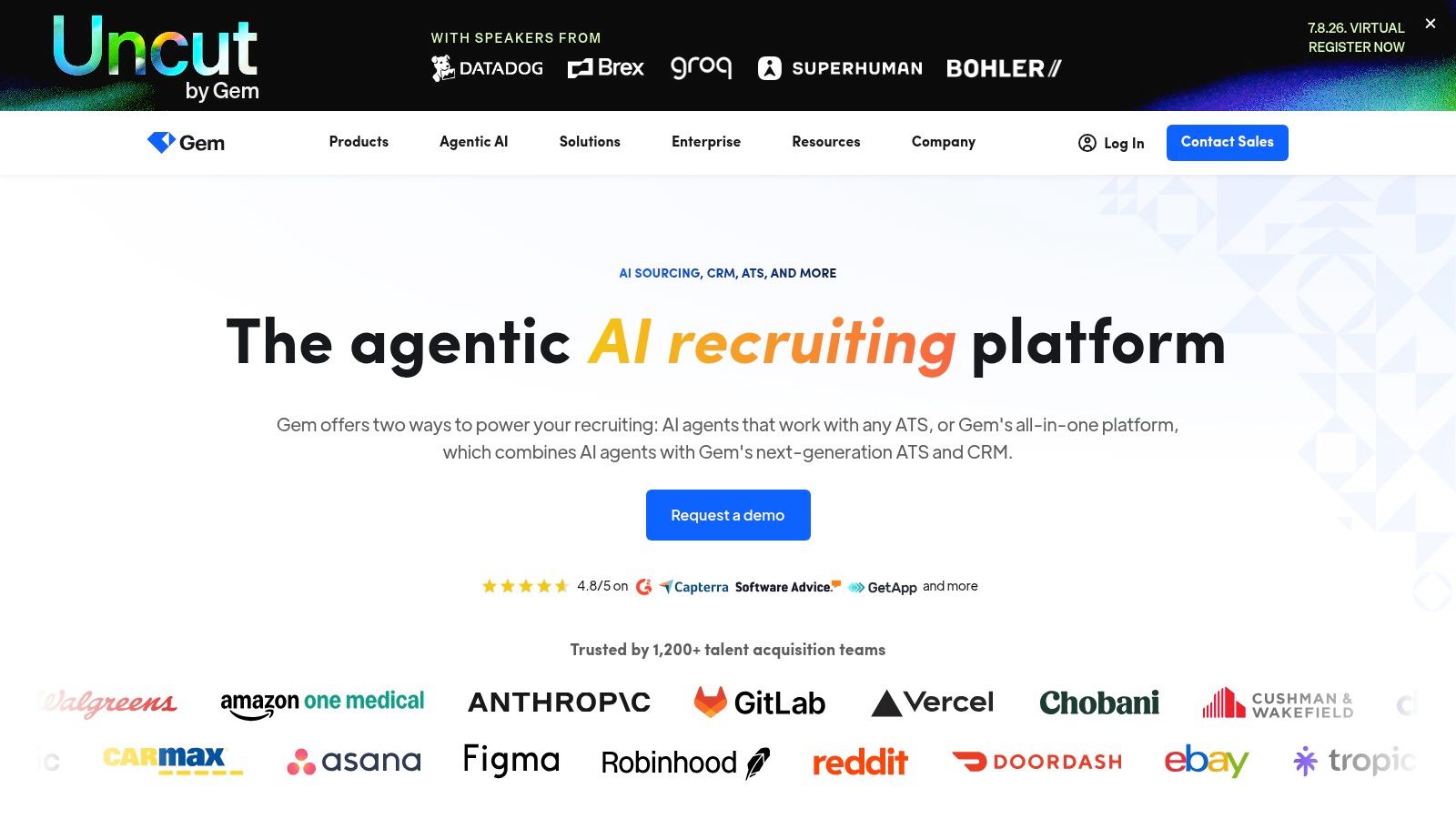
Gem started as a recruiting CRM, and that DNA still shows. It's strongest when your team runs outbound sourcing, multi-touch nurture, and talent pipeline management across long hiring cycles. Over time, it has expanded into a broader suite with ATS capabilities, sourcing automation, scheduling, and analytics.
For tech companies where passive talent matters, that's compelling. Recruiters need enriched profiles, sequencing, and visibility into engagement patterns. Gem gives them a more marketer-like operating model for recruiting.
Gem is particularly useful when your team doesn't want to abandon an existing ATS immediately. You can use it alongside a current system or adopt more of the suite over time. That flexibility lowers switching risk and gives recruiting leaders room to modernize in phases.
The market trend supports why tools like Gem keep expanding. The global Internet Recruiting Platform Market is projected to grow from USD 42.05 billion in 2026 to USD 100.31 billion by 2035, reflecting the broader shift toward technology-driven sourcing and matching.
Like most platforms in this tier, advanced bundles are quote-based. And if you adopt the full suite, change management becomes part of the project. Explore it at Gem recruiting platform.
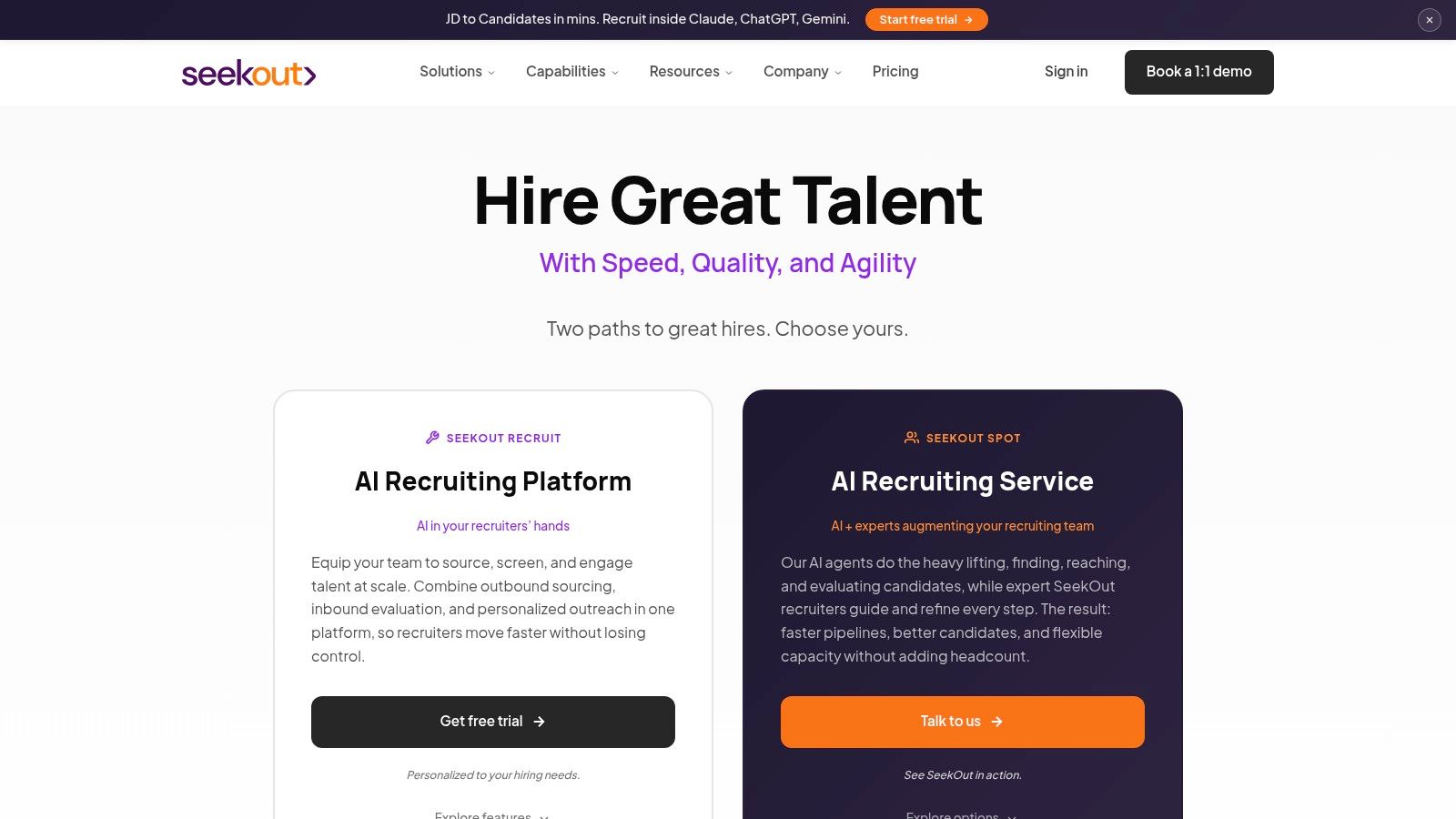
SeekOut is one of the strongest sourcing and talent intelligence platforms for teams that need both outbound reach and better use of the candidates they already have. The core value is broad profile search, advanced filtering, rediscovery of past applicants, market insights, and an AI screener called Sam for structured early-stage interviews.
That combination matters because many companies don't have just one funnel problem. They have two. They need to find new talent, and they need to stop ignoring qualified people already sitting in the ATS.
SeekOut's rediscovery angle is especially practical. Most organizations have silver medalists, prior finalists, and dormant applicants who were good but not right for a past opening. Pulling those people back into consideration is often faster than building a net-new pipeline.
This kind of layered workflow fits broader market direction. Cloud deployments accounted for 68.73% of the recruitment software market share in 2025, and talent-analytics tools are projected to grow at a 9.82% CAGR through 2031. That tells you where buying priorities are going. Integrated data access, scalable delivery, and analytics are no longer optional.
One caution is commercial complexity. Advanced capabilities may sit behind add-ons or enterprise tiers, so seat and usage economics need close review. Visit SeekOut talent intelligence platform.
| Product | Core screening & automation | Candidate experience & quality | Unique selling points | Target audience | Pricing & value |
|---|---|---|---|---|---|
| Talent Pronto 🏆 | 24/7 conversational AI screens (web & mobile), role-aware Q‑sets, resume eval, auto-scheduling | ★★★★★ Mobile-first, consistent scorecards | 🏆 ✨ Agentic AI probes behavior, customizable rubrics, fast 1–3 week implement, ATS/HRIS integrations | 👥 High-volume & hard-to-fill roles; healthcare, retail, hospitality, gov, tech | 💰 Quote-based; plans with analytics & account management |
| Greenhouse | Structured hiring ATS: interview kits, scorecards, workflows | ★★★☆☆ Solid process, heavy setup | ✨ Governance & integrations; ⚠ no native conversational screening; clunky to configure | 👥 Mid→enterprise teams that already run on process | 💰 Quote-based; costly and slow for smaller teams |
| Lever (LeverTRM) | Unified ATS + CRM, sequencing, automation for nurture | ★★★★☆ Good pipeline management & scheduling | ✨ Reduces tool sprawl with CRM+ATS in one system | 👥 Teams needing sourcing + CRM workflows | 💰 Quote-based; scales with seats |
| Ashby | Modern ATS with scheduling and flexible analytics | ★★★☆☆ Cleaner UX than legacy ATS tools | ✨ Strong reporting; ⚠ still an ATS, no native conversational screening | 👥 Startups & scale-ups needing a better system of record | 💰 Quote-based; climbs with seats/add-ons |
| Hired | Curated marketplace, AI matching, upfront salary data | ★★★★☆ High-intent, vetted tech candidates | ✨ Salary transparency, curated candidate marketplace | 👥 Tech hiring (engineering, data, product, design) | 💰 Subscription and/or success fees; quote-based |
| HackerRank | Role-based coding tests, live IDE, code playback & plagiarism checks | ★★★★☆ Proven for engineering assessments at scale | ✨ Large question library, standardized scoring & analytics | 👥 Engineering & data teams needing technical screening | 💰 Quote-based; assessment pricing per usage |
| Codility | Coding tests, take-home tasks, live interviews, enterprise security | ★★★★☆ Secure, customizable assessments | ✨ Compliance-ready (enterprise security), ATS integrations | 👥 Enterprise technical hiring teams | 💰 Quote-based; enterprise tiers |
| Karat | Interviewing-as-a-service: live, trained interview engineers & calibrated scoring | ★★★★☆ Strong candidate experience; human-run interviews | ✨ Outsourced calibrated interviews to save internal engineer time | 👥 High-volume engineering teams wanting consistent live interviews | 💰 Premium, services-based pricing |
| Gem | Recruiting CRM with AI-assisted sourcing, sequencing & analytics | ★★★★☆ Improves outreach response & pipeline conversion | ✨ Consolidates sourcing CRM, AI messaging, and analytics | 👥 Outbound sourcing teams & talent marketers | 💰 Quote-based; add-ons for full-suite features |
| SeekOut | Sourcing & talent intelligence + "Sam" AI screener & rediscovery | ★★★★☆ Powerful sourcing + standardized AI screening | ✨ 1B+ profiles, ATS rediscovery, market insights & Spot delivery | 👥 Teams blending outbound sourcing with high inbound volume | 💰 Seat/add-on pricing; enterprise options |
A hiring team can buy the wrong platform for the right reasons. The demo looks polished, the feature list checks every box, and six months later recruiters are back in spreadsheets because the system does not match how the company hires.
The better question is not which platform has the most features. It is which platform fits your hiring model, team maturity, and bottleneck. A startup hiring its first ten engineers usually needs speed, founder visibility, and low admin overhead. A large enterprise often needs approval controls, reporting, integration depth, and consistency across multiple business units. High-volume teams need throughput and standardized screening. Specialized technical teams need stronger assessment design and interviewer calibration.
That is the lens that matters.
If screening volume is overwhelming the team, the priority is reducing manual review without losing consistency. That is where conversational screening matters more than another ATS. If process discipline is the issue and you already have recruiting ops capacity, Greenhouse can still be a workable system of record. If the team wants ATS and CRM in one system, LeverTRM makes more sense. If outbound sourcing drives hiring, Gem and SeekOut are stronger bets. If the hard part is technical evaluation, HackerRank, Codility, and Karat each solve a different problem, from automated testing to live interview execution.
AI adds value in narrow, practical ways. It can handle first-pass screening, scheduling, outreach support, and workflow triggers. It does not replace recruiter judgment, hiring manager calibration, or a defensible decision process. Teams get the best results when automation handles repeatable work and people stay close to evaluation criteria, candidate experience, and final decisions.
Integration fit decides adoption more often than vendors admit. Some employers run modern ATS stacks. Others still depend on HRIS-heavy environments such as Paylocity, ADP, or Workday, where workflow gaps create extra admin work and slow rollouts. A platform that looks strong in a demo can become expensive fast if recruiters have to patch together manual steps.
Choose the platform your team will use effectively. It should speed up review cycles, improve signal quality for hiring managers, and support a process you can explain when decisions are questioned. That is what separates software you bought from infrastructure your team relies on.
If your team is buried in screening, follow-up, and side-by-side candidate comparisons, Talent Pronto is worth evaluating based on the use case outlined earlier. The strongest fit is for teams that need always-on applicant engagement, structured screening, and automation that reduces recruiter workload without giving up control.

Talent Pronto is an AI-powered hiring platform built around Anna, our intelligent AI that conducts 24/7 conversational screening, evaluates candidates against specific job requirements and compliance needs, and schedules interviews. Run everything on the Talent Pronto ATS, our all-in-one applicant tracking system with a branded careers site and Anna built in, or keep your existing ATS and let Anna integrate with Greenhouse, Ashby, iCIMS, Jobvite, Lever, Oracle, and more. Either way, we help organizations reduce time-to-hire and build stronger teams.