Master soft skills assessment to hire better. Cover methods, scoring, compliance, & ATS integration for data-driven decisions in 2026.
Most hiring teams say soft skills matter. Then they evaluate them with loose interview notes, inconsistent follow-up questions, and a lot of intuition dressed up as experience. That gap is expensive.
The problem is bigger than interview quality. It affects who gets shortlisted, who gets rejected too early, and which managers trust the process. 92% of talent professionals and hiring managers say soft skills matter as much or more than hard skills, yet many still struggle to measure them objectively, according to soft skills hiring data summarized here. If your process depends on “good communicator” or “strong presence” without a shared definition, you don't have an assessment system. You have opinions.
A strong soft skills assessment process doesn't try to make human judgment disappear. It makes judgment more disciplined. It defines what matters for the role, captures evidence the same way every time, and turns early-stage screening into a structured workflow instead of a guessing exercise.
Conclusion Building a Fairer and More Effective Hiring Engine
Soft skills usually fail in hiring for one simple reason. Teams discuss them abstractly and assess them informally.
A recruiter might look for polish. A hiring manager might care about conflict handling. A panel interviewer might react to confidence, even when the role really needs listening, judgment, and follow-through. By the end of the process, everyone says they're assessing communication or teamwork, but each person means something different.
That creates three predictable problems:
Practical rule: If two interviewers can't explain the same score using the same behavioral evidence, the score isn't reliable.
This is why soft skills assessment has to start earlier than the final interview. In high-volume hiring, waiting until a live conversation to evaluate judgment, empathy, adaptability, or collaboration creates unnecessary waste. You invest time in candidates before you know whether they have the interpersonal foundation the role requires.
The better approach is structured from the start. Define the soft skills tied to success in the role. Choose the right screening method for volume and context. Use scoring rubrics that force evidence. Then store those results in the systems your team already uses so every reviewer sees the same record. That's how hiring becomes more predictable, and fairer for candidates at the same time.
Technical skill gets people into the workflow. Soft skills determine whether they can operate inside it.
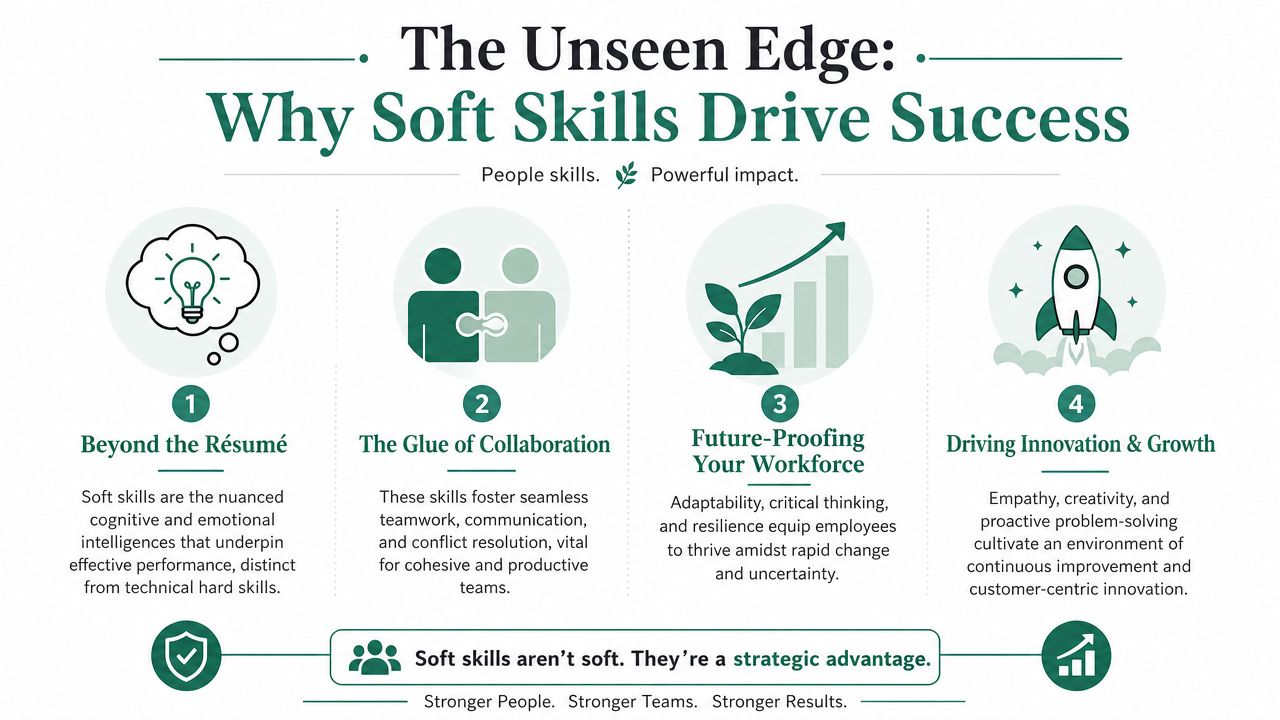
Think of hard skills as tools and soft skills as the operating system. A person may know the software, the process, or the technical domain. But if they can't handle ambiguity, explain trade-offs, respond well to feedback, or build trust across functions, the technical skill doesn't travel very far.
That matters more in real workplaces than job descriptions usually admit. Most work is interdependent. Product managers need influence without authority. Nurses need composure and communication under pressure. Manufacturing supervisors need clear direction and conflict handling. Customer-facing teams need judgment when scripts stop working.
Soft skills also shape team efficiency in ways managers notice quickly. Strong collaborators reduce friction. Clear communicators shorten handoff errors. Adaptable employees need less rescue when priorities change. None of that is “extra.” It's part of execution.
Employer demand reflects that shift. More than 40% of all skills required by employers globally are soft skills, and that demand rose from 42.7% in 2018 to 46.0% in 2021, based on global labor market analysis published in this research article.
That trend changes how hiring teams should think about competitiveness. The old model treated soft skills as a tie-breaker between technically qualified candidates. The current reality is different. In many roles, soft skills are part of baseline qualification because work now depends on communication, cross-functional coordination, adaptability, and learning speed.
A practical hiring consequence follows from that. You can't bolt soft skills assessment onto the end of the process and expect good outcomes. If these capabilities represent a large share of what employers need, your screening system has to evaluate them early enough to affect who moves forward.
Soft skills don't just improve culture. They determine whether technical ability translates into team performance.
When companies get this right, they don't just hire “nicer” people. They hire people who can handle customers, managers, peers, and change without dragging the organization into avoidable friction.
Most companies don't need one perfect assessment method. They need the right mix for role complexity, applicant volume, and stage of the funnel.
The mistake is using a high-depth method where speed matters, or a high-scale method where nuance matters. A practical soft skills assessment design starts with trade-offs.
| Method | Best For | Scalability | Candidate Experience | Bias Risk |
|---|---|---|---|---|
| Behavioral Interviews | Final-stage evaluation for complex roles | Low | Strong when interviewers are trained | Medium without structure |
| Situational Judgment Tests | Standardized early or mid-stage screening | Medium to high | Generally clear and efficient | Lower when scoring is standardized |
| Work Simulations | Roles where behavior can be observed directly | Low to medium | Strong when realistic and job-relevant | Lower if rubric-driven |
| Psychometric Tools | Broad trait mapping across larger pools | High | Mixed, depends on clarity and length | Medium, depends on validation and interpretation |
| Conversational AI Screening | Early-stage, high-volume hiring | High | Strong for mobile-first and multilingual applicants | Lower when criteria and prompts are standardized |
Behavioral interviews are still one of the best tools for depth. They let interviewers probe for evidence, ask follow-ups, and understand context. Done well, they reveal whether a candidate can describe what they did, why they did it, and what they learned.
Done poorly, they become storytelling contests. Some candidates are polished but thin on substance. Others are reflective and capable but less practiced in delivery. Structure matters a lot here. Teams that want to reduce hiring bias should standardize prompts, score against defined behaviors, and limit improvisation.
Behavioral interviews work best late in the funnel. They don't scale well when applicant volume is high, and they consume recruiter and manager time fast.
Situational judgment tests, or SJTs, present candidates with work-relevant scenarios and ask them to choose or rank likely responses. They are useful when you want a standardized look at judgment, prioritization, empathy, or decision style without scheduling a live interview.
Their strength is consistency. Every candidate sees the same scenario and the same scoring framework. That makes comparison easier across a large pool. Their weakness is realism. A candidate can often recognize the “good” answer without proving they'd act that way on the job.
SJTs are most useful when paired with another method that captures behavior more directly. On their own, they're a good filter. They are rarely enough for a final decision.
Work simulations are the closest thing to seeing behavior before hiring. If the role depends on stakeholder communication, conflict resolution, prioritization, or customer handling, a simulation can reveal far more than a résumé or interview claim.
Examples include:
Simulations are strong because they create evidence. They are harder to fake, and they make scoring more concrete. The trade-off is effort. Designing good simulations takes time, and running them across a large candidate pool isn't widely practical.
Psychometric tools help when you need broad coverage at scale. They can surface patterns in communication style, interpersonal orientation, decision-making, and other traits that matter in role fit.
Some instruments are more grounded than others. The key question isn't whether a tool looks scientific. It's whether the output maps to the actual behaviors your role requires. A validated example is the Multiple Soft Skills Assessment Tool, which measures interpersonal skills, communication skills, decision-making style, and moral integrity, as described in this validation study on MSSAT.
That said, interpretation is where many teams go wrong. If the result can't be translated into a hiring rubric or interview focus, it becomes interesting but not operational. Psychometric data should sharpen decisions, not replace them.
For teams building an early funnel, this is also where a strong job fit assessment approach becomes useful. It ties behavioral signals to role criteria instead of leaving them as standalone personality observations.
Conversational AI screening is built for the bottleneck most talent teams face. Too many applicants, not enough recruiter time, and too little evidence before the shortlist is built.
The format matters. Instead of asking candidates to complete static application forms, the system asks structured questions in dialogue. That makes it easier to gather information on availability, communication, decision-making, and role-relevant behavioral indicators in a format candidates will complete. According to conversational screening performance data from Ringtime, AI agents achieve an 80% engagement rate compared to 30% for traditional application forms, and those conversations typically take 3–5 minutes.
This method is especially effective in high-volume environments where early-stage consistency matters more than long-form exploration. It doesn't eliminate the need for interviews or manager judgment. It improves who reaches that stage, and it creates structured records that are easier to compare.
The right early-stage assessment method isn't the one with the deepest insight. It's the one that gives you usable, comparable evidence before recruiter capacity runs out.
Most assessment systems fail at scoring, not questioning. Teams ask decent questions, then score answers with vague labels like “good communicator” or “not very collaborative.” That destroys comparability.
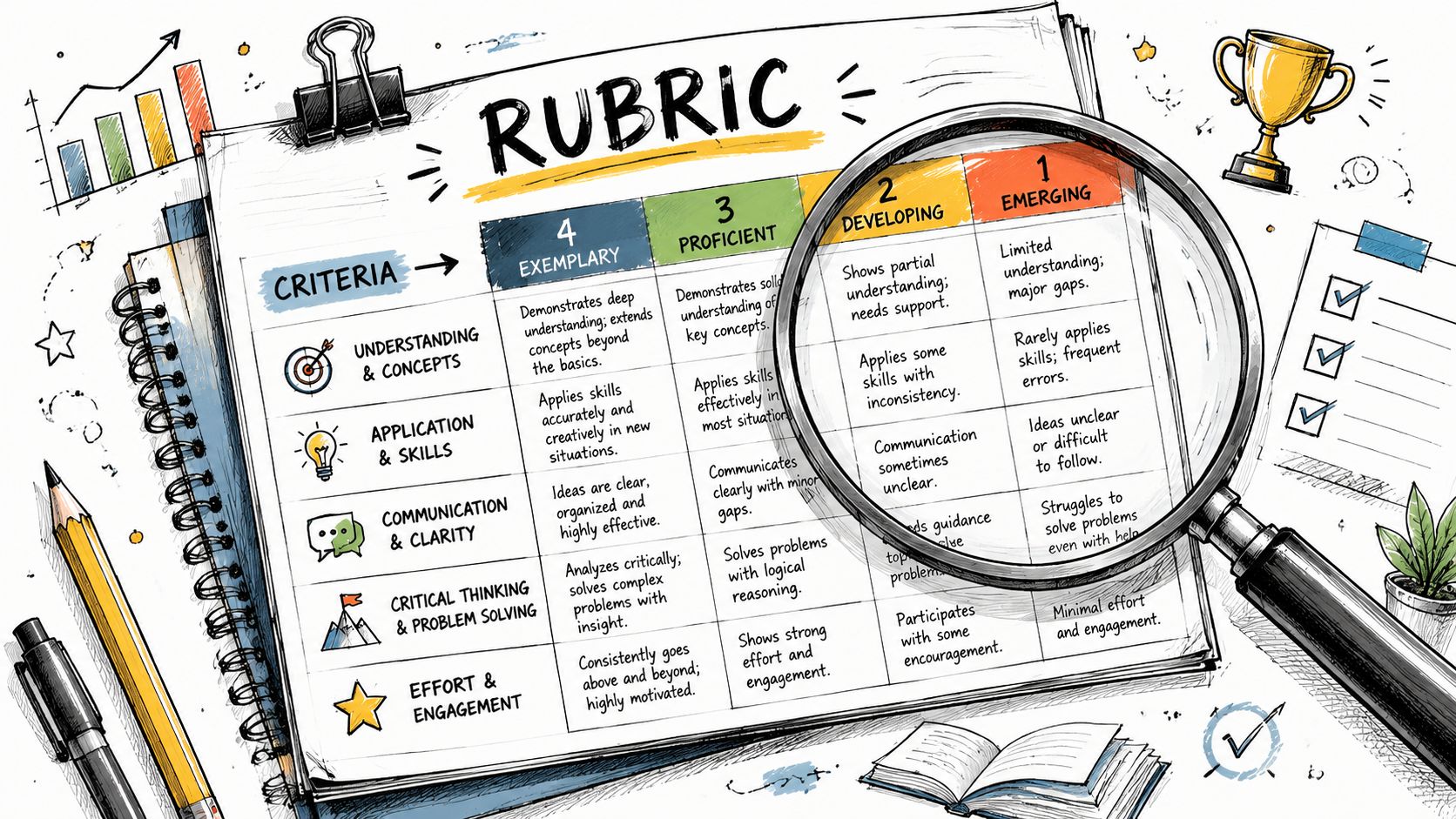
A good rubric defines what each score looks like in practice. Start with one soft skill, not ten. Collaboration is a good example because organizations frequently overrate and underdefine it.
Instead of asking whether someone is collaborative, define behaviors across levels:
Structured scales help. Research reviewing 136 studies found that Likert scales were used in 101 out of 109 articles that relied on scales, according to the Soft Skills Assessment Framework review. That matters because scales force consistency. They give teams a common scoring language instead of unstructured commentary.
A practical rubric usually includes:
One useful pattern is a five-point scale with behavior anchored at points one, three, and five. That leaves room for nuance without creating fake precision.
Even a strong rubric will drift if teams don't calibrate. One interviewer treats confidence as communication. Another rewards concision. A third values warmth. Soon the same candidate would get three different scores for the same answer.
Calibration fixes that through repetition and comparison. Before interviews begin, reviewers should meet and align on what each skill means for the role. During the process, they should compare sample answers and discuss why one response earned a stronger score than another.
A simple calibration routine works well:
This short explainer is worth watching if your team needs a clearer model for structured evaluation.
Score the behavior you observed. Don't score how much the candidate resembles someone who already works there.
The payoff from calibration isn't just fairness. It speeds up debriefs, improves hiring manager trust, and gives recruiters better feedback on why candidates moved or stalled.
The fastest way to improve soft skills assessment is to stop asking broad personality questions and start asking for specific behavior in context.
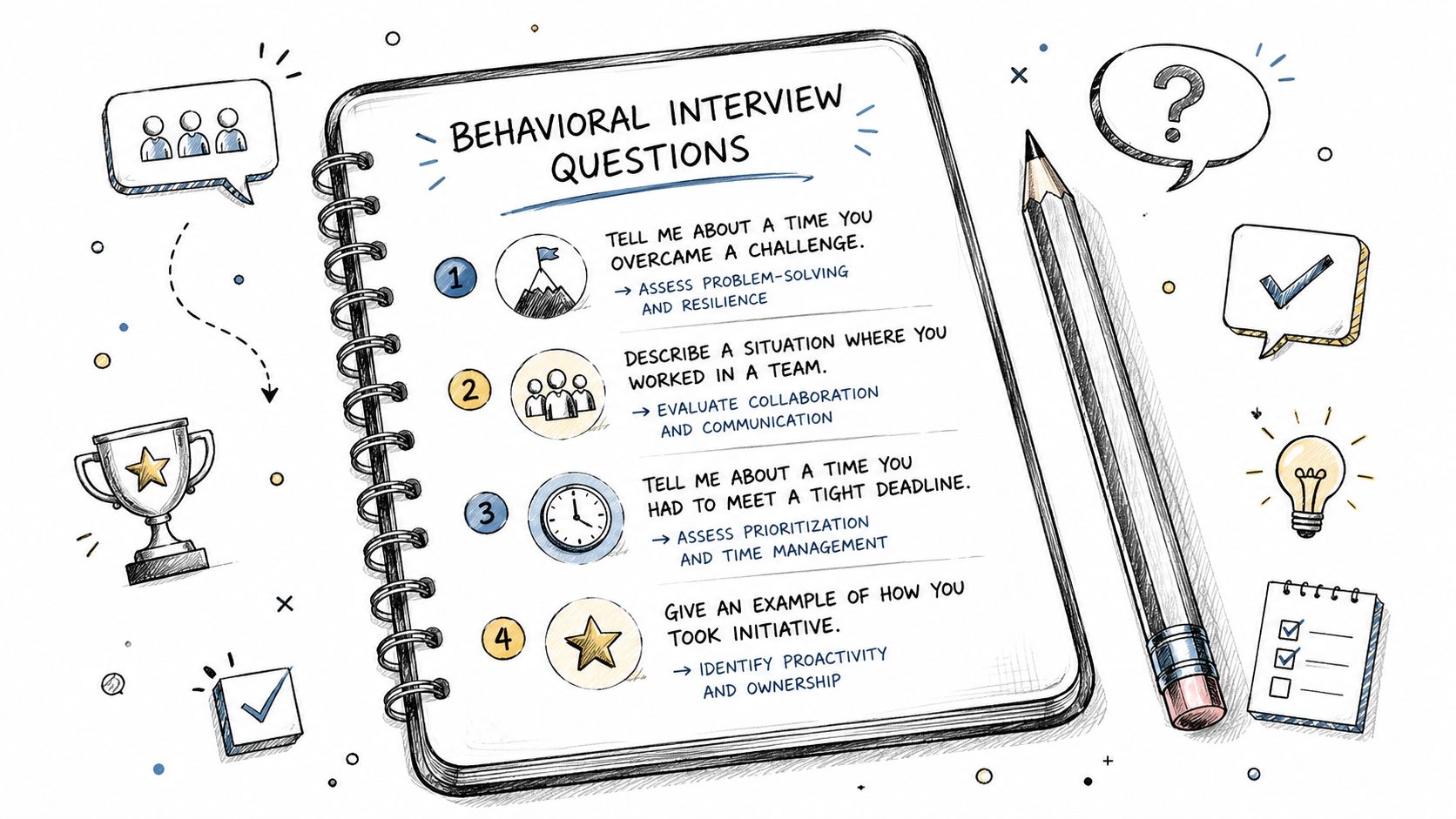
A useful question does two things. It targets one skill, and it makes evidence hard to fake.
Try prompts like these:
These work because they force candidates into details. You can hear whether they took ownership, how they read the situation, and whether they learned anything. If you need more options for communication-focused roles, this set of communication skills interview questions is a practical starting point.
Take the influence question. A basic evaluation template might look like this:
| Element | What to capture |
|---|---|
| Skill | Influence without authority |
| Question | Tell me about a time you had to persuade a stakeholder who disagreed with your recommendation |
| Score 1 | Avoided direct conversation, relied on escalation, gave little evidence of understanding the other person's concerns |
| Score 3 | Presented a rationale, listened to objections, achieved partial alignment or a workable compromise |
| Score 5 | Diagnosed stakeholder concerns, adapted message to audience, built alignment through evidence and follow-up |
| Evidence notes | Specific actions, stakeholder context, result, lessons learned |
| Decision | Advance, hold, or decline |
What matters most is the evidence field. If the interviewer can't write down the observed behaviors behind the score, the score isn't carrying enough weight to be useful.
A candidate doesn't need a perfect story. They need a clear example that shows judgment, ownership, and behavior you can map to the role.
Good follow-ups are equally important. Ask what trade-offs they considered, what they said first, what resistance they encountered, and what they'd do differently now. Those details separate rehearsed answers from credible ones.
Over time, these templates become reusable assets. Recruiters get faster, hiring managers get more consistent, and candidates get a process that feels more deliberate and less arbitrary.
A soft skills assessment process only becomes real when it lives inside the workflow your team already uses. If the rubric sits in a slide deck and the interview notes live in five different places, adoption won't last.
For growing companies and high-volume employers, the best place to operationalize soft skills assessment is early. Not at offer stage. Not after three interviews. Early enough to shape the shortlist.
A practical workflow often looks like this:
The configuration of your ATS and HRIS matters. Systems like Greenhouse, Workday, iCIMS, ADP, and Paylocity can store structured scorecards, status changes, and interviewer feedback. If your current setup doesn't support that cleanly, your broader HR tech stack design probably needs attention before you add more assessment layers.
Teams often store too little or too much. Too little means vague thumbs-up notes. Too much means long narratives nobody reads.
Store the fields that improve consistency:
This structure becomes more important because validated, role-specific measurement is still a weak spot in the market. As noted in research on gaps in soft skills scales, there is a lack of validated, role-specific metrics for adult professionals in critical roles, which contributes to inconsistent hiring decisions. In practice, that means employers need defensible internal frameworks even when no universal external standard exists.
Soft skills assessment raises valid compliance questions. Are the criteria job-related? Does every candidate get the same opportunity to respond? Are accommodations available? Can you explain why one person advanced and another didn't?
Those are operational questions, not just legal ones. A structured process helps because it creates a documented chain from job requirement to question to score to decision. That reduces ambiguity.
Tools can support that discipline, but they shouldn't replace judgment. If you're evaluating interview preparation or trying to strengthen interviewer quality, resources like this AI tool for interview success can be useful alongside your internal process. The key is making sure every tool fits a documented framework rather than becoming another isolated data point.
When teams operationalize soft skills assessment inside the tech stack, they stop treating it as an interview philosophy. It becomes part of hiring infrastructure.
Gut feel doesn't disappear in hiring. But it needs boundaries.
The strongest hiring teams don't pretend soft skills are easy to measure. They accept that judgment, communication, adaptability, and collaboration are harder to assess than certifications or years of experience. Then they build a process that makes those qualities visible through structured questions, clear rubrics, calibration, and system-level documentation.
That shift changes more than interview quality. It improves early-stage screening, gives candidates a more consistent experience, and helps recruiters explain decisions with evidence instead of instinct. It also helps hiring managers trust the process because they can see how scores were earned.
The practical lesson is simple. Start narrow. Identify the few soft skills that predict success in the role. Choose the assessment method that fits your hiring volume. Score observable behavior. Store the data in the ATS. Review calibration drift. Repeat.
Fair hiring isn't just about removing bias from the final interview. It's about building a process where every candidate is evaluated against the same criteria from the start.
That's what turns hiring from a set of disconnected opinions into an operating system. Not perfect. But consistent, scalable, and much easier to improve.
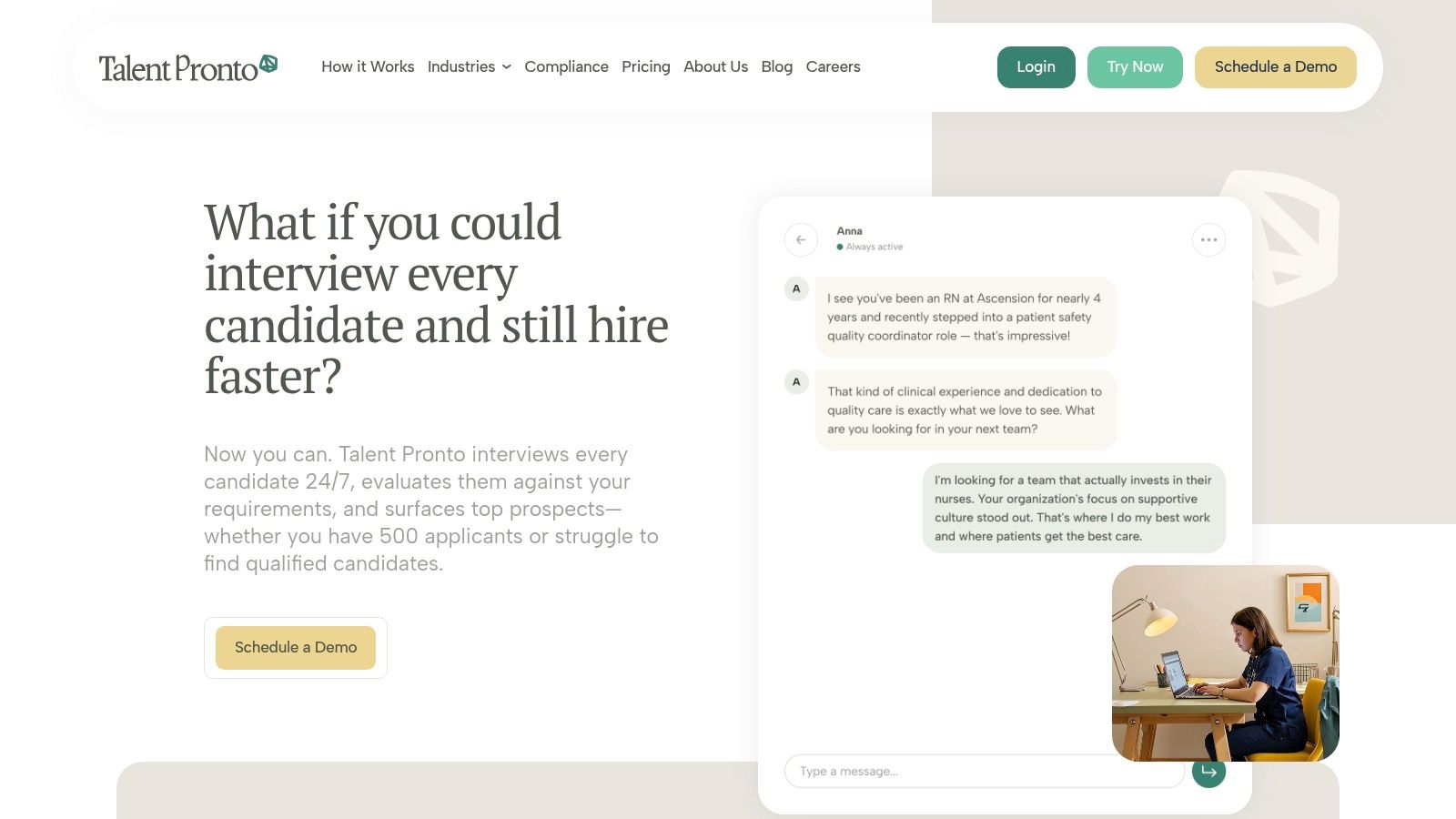
If you want to put this into practice without adding manual screening work, Talent Pronto helps employers run structured conversational screening, capture role-specific behavioral evidence, and sync candidate scorecards into existing ATS and HRIS workflows. It's a practical way to bring soft skills assessment into the early funnel where it has the most impact.

Talent Pronto is an AI-powered hiring platform built around Anna, our intelligent AI that conducts 24/7 conversational screening, evaluates candidates against specific job requirements and compliance needs, and schedules interviews. Run everything on the Talent Pronto ATS, our all-in-one applicant tracking system with a branded careers site and Anna built in, or keep your existing ATS and let Anna integrate with Greenhouse, Ashby, iCIMS, Jobvite, Lever, Oracle, and more. Either way, we help organizations reduce time-to-hire and build stronger teams.