Discover the top 10 situational interview questions to identify great candidates. Get examples, scoring rubrics, and tips to hire smarter and reduce bias.
You've got a polished resume in front of you, but the core question is whether this person can handle the messy, high-pressure moments the job will throw at them. That's where situational interview questions earn their keep, because they push candidates beyond credentials and into judgment, communication, and problem-solving under realistic constraints. Structured interviews also matter because the strongest evidence base favors them over improvisational conversations, and the structured format helps hiring teams compare candidates on the same criteria rather than on interview charisma alone, as summarized in the evidence on structured interviewing and the Schmidt and Hunter validity findings (structured interview evidence). If you're screening at volume, hiring across functions, or trying to make your evaluation fairer, this is the kind of tool that turns a soft conversation into a defensible process, with practical guidance like the recommendations from nexus IT group (recommendations from nexus IT group).
A candidate's answer should show more than composure. It should show how they sized up the problem, chose what to protect, and kept the work moving without creating avoidable rework. In practice, this question reveals prioritization, stress resilience, and whether the person communicates early enough to keep a deadline from turning into a fire drill.
The setting will vary, but the hiring signal stays the same. A nurse may describe triaging admissions during a surge, a manufacturing supervisor may explain how they handled a line delay with limited spare parts, and an engineer may talk about stabilizing a bug before launch. A recruiter using a scenario-based interview guide can use the same logic across roles, which is why a resource like the scenario-based interview questions guide can help standardize what to listen for. Did the candidate stay organized, keep stakeholders informed, and make trade-offs deliberately?
Strong answers usually follow a clear sequence. The candidate explains the deadline, what changed, what became risky, and how they adjusted the plan without losing sight of quality. I listen for concrete moves such as reassigning work, narrowing scope, escalating early, or resetting expectations with a manager or client. I also pay attention to whether the person brought the team into the fix or tried to carry everything alone, because that often reveals their leadership style as much as the result does.
Weak answers stay vague. The candidate says they “managed it,” “worked hard,” or “just pushed through,” but never explains the pressure, the decision points, or the trade-offs involved. That often means they were reacting in the moment instead of managing the situation.
A second warning sign is overclaiming. If everything was handled perfectly, with no tension, no prioritization, and no stakeholder pushback, the story probably lacks detail or real pressure.
Ask, “What was at risk if the deadline slipped?” That tells you whether the candidate understood the business impact or only the task itself.
Then ask, “What did you cut, defer, or delegate?” A strong candidate can explain the trade-offs clearly and without defensiveness.
If the answer still feels polished but thin, follow with, “Who did you tell first that the timeline was at risk, and what happened next?” That probe often separates candidates who communicate early from those who wait until the problem is already public.
Use a simple rubric so every interviewer grades the same way.
Score 5 if the candidate gives a specific situation, shows clear prioritization, and explains how they protected quality under pressure.
Score 3 if the story is real but thin, with some action and a limited explanation of judgment.
Score 1 if the answer is vague, purely self-congratulatory, or missing the candidate's actual role.
A strong score should reflect judgment, not just effort. In a hiring loop, that keeps the focus on how the person handles pressure, communicates trade-offs, and works with others when time is collapsing.
Even well-functioning teams run into disagreement. The test is whether the candidate handles it with clarity and respect, or turns it into avoidance, politics, or a personal battle. I use this question to see whether someone can disagree on substance, protect the working relationship, and keep the work moving when viewpoints split.
A clinician might question a treatment path after seeing newer evidence. An operations lead might push back on deferring maintenance because the short-term savings could create a larger failure later. A junior developer might argue for a different architecture than a senior engineer proposed. The surface issue changes, but the signal is the same, can this person disagree without damaging trust, and can they defend their view with facts instead of emotion?
Strong candidates describe the disagreement in a balanced way. They explain what they believed, what the other person believed, and how they tested the gap instead of just trying to win. I listen for specifics, how they framed the concern, whether they asked questions to understand the other side, and how they moved the conversation toward a decision. For recruiters who want a tighter evaluation framework, this pairs well with a communication skills interview questions guide because disagreement is often a direct test of clarity, listening, and judgment.
A weak answer usually exposes one of three patterns: blame, avoidance, or escalation without effort. The candidate may describe the other person as difficult, say they kept quiet to stay professional, or jump straight to HR or a manager before any direct conversation happened. That does not always mean the person is impossible to work with. It often means they have not built a mature process for handling tension.
A stronger answer shows proportion. The candidate knew when to hold their ground, when to ask for more context, and when to commit once a decision was made. That tells you more than a polished story about “getting along with everyone,” because real work usually requires people to disagree and still finish the job together.
Ask, “What was the specific point of disagreement?” That forces the candidate to move past a vague story and name the issue.
Then ask, “How did you raise the concern?” You want to hear whether they approached the other person directly, chose a private conversation, or brought in evidence that made the discussion more objective. Candidates who handle conflict well usually describe a calm, concrete conversation, not a dramatic confrontation.
If the answer still sounds clean but thin, ask, “What did the other person say that changed, or did not change, your view?” That probe shows whether the candidate listened with intent or only waited for a chance to restate their own position.
Use the same rubric for every candidate so the interview stays consistent.
Score 5 if the person explains the disagreement clearly, shows respect for the other side, and demonstrates a practical way of resolving or containing the conflict.
Score 3 if the situation is real but the candidate gives limited detail about the conversation, the trade-offs, or the final decision.
Score 1 if the answer is vague, defensive, or focused on assigning blame instead of handling the problem.
A strong score should reflect judgment and communication, not just the fact that a disagreement happened. That keeps the evaluation grounded in how the candidate works through tension, which is what this question is meant to reveal.
A manager asks why two teammates argued over a process change. A candidate who can handle that well usually shows judgment, not just confidence. The question reveals whether they can disagree without turning the discussion personal, shutting down, or escalating too fast, which matters in healthcare teams, manufacturing committees, and cross-functional tech groups that still have to work together the next day.

A clinician might challenge a treatment protocol after reviewing newer evidence. An operator might push back when maintenance keeps getting deferred. A junior developer might argue for a different architecture than a senior engineer proposed. The topic changes. The underlying test does not, can this person protect the relationship while still standing up for sound judgment?
Strong candidates own their part in the disagreement. They do not stop at describing what the other person got wrong. They explain how they framed the issue, how they tried to understand the other side, and how the decision was made.
Weak answers often drift into blame, avoidance, or an early trip to HR before any real conversation happened. That does not automatically mean the candidate is difficult, but it does suggest they may struggle with direct communication. In many roles, that becomes a real operating risk.
A simple scorecard works well here: - Awareness: Did they recognize their own role in the tension? - Communication: Did they state the issue clearly and respectfully? - Resolution: Did they repair trust, reach understanding, or at least maintain working terms?
If the candidate says they “don't really have conflicts,” press a little harder. Healthy teams do have disagreement, and the absence of examples can signal avoidance rather than harmony. Strong answers show curiosity, restraint, and a willingness to revisit the issue after emotions settle.
For hiring teams, this question is easy to standardize when everyone uses the same criteria. Talent Pronto's communication-focused interviewing content is a useful reference point for building that consistency (communication skills interview questions).
A strong answer to this question shows more than regret. It shows whether the candidate can face a problem directly, tell the right people, fix what went wrong, and change the way they work so the same error does not repeat.

The best examples usually involve real consequence. In healthcare, that could mean reporting a medication dosing error immediately. In manufacturing, it could mean flagging a misaligned component before shipment. In tech, it might be owning a bug that reached production and helping with the post-mortem. The setting changes, but the signal stays the same, does the candidate protect trust when things go wrong?
Start with the size of the mistake. A trivial miss, like forgetting to attach a file, rarely tells you much about judgment under pressure. A stronger example shows meaningful stakes and a real response, because that is where you see how the candidate behaves when reputation and reliability are on the line.
Timing matters too. Did the person catch the mistake themselves, or did someone else point it out first? Self-detection and early disclosure usually tell you more than damage control after the fact. I also listen for what happened after the correction. A good answer should end with a process change, a checklist, a review step, or another safeguard that reduces the chance of repeat failure.
Use this scorecard: - Accountability: Did they own the error without excuses? - Action: Did they respond quickly and directly? - Prevention: Did they change behavior or improve the system?
A candidate who can speak plainly about a mistake often gives you more useful evidence than someone who only offers polished success stories. That candor matters because interviewers need to know whether the person will surface problems early instead of hiding them until they become expensive. The strongest answers usually include a systemic fix, not just personal embarrassment.
A strong answer here shows how a candidate handles unfamiliar work without freezing or guessing. In healthcare tech, biotech, manufacturing automation, and fintech, new tools often arrive before the team has fully settled into the last one. The key indicator is whether the person can get up to speed without creating avoidable risk for the team.

A clinician learning a new EHR while still seeing patients is dealing with a very different level of pressure than someone who picked up a tool during a quiet offsite. The same is true for an engineer moving from legacy equipment to Industry 4.0 systems, or a product manager stepping into a new vertical. The question stays the same, but the story is only useful if it shows learning under real constraints.
The best candidates do not just say they adapted. They explain the path. They may describe how they broke the skill into smaller parts, asked targeted questions, used documentation, shadowed a colleague, or practiced in a low-risk setting before using the skill in live work. That tells you how they learn, not just that they eventually figured it out.
Weak answers often stop at, “I'm a quick learner.” That line is too thin on its own. It leaves out the method, the trade-offs, and the result. A better answer shows speed and judgment together, because both matter when the work is unfamiliar and the stakes are real.
For evaluation, I use a simple rubric: - Resourcefulness: Did they find the right sources and people? - Execution: Did they become competent quickly? - Application: Did the new knowledge show up in real work?
The strongest answers show flexibility without recklessness. The weaker ones usually drift in one of two directions, either too cautious to make progress or too confident to notice what they do not know. If a candidate can explain how they learned, applied, and improved in a short window, that is useful evidence of future adaptability.
A strong persuasion story usually starts with resistance. The candidate has to show they understood why the other person hesitated, what was at stake, and how they earned a hearing without turning the conversation into a contest.
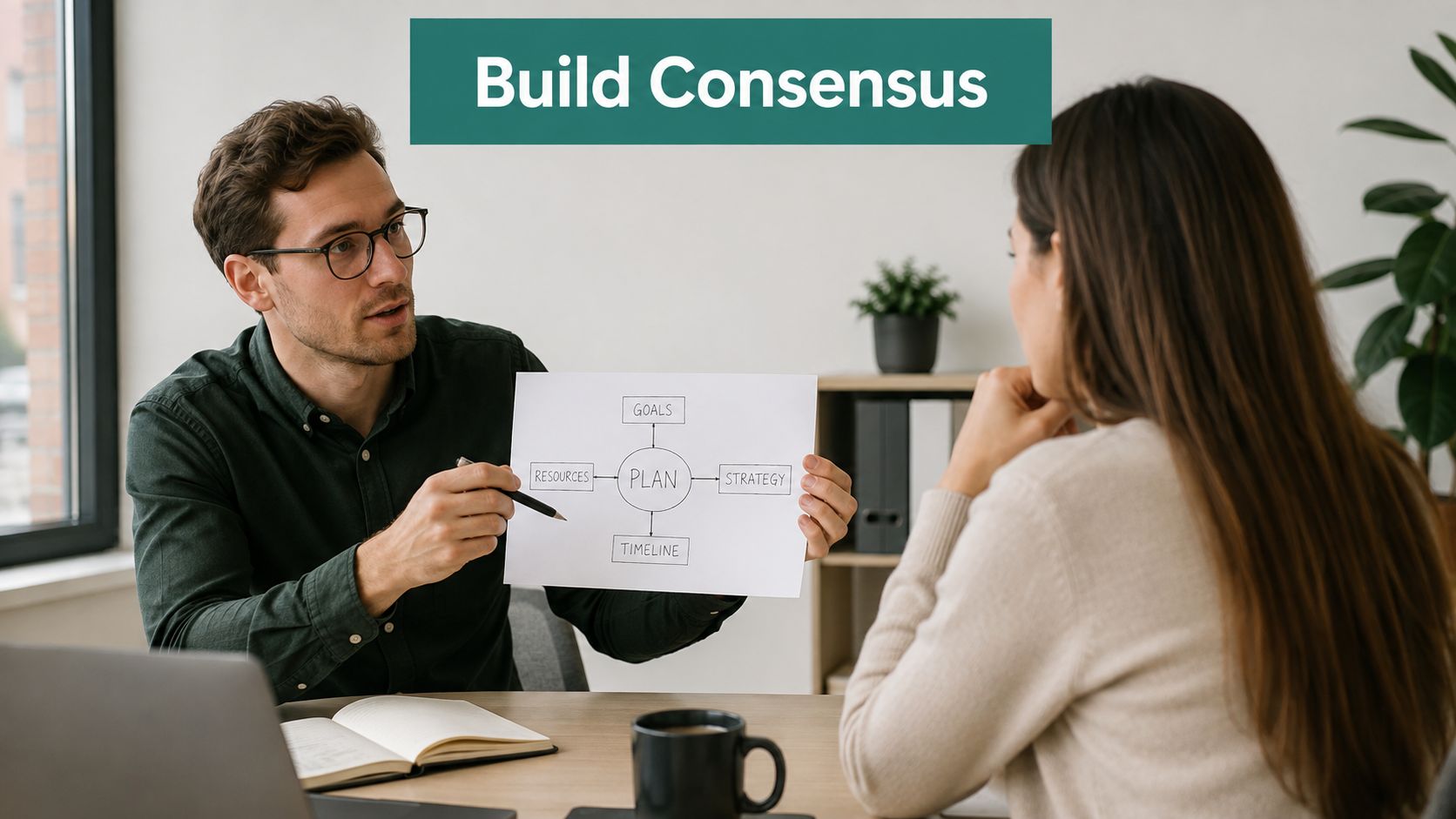
In healthcare, that might be a nurse asking colleagues to adopt a patient safety protocol that changes daily habits. In manufacturing, it could be a production lead making the case for automation despite concerns about disruption. In tech, it might be a designer asking engineering to prioritize UX improvements over raw feature velocity. The point is stakeholder management, especially when the first response is hesitation or pushback.
The best answers show the audience first. They explain what the other person cared about, where the disagreement came from, and how the candidate adjusted the message to fit that concern. Data can help. So can a concrete example, a clearer frame, or a compromise that preserves the goal without forcing agreement.
I listen closely for tone here. If the story sounds like “I kept pushing until they agreed,” that usually signals pressure, not persuasion. A stronger answer shows listening, trust-building, and a decision that held up after the meeting ended.
A simple rubric keeps this question consistent: - Preparation: Did they understand the audience and the stakes? - Presentation: Did they shape the message around what mattered to that person? - Outcome: Did they create alignment, not just compliance?
Persuasion that still works after the meeting is usually the best signal.
A useful follow-up probe is, “What did the other person object to first?” Clear answers often reveal a candidate who listened before speaking. Vague answers usually suggest the story is more about winning the argument than changing the outcome.
A good answer here usually comes from a real workload pinch point, not a polished theory. Schedulers, planners, technical leads, and administrators spend a lot of time deciding what gets handled now, what can wait, and what needs escalation. This question shows whether the candidate has a repeatable way to manage competing demands, or whether they are relying on memory and goodwill.
A healthcare scheduler might balance patient appointments, staff requests, and emergency adds. A manufacturing planner might juggle production orders, maintenance windows, and supply disruptions. A technical lead might split attention between feature work, mentoring, and operational support. The context changes, but the core test stays the same, can they keep work visible and make clear trade-offs?
Strong candidates name a system they use. That might be Asana, Monday, Slack, a notebook, or a hybrid process. The tool itself matters less than whether the candidate uses it in a deliberate way to track work, communicate constraints, and reset priorities when something changes.
I also listen for how they decide what rises to the top. Do they rank work by deadline, business impact, stakeholder urgency, or risk? If they cannot explain the criteria, they may be reacting to pressure instead of managing it.
A solid scoring rubric can come from three signals: - System: Is there a repeatable method for tracking work? - Discipline: Do they keep using that method under stress? - Communication: Do they flag overload early and ask for help before quality slips?
A strong answer often includes a moment when the candidate realized they were at capacity and said so. That is not weakness. It shows judgment. Candidates who never escalate or delegate can sound dependable in an interview, then become a bottleneck when the workload grows.
Sustainability matters too. Some people hold everything together through sheer effort for a short stretch, but that does not mean they can manage workload over time. You want someone who stays organized without creating avoidable strain for the rest of the team.
A strong answer starts with a real difference, not a vague claim about “getting along with everyone.” In practice, the gap might be between functions, seniority levels, communication styles, or cultural expectations. The question tests whether a candidate can work through those differences without turning the interview into a harmony story that skips the hard parts.
A physician working with a specialty colleague, an experienced operator paired with a newer hire, or a remote engineer joining an office-heavy team all face the same issue. They need to build working trust before they can build results. The best candidates show how they handled tension, adjusted their own style, and still kept the work moving.
A weak response often sounds polished but empty. “We were different, but we worked it out” does not tell you how the candidate behaved under pressure. It also hides whether they learned anything from the other person or waited for the relationship to calm down on its own.
The stronger signal is curiosity. Did they ask how the other person preferred to communicate, make decisions, or receive feedback? Did they check their assumptions before reacting? Those details matter because mixed teams usually break down over small mismatches, not dramatic conflict.
A practical way to evaluate the story is through STAR. Listen for the situation, the task they needed to complete together, the actions they took to reduce friction, and the result. If the answer only covers the situation and the result, probe for the work in the middle.
You can score it on three dimensions: - Awareness: Did they notice the difference without judging it? - Adaptation: Did they change their approach in a useful way? - Outcome: Did the working relationship and the work itself improve?
Strong answers often include a specific adjustment. Maybe they changed how they wrote follow-up notes, how often they checked in, or how they structured meetings so the other person could contribute more clearly. Those are small moves, but they are often what gets cross-functional work unstuck.
For a sharper evaluation, ask a follow-up that gets past the polished version of the story. You might ask how they handled a moment of misunderstanding, what they would do differently now, or whether they had to reset expectations with the other person. If you want a broader framework for judging judgment under pressure, the decision-making interview questions guide can help you compare responses more consistently.
The best candidates do not try to flatten differences. They work through them, keep respect intact, and leave the other person easier to work with, not harder. That is the practical standard for inclusive teams, and it is also the standard for reliable execution.
A strong answer here shows more than helpfulness. It shows whether a candidate notices a problem, takes ownership without being asked, and understands the trade-off between extra effort and sustainable performance.
A technical staff member in healthcare might stay late to restore a system that is slowing patient care. In manufacturing, a quality auditor might spot a process gap that affects more than one team and recommend a redesign. In tech, a senior engineer might spend time coaching junior developers even though mentoring is not formally part of the role.
Start with the reason they stepped in. Did they do it because they expected praise, or because they felt responsible for the outcome? Recognition is fine, but the stronger signal is a candidate who acts from judgment and ownership, not from a one-off incentive.
Then look at the cost of the effort. A single emergency push can be a good sign. A pattern of constant rescue work can point to weak delegation, unclear roles, or burnout risk. Extra effort should solve a real problem, not become a substitute for basic team discipline.
A practical scorecard keeps the evaluation consistent: - Initiative: Did they act without being told? - Scope: Did the action affect more than one isolated task? - Impact: Did the effort produce a meaningful result?
The best answers usually include a concrete gap they noticed, the step they took, and what changed because of it. That is the kind of story that shows judgment, not just effort.
Failure is a practical interview test. It shows whether a candidate treats setbacks as evidence, embarrassment, or someone else's fault. In innovation-heavy environments, the strongest hires are usually the ones who can fail, think clearly, and adjust without spiraling.
A clinical trial may miss its efficacy endpoints. A process improvement project may backfire before the team recovers. A product launch may underperform and force a new strategy. None of those stories should sound polished. They should sound honest, specific, and thoughtful.
Start with the failure itself. What broke, what did the candidate own, and where were they in the chain of decisions? That detail matters because learning only counts when responsibility is real. If they were one contributor among several, I still want to know what they could have seen sooner or handled differently.
Then listen for the quality of the reflection. Can the candidate explain root causes, trade-offs, or assumptions that were wrong? If they only describe what happened, they have not shown much learning. If they can say what changed next time, that is much more useful for evaluation.
A practical rubric keeps the judgment consistent: - Accountability: Did they own their share of the miss? - Analysis: Did they identify the cause? - Adaptation: Did they change future behavior?
A red flag is pure external blame. “The market changed” or “the team failed” may be partly true, but if that is the whole story, the candidate is not showing insight. A stronger answer includes the market, the team, and the part the candidate would handle differently now. Talent Pronto's decision-making content pairs naturally with that kind of reflection and rubric design (decision-making questions and answers).
This is one of the clearest windows into communication maturity. Bad news is easy to avoid, and many candidates do. The ones who can deliver it clearly, with empathy and preparation, are the people you want in client-facing roles, leadership tracks, and any position that carries real accountability.
A manager may need to tell a long-tenured employee their role is being eliminated because of automation. A lead may need to report a safety violation. A product manager may need to explain that a requested feature won't ship because the strategy changed. Each version tests courage and tact at the same time.
Strong candidates usually prepare the conversation. They think through the message, the likely reaction, and the support the other person might need afterward. They don't hide behind policy language or pretend the issue is less serious than it is.
Weak answers often lean on avoidance or over-explaining. Some people bury the message in jargon. Others rush into it without thought and then struggle with the fallout. I'm looking for balance, directness without cruelty.
Use this scoring shape: - Preparation: Did they plan the conversation? - Delivery: Did they own the message clearly? - Follow-up: Did they check in afterward and support the person?
The strongest signal is when the candidate combines honesty with empathy. They don't soften the truth so much that it becomes meaningless, and they don't deliver it so bluntly that they cause avoidable harm. That balance is especially valuable in roles where trust depends on straight talk.
| Interview Question | Implementation Complexity 🔄 | Resource Requirements ⚡ | Expected Outcomes 📊 | Ideal Use Cases | Key Advantages ⭐💡 |
|---|---|---|---|---|---|
| Tell Me About a Time You Had to Meet a Tight Deadline Under Pressure | 🔄 Medium, structured STAR answer; follow-ups useful | ⚡ Low, single-question time | 📊 Reveals prioritization, stress tolerance, execution under pressure | Time-sensitive roles (triage, production sprints, product launches) | ⭐⭐⭐ Universally applicable; yields concrete examples. 💡Ask "what would you do differently?" |
| Describe a Situation Where You Disagreed With a Coworker or Manager. How Did You Handle It? | 🔄 Medium, probe for ownership and resolution | ⚡ Low, behavioral follow-ups | 📊 Shows conflict resolution, empathy, boundary management | Collaborative teams, matrixed orgs, client-facing roles | ⭐⭐⭐ Predicts team fit and communication style. 💡Probe for ownership vs blame |
| Tell Me About a Time You Made a Mistake at Work. How Did You Respond? | 🔄 Medium, sensitive; requires safe framing | ⚡ Low, example-based | 📊 Assesses accountability, recovery, learning orientation | Regulated/safety-critical industries (healthcare, pharma) | ⭐⭐⭐ Strong predictor of integrity and improvement. 💡Seek a meaningful-scope mistake |
| Give an Example of When You Had to Learn Something New Quickly. How Did You Approach It? | 🔄 Low, focuses on strategies and timeframe | ⚡ Low, candidate example sufficient | 📊 Evaluates learning agility, resourcefulness, adaptability | Fast-changing fields (AI, biotech, automation) | ⭐⭐⭐ Predicts onboarding speed and initiative. 💡Ask how mastery was validated |
| Tell Me About a Time You Had to Persuade Someone to Your Point of View | 🔄 Medium, needs context on methods and ethics | ⚡ Low, situational example | 📊 Measures influence, stakeholder management, evidence use | Leadership, sales, cross-functional change initiatives | ⭐⭐⭐ Indicates leadership potential and impact. 💡Watch for ethical vs coercive tactics |
| Describe a Time When You Had to Manage Multiple Projects or Priorities. How Did You Stay Organized? | 🔄 High, requires detailed systems and prioritization criteria | ⚡ Medium, may need examples of tools/processes | 📊 Shows project management discipline and capacity awareness | PMs, operations, schedulers, technical leads | ⭐⭐⭐ Identifies scalable systems and delegation. 💡Probe tools and prioritization rules |
| Tell Me About a Time You Had to Work With Someone Very Different From You. How Did You Navigate That? | 🔄 Medium, sensitive to social desirability bias | ⚡ Low, behavioral probing | 📊 Reveals cultural intelligence and inclusion mindset | Diverse teams, global orgs, cross-disciplinary projects | ⭐⭐⭐ Predicts inclusive collaboration. 💡Listen for curiosity, not "I don't see differences" |
| Give an Example of When You Went Above and Beyond Your Job Description | 🔄 Low, straightforward but probe sustainability | ⚡ Low, example-focused | 📊 Highlights initiative, ownership, discretionary effort | High-impact roles, leadership pipelines, retention-focused hires | ⭐⭐⭐ Identifies high performers. 💡Assess sustainability to avoid burnout risk |
| Tell Me About a Time a Project or Initiative Failed. What Did You Learn? | 🔄 Medium, needs honest reflection and root-cause analysis | ⚡ Low, deep probing beneficial | 📊 Measures resilience, learning agility, attribution style | Startups, R&D, innovation-focused teams | ⭐⭐⭐ Reveals growth mindset and accountability. 💡Probe for concrete behavior changes |
| Describe a Situation Where You Had to Deliver Bad News or Difficult Feedback. How Did You Approach It? | 🔄 Medium, evaluates preparation, empathy, follow-up | ⚡ Low, situational depth required | 📊 Assesses courage, communication maturity, relationship management | Managers, client-facing roles, HR, clinical leaders | ⭐⭐⭐ Predicts leadership effectiveness and trust-building. 💡Ask about follow-up support and outcome |
Adopting situational interview questions is the easy part. The hard part is using them the same way for every candidate, every time. That's where structured scoring changes the outcome. When you anchor each answer to the same dimensions, such as planning, communication, judgment, adaptation, and accountability, you reduce the influence of interviewer mood, personal style, and one-off conversation drift.
The strongest hiring teams don't rely on memory after the interview ends. They capture evidence while the conversation is still fresh, then compare candidates against the same rubric. That's the logic behind structured interviewing in industrial-organizational psychology, and it's the logic that makes situational interview questions more defensible than casual brainstorming during a screening call (structured interview evidence). It also lines up with practical guidance from sources like UC Davis, which recommends a structured Situation, Action, Results approach, and Indeed, which tells interviewers to keep the context tight and standardized when evaluating answers (UC Davis interview prep guide, Indeed situational interview guidance).
Consistency is the key benefit. When you ask the same core questions, probe the same dimensions, and score the same kinds of evidence, you're less likely to overvalue polish and more likely to spot actual job readiness. That matters in healthcare, manufacturing, logistics, public sector hiring, and tech, where the role often demands reliability, judgment, and repeatable performance more than improvisational charm.
If you're building a hiring process from scratch or tightening one that feels too subjective, start with a small question bank and a simple rubric. Don't chase novelty. Chase comparability. Use the same follow-up probes, document the same evidence, and decide in advance what strong versus weak looks like for the role.
Talent Pronto fits naturally into that workflow because it's built around conversational screening, role-specific question sets, and structured scorecards. If you want to standardize how candidates are screened and compared, visit Talent Pronto and use it to bring more consistency to early-stage hiring.
Talent Pronto gives hiring teams conversational screening, role-specific questions, and structured scorecards that fit this kind of interviewing. If you're ready to make your evaluation process more consistent, visit Talent Pronto and see how structured candidate screening can support your hiring workflow.

Talent Pronto is an AI-powered hiring platform built around Anna, our intelligent AI that conducts 24/7 conversational screening, evaluates candidates against specific job requirements and compliance needs, and schedules interviews. Run everything on the Talent Pronto ATS, our all-in-one applicant tracking system with a branded careers site and Anna built in, or keep your existing ATS and let Anna integrate with Greenhouse, Ashby, iCIMS, Jobvite, Lever, Oracle, and more. Either way, we help organizations reduce time-to-hire and build stronger teams.