Learn what is adverse impact in hiring, how the four-fifths rule works, and practical steps to detect and prevent bias in your screening process.
Adverse impact is a substantially different rate of selection that disadvantages a protected group under the Uniform Guidelines on Employee Selection Procedures. In hiring, the usual screening benchmark is the four-fifths rule, where a protected group's pass rate below 80% of the highest-selected group's pass rate signals possible adverse impact.
You can run a neutral process, use the same rubric for everyone, and still end up with a result that raises a compliance flag. That's why operations leaders and HR teams keep running into this term when they review candidate flow, test scores, interview pass-through, or promotion outcomes.
A recruiter posts a job, the application screen looks perfectly fair on paper, and the shortlist still comes out lopsided. Nothing obvious was said, nobody made a biased comment, and yet the numbers show that one group is getting filtered out at a much higher rate than another. That's the problem adverse impact is built to catch.
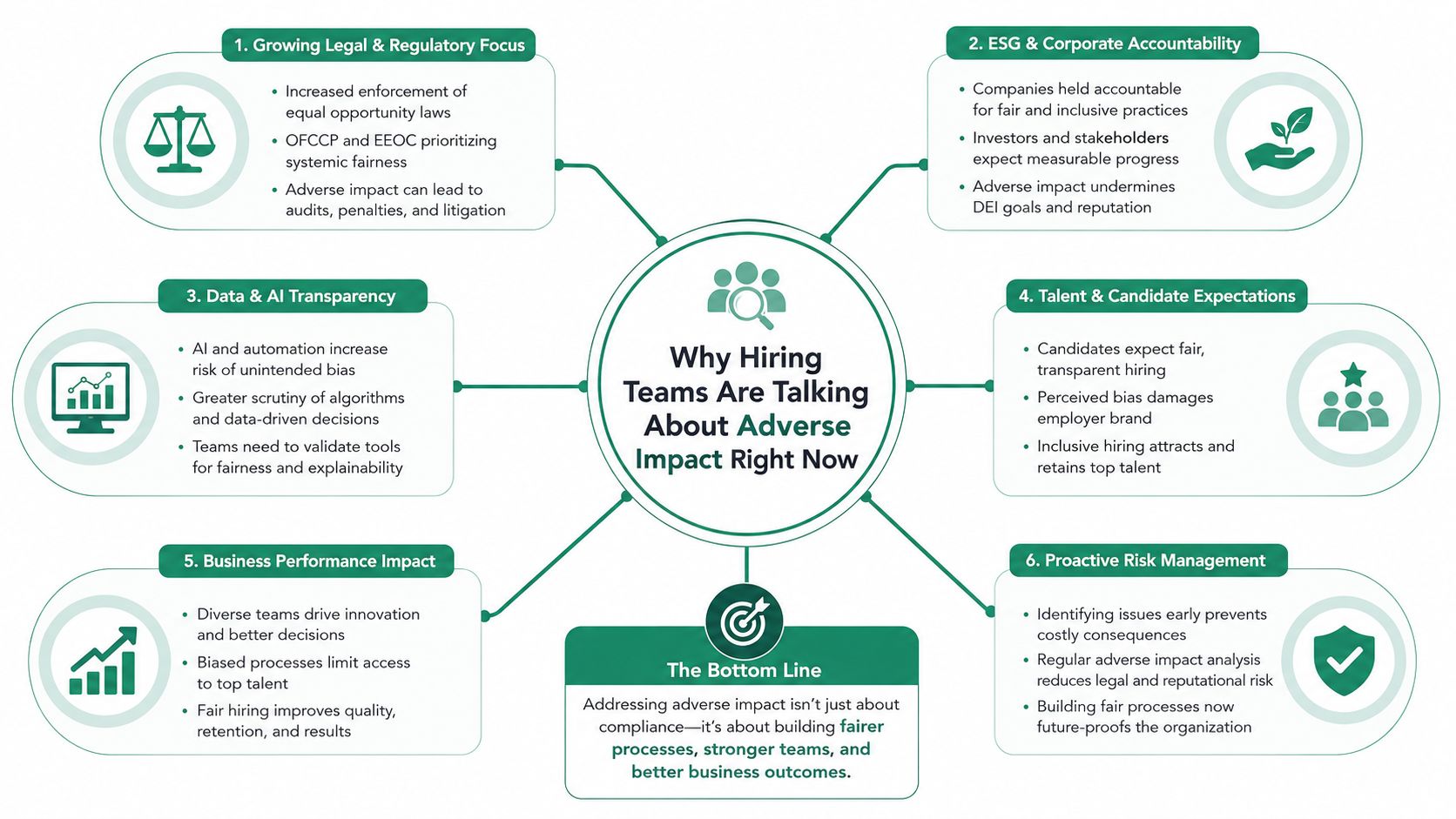
Adverse impact is a group-level selection-rate problem, not an individual complaint. Under the Uniform Guidelines on Employee Selection Procedures, it means a substantially different rate of selection that disadvantages a race, sex, or ethnic group, and the analysis is based on outcomes rather than intent. A process can be facially neutral and still create adverse impact if it produces materially different selection rates across protected groups. Mitratech's overview of adverse impact explains that point clearly.
That's why teams get surprised. They often assume, “We used the same screen for everyone, so we're safe.” The more accurate question is, “Did the same screen produce the same opportunity to move forward?”
Practical rule: if you only look at who passed, you can miss where the funnel started narrowing.
The more applicants you process, the more likely a small rule, threshold, or scoring quirk will show up in the data. Resume filters, knockout questions, assessment cutoffs, and structured interview scores all change who keeps moving. That makes adverse impact a day-to-day operations issue, not just a legal theory.
The concept also reaches beyond hiring. The same standard has historically been applied to promotion, termination, and other employment decisions, so HR teams can't treat it like a one-stage issue. Berkshire Associates' explanation of adverse impact calculations and Hiring Standards' discussion of process-level disparity both reinforce that broader view.
Title VII of the Civil Rights Act is the basic federal law behind this area. The Equal Employment Opportunity Commission enforces it, and the agency's concern is whether a facially neutral practice creates an unlawful outcome for protected groups. That's the legal bridge between “we meant well” and “we need to justify this process.”
The Uniform Guidelines on Employee Selection Procedures, issued in 1978, made the concept operational. They turned adverse impact into a measurable benchmark, and that's why employers still rely on the four-fifths rule and the impact ratio when they audit selection steps today. AllVoices' glossary on adverse impact captures the key point that employers can still defend a practice by showing it is job-related and consistent with business necessity.
Disparate treatment is about intent. Disparate impact, which is where adverse impact sits, is about the effect of a neutral practice. That distinction matters because a manager can avoid obvious bias and still create a legal problem if a scoring rule or screen systematically excludes a protected group.
The EEOC has also paid attention to AI-assisted hiring tools, especially when they act as selection procedures. In that context, the question isn't only whether a vendor built the system fairly, but whether the employer can explain and validate how it works in practice. For a practical hiring-policy reference, see Talent Pronto's equal opportunity hiring guide.
In a real audit, the HR team, legal counsel, and sometimes a vendor all enter the conversation. Federal agencies focus on Title VII enforcement, while state and local rules can add extra layers, especially for large employers and public-sector teams. The important point is simple, even if the paperwork isn't. A neutral practice can still need a legal defense if the outcomes show a substantially different selection rate.
A hiring manager opens a dashboard and sees one group advancing more slowly than another. That gap is where the four-fifths rule starts to matter. The rule says a group's selection rate should generally not fall below 80% of the highest-selected group's rate, and compliance teams use it as an early screen for possible adverse impact. AI with Michal's adverse-impact glossary explains the concept clearly.
The calculation is straightforward, but the meaning is easy to misread. A flagged ratio does not prove a legal violation, and a clean ratio does not guarantee the process is free of risk. It tells you where to look more closely.
Start with a basic hiring funnel. Suppose 100 applicants reach your initial screen. Forty candidates from Group A pass, and 30 from Group B pass. Group A's selection rate is 40%, Group B's is 30%, and the impact ratio for Group B is 30 divided by 40, or 0.75. That is below 0.80, so the screen deserves a closer look.
The same logic applies later in the process. If 20 of 40 Group A candidates advance, that is a 50% selection rate. If 12 of 30 Group B candidates advance, that is 40%. The ratio is 40 divided by 50, or 0.80, which sits at the benchmark rather than below it.
A ratio at or above the benchmark can still deserve review if the process is changing over time, especially in AI-assisted screening. A model that looks acceptable in one hiring cycle may drift in another if inputs, weighting, or applicant mix change. That is why continuous monitoring matters, even when the first calculation looks fine.
Use the group with the highest selection rate as the benchmark. That may be the majority group, but it does not have to be. The correct comparison is the top rate achieved in the funnel, because that is the number the other groups are measured against.
Here is where many calculations go wrong. If a team compares every group to the largest group by headcount instead of the highest-selected group, the ratio can be distorted and the review can miss a real disparity. The math should follow the selection rate, not the size of the group.
Subgroup size matters too. Some guidance applies the rule only when a group makes up at least 2% of the applicant pool as noted in Berkshire Associates' guide. If the demographic data is missing, the safest operational move is to document what is unknown and avoid treating incomplete data as proof that nothing happened.
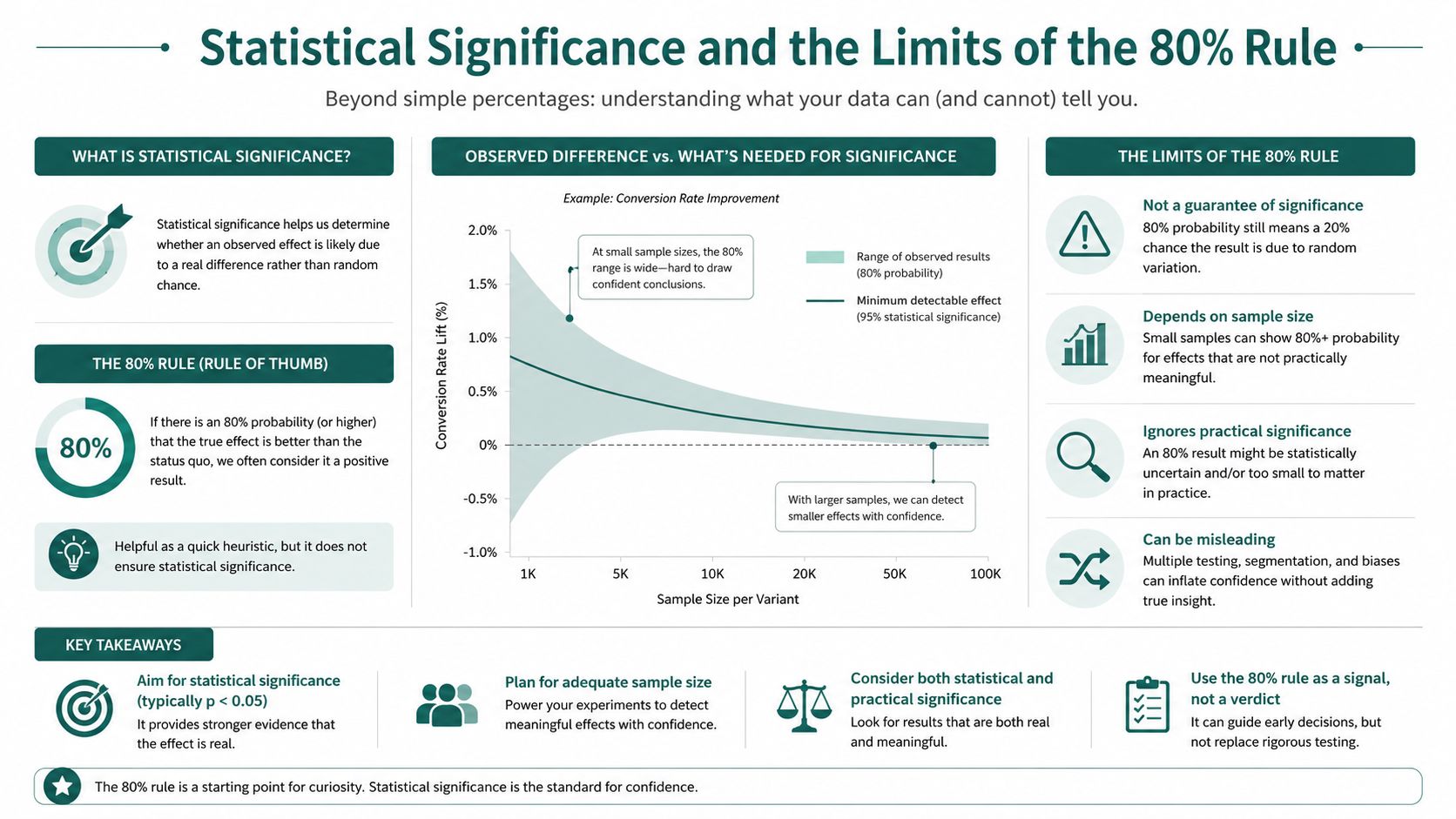
A hiring screen can produce a ratio that looks concerning on paper and still leave a reviewer unsure about what it means. The four-fifths rule is a useful first check, but it does not answer a separate question: is the gap likely to reflect a real pattern, or could it be random variation in the sample? Compliance reviews often pair the ratio with a statistical test, and one common approach is Fisher's Exact test with a p-value of 0.05 or less. An infographic explaining statistical significance and the limitations of using the 80% rule in data experiments.
A ratio of 0.78 can point in different directions depending on how many candidates sat in the pool behind it. With a small group, one or two extra selections can move the rate a lot. With a larger group, the same ratio is less likely to be caused by chance alone.
That is why the four-fifths result should be read as a signal, not a final answer. A small pool can look dramatic because the numbers jump around more easily, while a larger pool can show a statistically meaningful difference even when the operational effect seems modest. Statistical significance helps sort those situations out.
Another audit mistake is assuming the majority group is always the comparison point. The correct benchmark is the group with the highest selection rate, even if that group is not the largest by headcount.
Practical rule: if you compare against the wrong benchmark, your adverse-impact review can point you in the wrong direction.
The four-fifths rule and the statistical test serve different purposes. The ratio gives you a quick screen for disparity. The statistical test asks whether the gap is likely to be meaningful enough to deserve a closer look. Used together, they help an HR team avoid overreacting to noise or overlooking a pattern that deserves review.
Teams don't see adverse impact at the offer stage first. It usually starts earlier, where one rule changes who gets to keep going. A knockout question, a resume filter, or a scoring cutoff can all shift the flow before a hiring manager ever sees the candidate.
Start with the earliest stage that changes candidate flow, then move in order. Ask three questions at each gate. Does this rule eliminate candidates? Is the reason tied to job performance? Did we compare pass rates by protected group? If you can't answer all three, you probably haven't looked closely enough.
For teams using automated tools, the same logic applies to conversational screens, video scoring, and assessment platforms. The mechanism changes, but the compliance question doesn't. A tool that behaves consistently can still create inconsistent outcomes.
For a short primer on how AI can enter the screening conversation, see Talent Pronto's explanation of whether AI candidate screening is biased. If you prefer a broader hiring example, Trackside Careers' guide for women is a useful reminder that funnel design can affect who gets through before the final interview even begins.
A flagged ratio is the start of a review. It does not, by itself, prove discrimination. HR teams often need that distinction first, because a number on its own can look alarming even when the next question is still open.
A useful way to read the result is to separate the math from the legal meaning. The math says one group passed at a lower rate. The legal meaning asks whether the selection step was tied to the job and whether the employer can explain the outcome with evidence.
Under the Uniform Guidelines, a practice that creates a substantially different selection rate can still be defended if it is job-related and consistent with business necessity. That is the core legal response to a disparate-impact claim. If the employer can show the rule measures something tied to the role, the analysis does not end with the flagged ratio.
That explanation has to be concrete, documented, and connected to the work. “We've always done it this way” does not answer the question. A stronger response is proof that the criterion measures a legitimate requirement of the role or a validated business need. If your team is using automated screens, Talent Pronto's answer on whether AI candidate screening is biased is a useful starting point for understanding how consistency and defensibility are evaluated.
A disparity can also come from different applicant self-selection, location constraints, or real differences in relevant qualifications. Those explanations may be valid, but they still need support. If the numbers look uneven and the reason is only anecdotal, compliance teams usually ask for more proof.
A simple example helps. If one job requires a license, and fewer applicants from a particular group hold that license because of school access, geography, or prior opportunity, the pass-rate gap may reflect labor-market conditions rather than an unlawful screen. That does not end the review, but it changes what the employer needs to document. A similar point shows up in the Trackside Careers guide for women, where applicant flow can be shaped by who enters the pipeline before the final interview stage.
A flagged ratio is a signal, not a conclusion. The question is whether the employer can connect the selection rule to the job, then support the outcome with data. For AI-assisted screening, that same logic also raises a follow-up issue, whether the system is monitored continuously after launch or only checked once during setup.
If you want fewer adverse-impact surprises, start by making early-stage evaluation more consistent. Structured interviews, standardized rubrics, and blind resume review where feasible reduce the number of moving parts that can distort candidate flow. Ongoing monitoring matters too, because a fair-looking process can drift once real applicants start moving through it.
Talent Pronto fits into that workflow by running 24/7 conversational screening, asking every applicant the same behavioral, technical, and compliance questions, then turning those responses into structured scorecards. It also provides analytics and reporting so employers can watch funnel outcomes over time, while leaving final advancement and rejection decisions with the employer.
Teams don't need a months-long rollout. With common ATS and HRIS integrations such as Greenhouse, iCIMS, Paylocity, ADP, and Workday, the data can flow without duplicate entry, which helps keep the review trail cleaner. For a related policy lens, Firacard's discussion of diversity initiatives that actually stick is a useful companion read for teams trying to move from intention to repeatable process.
Practical rule: consistency beats intuition when you're trying to explain selection outcomes later.
For a deeper framework on fair process design, Talent Pronto's fair hiring practices guide is worth keeping alongside your internal checklist.
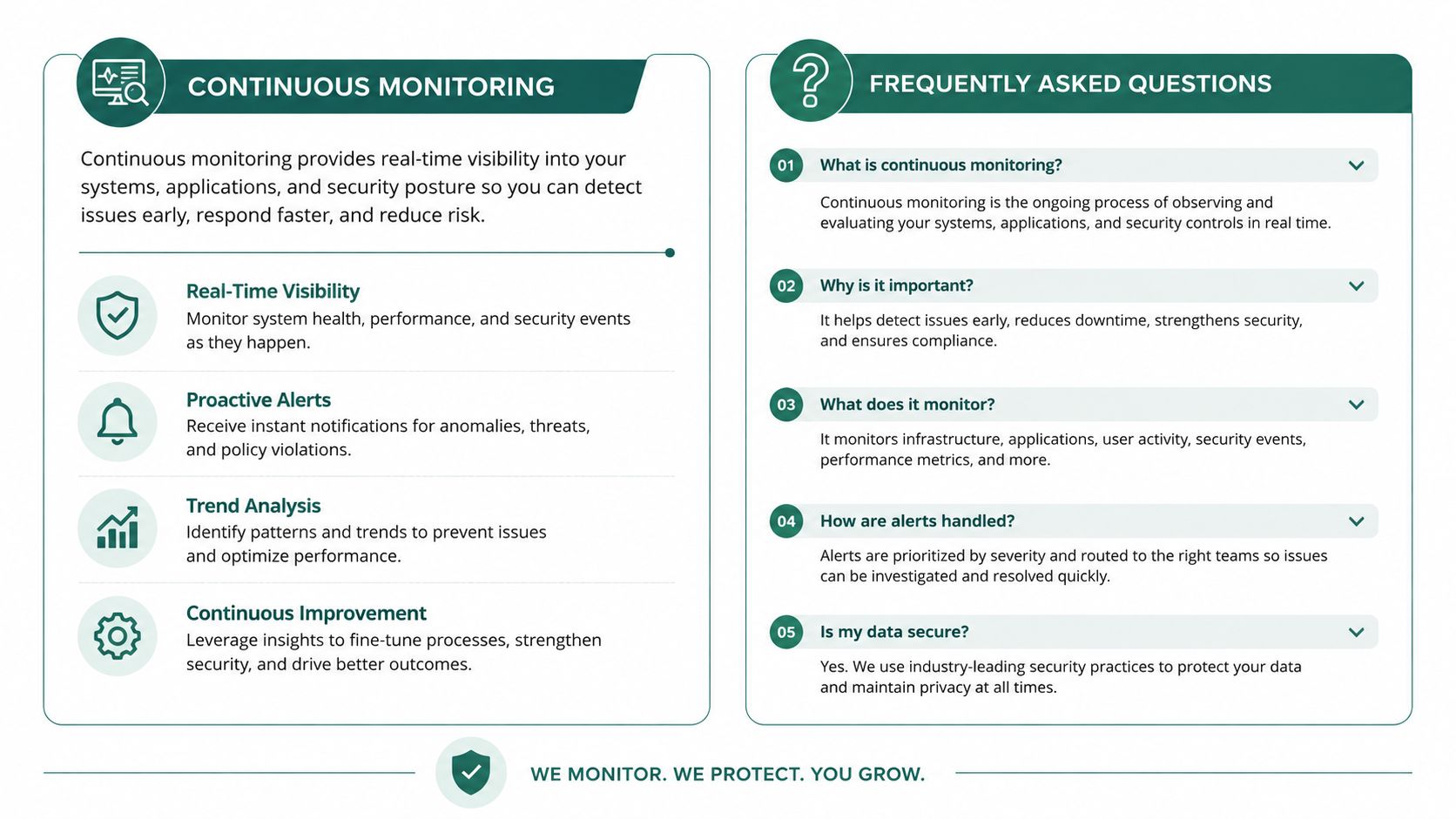
Adverse impact shouldn't live in an annual audit folder. In AI-assisted hiring, the better model is continuous monitoring, because screening tools, question sets, and applicant pools can change without warning. The teams that stay out in front of problems track funnel outcomes regularly, not just once a year.
Does adverse impact apply outside hiring? Yes. The same concept has historically been applied to promotion, termination, and other employment decisions.
Can automated screening tools create adverse impact? Yes. If a tool changes pass-through rates by protected group, it needs to be reviewed like any other selection procedure.
What sample size is too small? There isn't a single universal cutoff, but very small groups can make ratios noisy. Many teams get cautious when a group has fewer than 30 cases, while exact thresholds vary by context and method.
Does a flagged ratio automatically mean the process is unlawful? No. It means the employer should review the rule, test for significance, and evaluate whether the process is job-related and consistent with business necessity.
If you're building a fairer funnel, start with the data you already collect, then tighten the points where candidates fall out. Talent Pronto gives employers a way to standardize early screening, document the questions asked, and monitor outcomes without handing final hiring decisions to software. Visit Talent Pronto to see how structured conversational screening can support your compliance review and make your funnel easier to audit.

Talent Pronto is an AI-powered hiring platform built around Anna, our intelligent AI that conducts 24/7 conversational screening, evaluates candidates against specific job requirements and compliance needs, and schedules interviews. Run everything on the Talent Pronto ATS, our all-in-one applicant tracking system with a branded careers site and Anna built in, or keep your existing ATS and let Anna integrate with Greenhouse, Ashby, iCIMS, Jobvite, Lever, Oracle, and more. Either way, we help organizations reduce time-to-hire and build stronger teams.