Learn how to improve candidate experience with our step-by-step guide. Discover actionable strategies for every stage, from application to onboarding.
When companies introduce AI chatbots into the application process, candidate NPS can rise from 13 to 69, while 42% of candidates withdraw because of scheduling delays. That's not a branding problem. It's a process problem, and it starts the moment a candidate clicks apply (PIN's candidate experience guide).
The good news is that candidate experience is controllable. You don't need a flashy employer brand campaign to fix it. You need faster responses, clearer expectations, less friction, and a hiring process that treats candidates like people instead of form submissions.
Candidates judge your hiring process long before they judge your offer. The first reply, the calendar invite, the clarity of the next step, and the tone of the messages all shape whether they stay engaged or leave the funnel. AI chatbots can remove a lot of the back-and-forth that slows teams down, and Talent Pronto's guide to recruitment chatbots shows how that kind of automation can handle early candidate questions without adding more recruiter workload.
Slow hiring is not just an operations problem, it changes the quality of the talent you can keep in play. When a process drags, candidates assume the company is disorganized, and strong applicants often accept other offers or stop responding. The practical result is simple. Recruiters spend more time reopening conversations, rescheduling interviews, and explaining delays than they do moving good people forward.
Practical rule: every delay sends a signal. Candidates read silence as disorganization, indifference, or both.
The hiring experience has become part of your employer brand because it is visible in every interaction. A process that feels responsive and respectful gives candidates clarity and confidence. A process that feels slow or inconsistent makes even a strong company look harder to work with.
Candidates do not evaluate your company on slogans. They judge the reality they encounter. Did the role description make sense? Was the application reasonable on a phone? Did the interview invite explain who they would meet and how long it would take? Those details decide whether someone keeps going, recommends your company, or drops out.
This is why how to improve candidate experience is a business topic, not a polite HR side project. Better hires usually come from a process that is fast enough to keep momentum, clear enough to reduce anxiety, and human enough to make candidates feel respected at every stage. When those pieces are in place, recruiting gets easier for the team and less frustrating for the people on the other side of the screen.
The first impression is usually the job ad, career page, or employer profile. If those assets are vague, inflated, or hard to read on mobile, candidates assume the process will be the same. Clear, specific, and honest language does more to improve application quality than polished marketing copy ever will.

A good job description tells candidates what the work is, who they'll work with, and what success looks like. A better one also tells them what the process will feel like. CareerPlug recommends making expectations explicit, including context in interview invites, and training interviewers to be on time and distraction-free (CareerPlug). That same mindset should show up in the job ad itself.
Use plain language. Replace “fast-paced environment” with the actual pace, the actual priorities, and the actual collaboration model. Replace “rock star” with the skill set and outcomes you need. Candidates don't need hype, they need a decision-making tool.
A career page works best when it answers the questions candidates are already asking. What's the hiring timeline? Who interviews them? Is the process remote, in person, or hybrid? What does the company value in day-to-day behavior? Those answers lower anxiety before the first application click.
For a practical model of how conversational automation can fit into that front door, see Talent Pronto's overview of chatbot for recruitment. Use it as a reference point for how fast, consistent answers can reduce hesitation without turning the process into a black box.
The goal isn't to oversell the role. It's to make the opportunity understandable enough that the right candidates feel safe applying and the wrong candidates self-select out early.
If your public-facing language says the company is organized, the hiring process has to prove it. If your brand sounds inclusive, the application can't demand unnecessary hoops. Candidates spot the gap immediately, and once they do, trust drops fast.
A useful comparison is a rental or service screening process, where the applicant expects clarity, speed, and predictable communication. Even outside hiring, systems like the UK tenant screening software guide show how much confidence comes from straightforward criteria and clear next steps. Hiring should feel at least as organized.
The application is where candidate frustration usually starts, because time, effort, and uncertainty all hit at once. If you make people type the same information twice, hide basic role details, or force account creation before they trust you, drop-off is baked into the process. The fix is simple in principle, harder in execution, and worth the effort.
Forced manual entry is a common reason people abandon an application, and many candidates apply from their phones, so mobile compatibility matters (4DayWeek). Resume parsing helps because it saves candidates from retyping work history they already uploaded. Nonessential fields should disappear, especially at the top of the funnel.
The first application step should be short enough to finish quickly and structured enough to give you what you need. Ask for the essentials only. Use follow-up screening to collect role-specific details later.
Keep the first step light enough that a candidate can complete it without stopping to find a charger, a laptop, or patience.
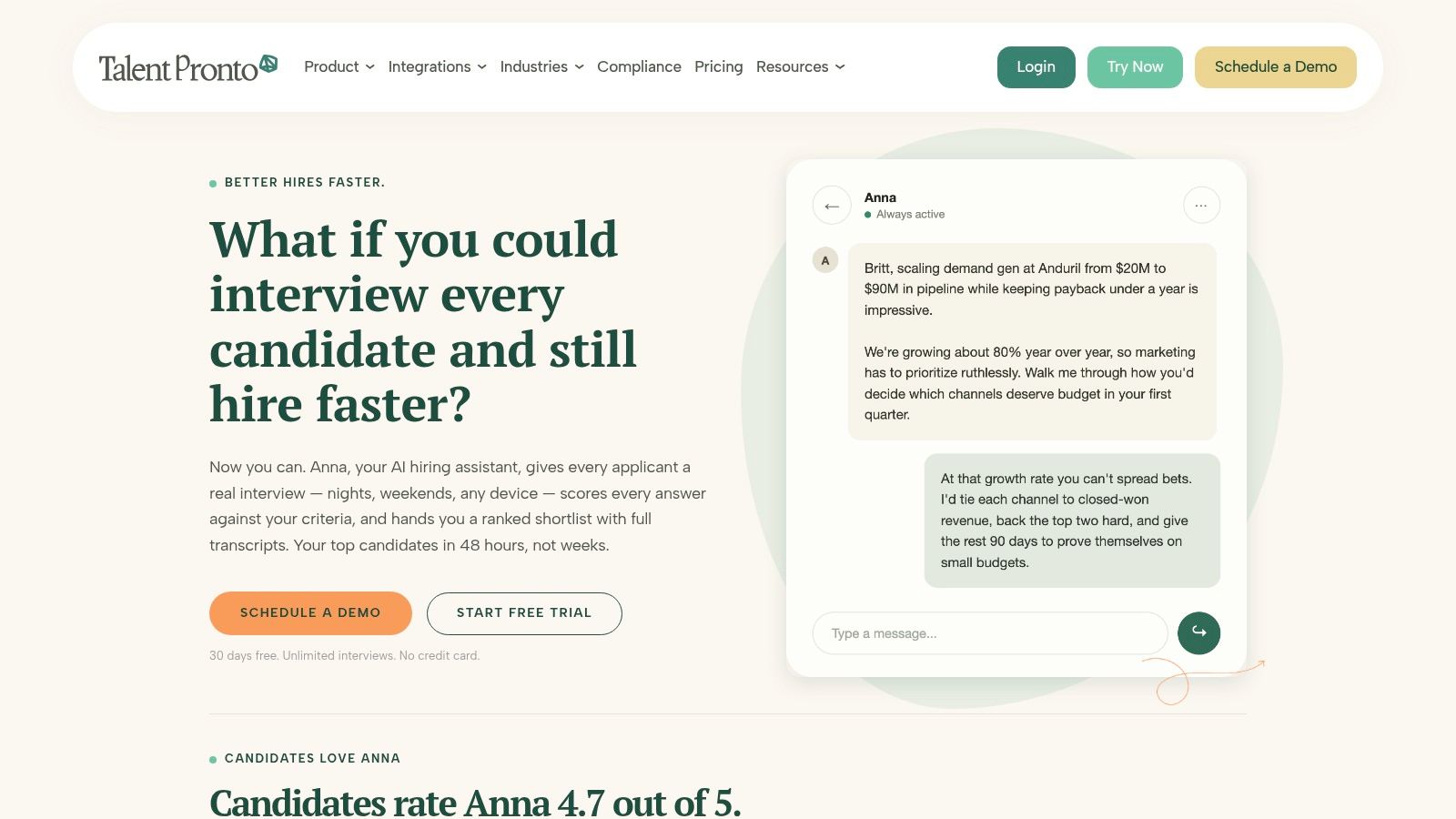
Early signal is easier to capture through conversation than through a long form. Talent Pronto's conversational screening, with its virtual assistant Anna, is built around 24/7 engagement, role-aware questions, and instant responses, which removes the “submit and hope” experience that kills momentum. Used well, this kind of automation does not replace hiring judgment, it keeps the funnel moving so recruiters can review stronger applicants faster.
The operational flow should stay simple. A candidate applies, gets an immediate acknowledgement, answers a few relevant screening questions, and knows where they stand. That is far better than waiting days for a human response after the first click.
Structured review matters because it makes the experience feel fair. Criteria Corp recommends grading all candidates with the same rubric and using structured interviews so each person gets the same opportunity to prove themselves (Criteria Corp). That principle should start before the interview, not after it.
If you want a model for how to operationalize the funnel, Talent Pronto's AI resume screening tool shows how structured data can reduce manual sorting while keeping criteria consistent. The main benefit is not just speed. It is speed with discipline.
A useful comparison outside hiring is the UK tenant screening software guide, where confidence comes from straightforward criteria and clear next steps.
A solid rule for this stage is easy to remember.
If a candidate cannot move through the application in a few minutes on a phone, the process is too heavy.
A candidate can forgive a lot of things. They will not forgive an interview that feels chaotic, disrespectful, or random. Interviews should feel like a structured conversation, not a trap, and the difference shows up fast when interviewers are late, distracted, or improvising from one candidate to the next. They also notice when the process is orderly, the agenda is clear, and the questions map to the job.
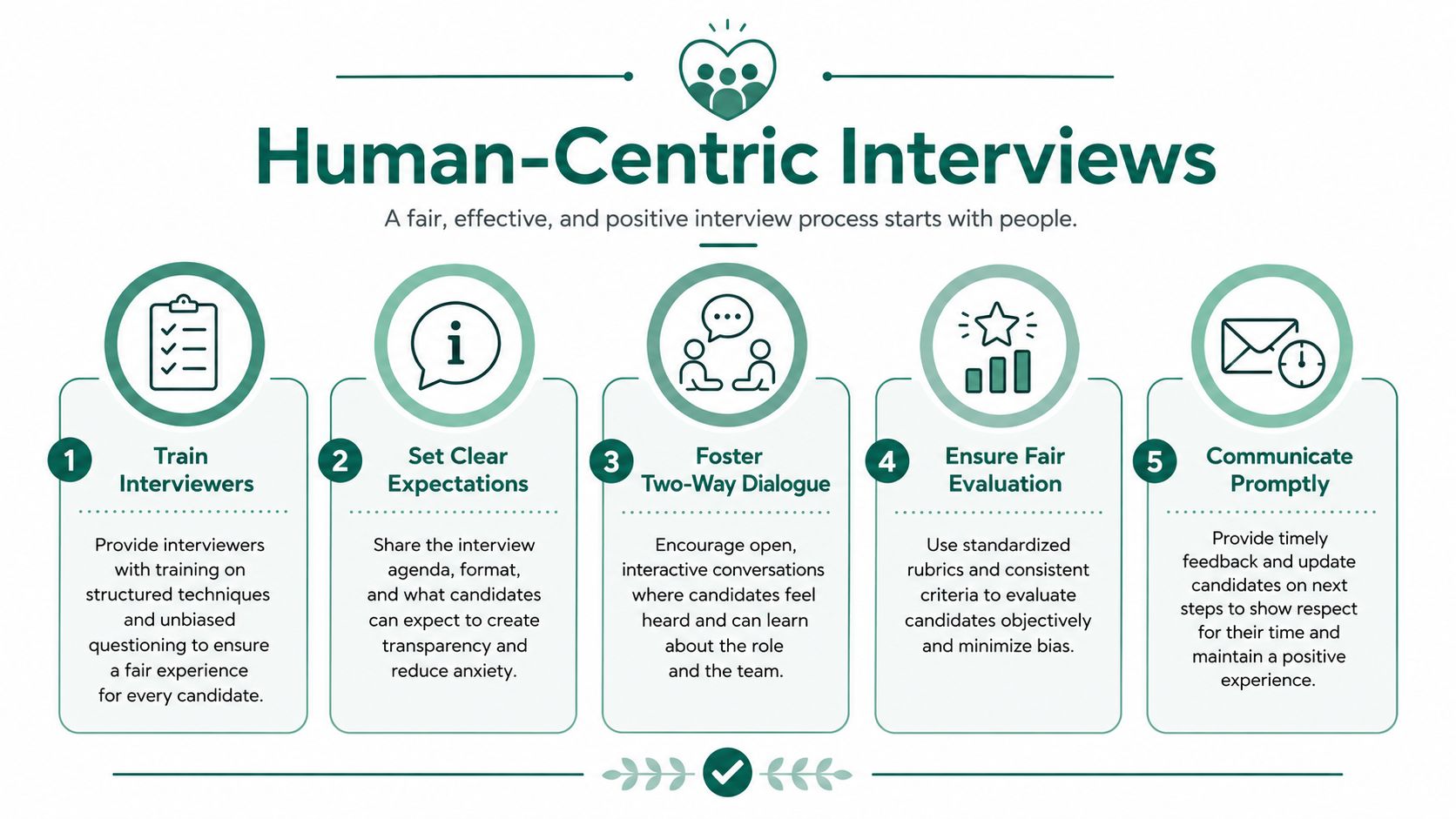
The strongest interview experience starts with clarity. Tell candidates who they will meet, the interview format, the expected length, and practical details like parking, building access, and check-in. That level of detail lowers anxiety, helps candidates prepare, and makes your team look organized before a single question is asked.
A short pre-interview note does the job well:
Hi [Name], you'll meet [interviewer names] for a [format] interview that should take about [time]. We'll focus on [role area], and you're welcome to bring questions about the team, the process, or the work itself.
That message gives candidates a frame without burying them in extra context. It also signals that the interview is designed, not improvised.
Interviewers set the tone for the whole process. They need to be on time, present, and fully focused on the conversation. A hiring manager checking email mid-interview tells the candidate they are not the priority, and candidates remember that.
Training should cover the questions, the rubric, the role context, and the signals the interviewer should listen for. If a manager cannot explain why a question matters, it should not be asked. The goal is consistency, not scripting every moment out of the conversation.
A host mindset helps here. The interviewer's job is to create a fair, respectful conversation where the candidate can do their best work. That means reading the invite carefully, reviewing the resume before the call, and knowing how the role fits into the team before the first question starts.
Calendar back-and-forth is one of the most avoidable sources of candidate frustration. Self-scheduling reduces delay, and automated reminders reduce no-shows. Recruiters get time back, and candidates get a process that feels responsive instead of stalled.
Sapia.ai recommends SLA timers for manager review and escalation when a candidate has been silent for more than 48 hours, which is the kind of operating discipline that keeps momentum alive (Sapia.ai). The same idea applies to interview scheduling. If a candidate is waiting, the process should surface that delay quickly instead of letting it sit in an inbox.
Use a scorecard to keep feedback tied to the role. A simple structure helps interviewers compare candidates without making the process rigid for its own sake.
| Criterion | What to assess | Notes |
|---|---|---|
| Role fit | Does the experience map to the job? | Keep it job-specific |
| Communication | Are answers clear and direct? | Avoid personality-only judgments |
| Problem solving | Can the candidate reason through scenarios? | Ask for examples |
| Motivation | Does the role make sense for them? | Listen for real interest |
That approach keeps interviews comparable and fair. It also gives recruiters a cleaner review trail when decisions need to be explained later.
The follow-through matters too. If your scheduling and reminder system is unreliable, the candidate experiences that as friction, even when the interview itself goes well. A dependable process, supported by infrastructure like Robotomail email infrastructure, helps keep confirmations, reminders, and updates consistent without making the team chase every message by hand.
The most underrated part of candidate experience is what happens after the interview. Many teams spend time polishing attraction and screening, then let candidates sit in silence. That's a mistake, because rejected applicants still remember whether they were treated with care.

A frequently underserved angle is the candidate experience for rejected applicants, and a poor rejection experience can damage employer brand (Naylor Association Adviser). Too many teams still rely on generic templates that say nothing useful. That keeps the legal risk low, but it also leaves the candidate feeling dismissed.
The better approach is plain language. Say what happened, thank them for the time they invested, and give feedback only where it's appropriate and supportable. Final-round candidates may deserve more detail than high-volume early applicants, but both groups deserve dignity.
You can automate status updates without automating away respect. That's where systems matter. For operational reliability in communication workflows, it helps to understand how a sound email infrastructure handles message flow, which is why resources like Robotomail email infrastructure are useful when teams are designing high-volume candidate communications.
Automated messages should do three things. Confirm receipt. Set expectations. Close the loop. Anything less feels like a dead end.
Career teams often worry that feedback at scale becomes a legal or time burden. That's real, but it doesn't justify silence. The practical standard is to keep feedback specific to the stage and the criteria used, then avoid vague phrases like “not a fit” when you can say something more useful.
A strong rejection note might sound like this:
Thank you for the conversation and for the time you put into the process. We're not moving forward, but we appreciated your experience in [area]. We're keeping your details on file for future roles that align more closely with your background.
That kind of message preserves the relationship without overpromising.
Candidates remember whether the process ended cleanly. Recruiters should care about that because every candidate is also a future applicant, referral source, or customer.
An accepted offer isn't the finish line. It's the start of the credibility test. If communication stops after acceptance, candidates start wondering whether they made the right choice, especially if another employer is still trying to win them back.
Use pre-boarding to reduce uncertainty. Send paperwork promptly. Confirm the start date. Share the reporting structure, first-day logistics, and what they need to bring or complete before they begin. The point is to remove the “what now” feeling that often appears after the excitement of an offer fades.
A welcome message from the manager matters here because it feels personal, not transactional. So does a short note from the team that says they're expected and valued.
The candidate experience doesn't end when the contract is signed, it blends directly into employee experience. If onboarding is disorganized, the earlier work gets undermined. If it's clear and welcoming, the candidate's decision is reinforced.
A simple checklist helps:
The companies that do this well make the new hire feel included before day one. That lowers anxiety and reduces the risk of second thoughts.
If you want to improve candidate experience, you need evidence, not instinct. The right metrics show where candidates slow down, which steps create confusion, and where the process loses speed. Without that visibility, hiring decisions turn into opinion battles.
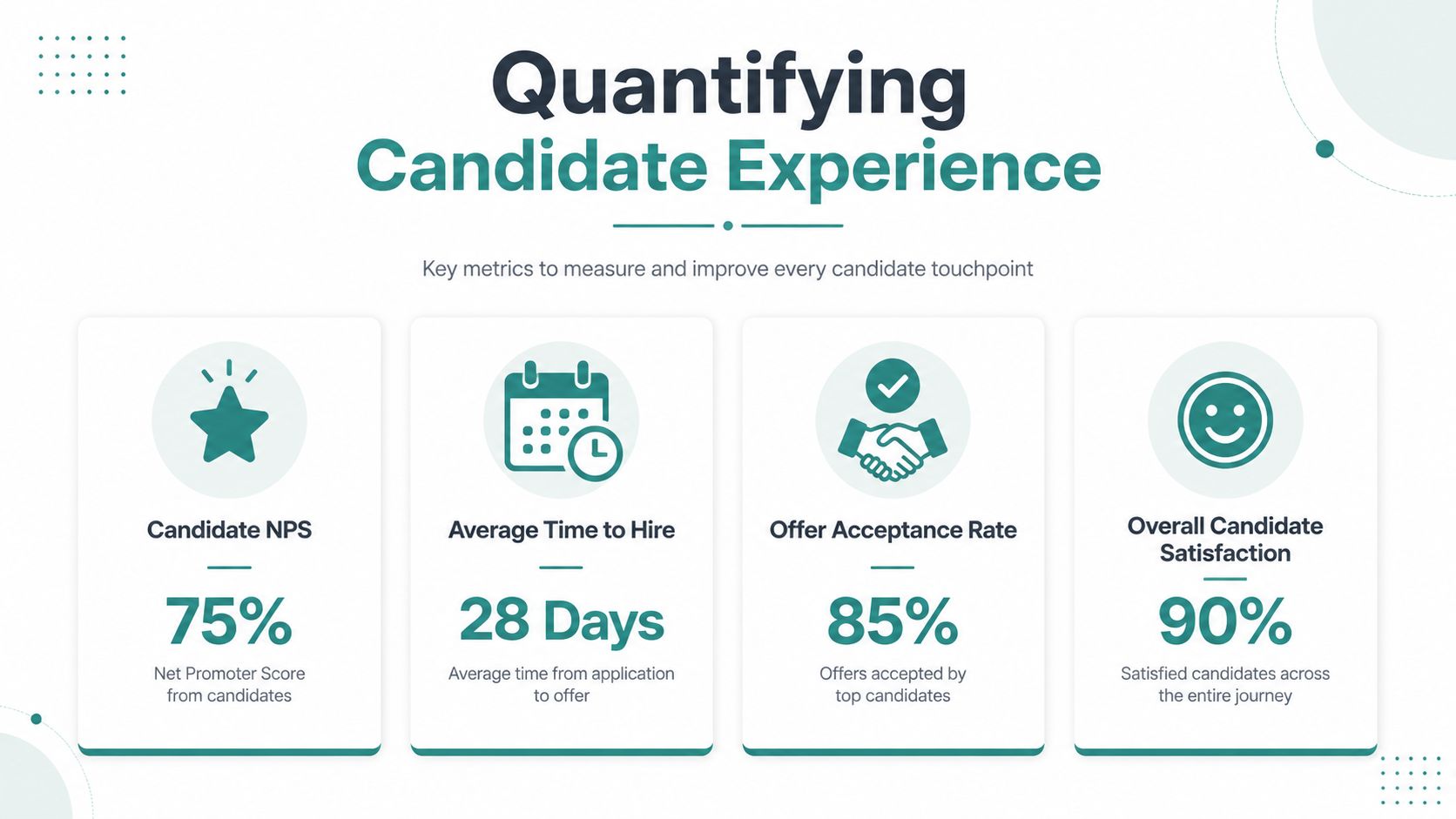
Start with the measures that show whether candidates are moving through the funnel without friction. Application completion, interview-to-offer movement, offer acceptance, and candidate sentiment are the core signals. Interview transparency belongs in that group too, because candidates need to know who they will meet, the format, the length, and practical details like parking and check-in.
If your team uses a people analytics layer, it becomes much easier to spot patterns across recruiters, roles, and stages. A clear what is people analytics framework helps connect funnel data with hiring outcomes, so you can see where delays and drop-offs come from.
Wait too long, and the feedback gets vague. Ask after application submission, after interviews, and after offer or rejection. That gives you stage-specific insight instead of one generic comment about the whole process.
A practical survey can stay short:
Short surveys work because candidates will finish them. Long ones usually get ignored.
Measurement only matters if it changes behavior. Review the data on a regular cadence, look for recurring drop-off points, and assign each issue to a clear owner. If scheduling is the bottleneck, fix scheduling. If feedback quality is weak, coach the interview team. If the application is too heavy, simplify it.
The strongest candidate experience programs do not try to optimize everything at once. They focus on the biggest points of friction, improve those first, and keep the process visible enough that the team can hold the line. That is also where structured automation helps. When teams use Talent Pronto to standardize screening and communication, they spend less time patching process gaps by hand and more time acting on the issues that candidates feel.
A good review cadence keeps the team honest. It also gives recruiting leaders a way to scale what works without adding more manual work to an already busy process.

Talent Pronto is an AI-powered hiring platform built around Anna, our intelligent AI that conducts 24/7 conversational screening, evaluates candidates against specific job requirements and compliance needs, and schedules interviews. Run everything on the Talent Pronto ATS, our all-in-one applicant tracking system with a branded careers site and Anna built in, or keep your existing ATS and let Anna integrate with Greenhouse, Ashby, iCIMS, Jobvite, Lever, Oracle, and more. Either way, we help organizations reduce time-to-hire and build stronger teams.