Learn how to write job advertisements that attract qualified candidates fast. Practical steps on headlines, structure, inclusive language, and SEO for hiring.
You can feel a bad job ad before you can prove it. The hiring manager says the inbox is full, the résumé pile is huge, and still nobody looks right, or the strongest applicants disappear after the first screen. That gap usually isn't a sourcing problem. It's a writing problem, and more specifically, a funnel design problem.
A job advertisement is the first schema your hiring system reads. If the title is vague, the summary sounds like internal HR copy, and the application steps are buried, the rest of the funnel starts with noise. If the ad is tight, searchable, and structured around real screening criteria, the entire process gets cleaner, from applicant self-selection to scorecards and ATS handoff.
A hiring manager once handed over a posting that looked successful on paper. The role pulled in hundreds of applications, the careers page traffic looked healthy, and the team still could not fill the seat. When the recruiter opened the inbox, most applicants were hard to compare, and the few strong ones were buried under noise. That is what a weak job ad does. It creates volume without relevance.
The failure usually starts in three places. First, the title is too generic, so the wrong people click. Second, the opening summary talks about the company more than the work, so candidates cannot tell whether they fit. Third, the ad never makes the application steps obvious, so even motivated candidates hesitate. Public-sector guidance has long pushed the AIDA structure, Attention, Interest, Desire, Action, along with one clear headline, short sentences, bullet points, simple language, and direct “you” language, because people scan faster when the posting is built that way.
Practical rule: if a candidate cannot understand the role in under a minute, the ad is probably written for the employer, not the applicant.
The problem is not just wording. A job ad sits at the front of sourcing, screening, and scoring, so every line changes who applies and how easy it is to review them later. A hiring-industry analysis found that job descriptions under 300 words get 8.4% more responses than average, and an employer survey found only 48.6% of employers believed their job ads were effective (Insight Global analysis). That lines up with what recruiters see in practice. Short, clear copy gets better engagement because it helps the right people self-select and keeps the wrong ones from drifting in.
I treat job-ad writing as funnel design, not copy polish. The first paragraph shapes the next ten applicants before a recruiter ever opens a scorecard, and the structure also affects how easily an ATS can sort, filter, and route the responses. A stronger ad does more than attract candidates. It filters for fit before the first interview, which saves time for everyone who has to work the pipeline later.
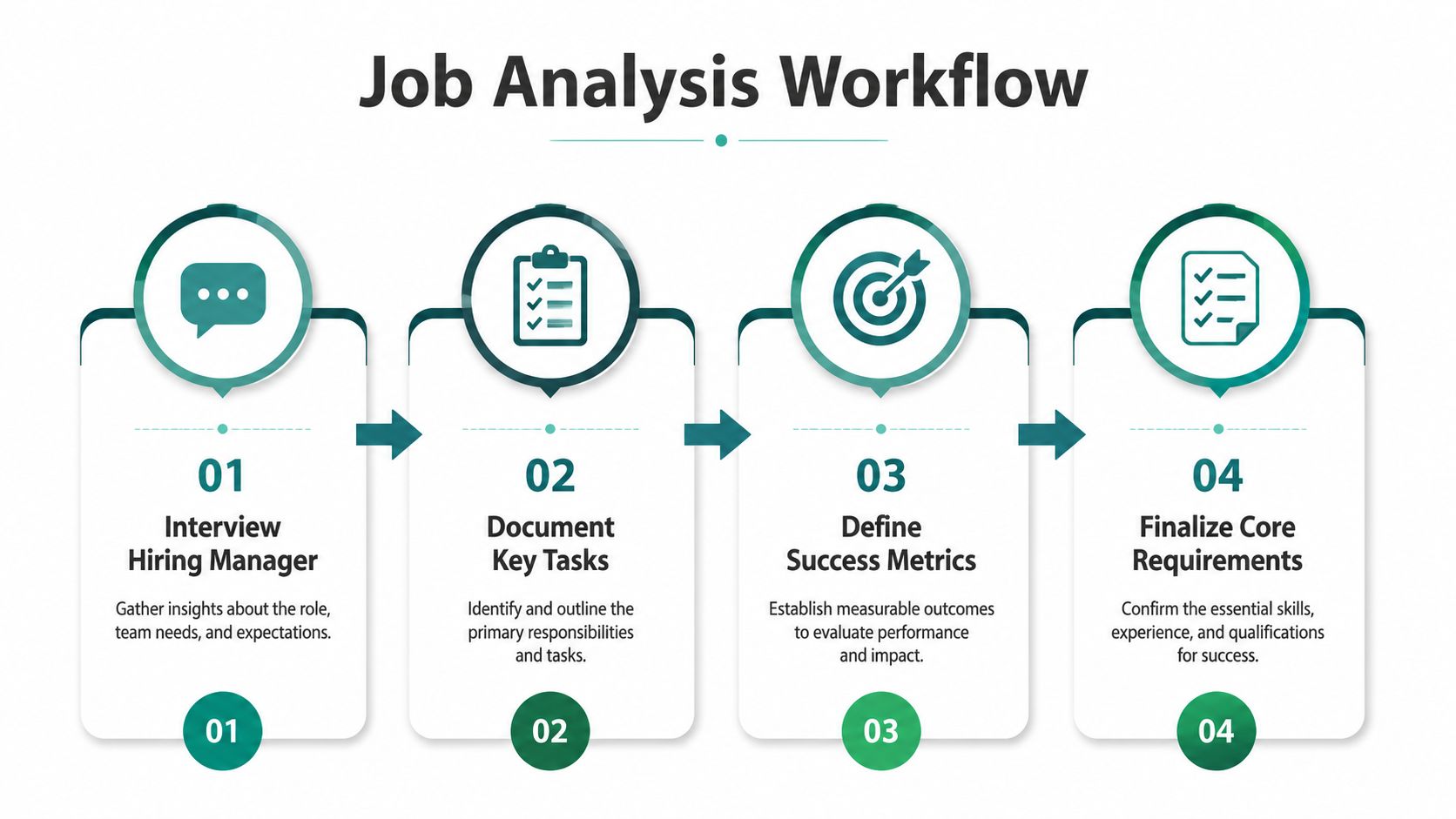
The fastest way to write a useless ad is to start with a template and then paste in every request the hiring manager can imagine. The better move is to run a short job analysis first, then let the writing follow the work. The University of Wisconsin–Madison recommends identifying screening criteria before finalizing a posting, then using those criteria to shape the requirements, while keeping the language plain and having multiple people review it before publication (UW–Madison guidance). That sequencing matters because it keeps the ad aligned with how you'll screen.
Open the conversation with the hiring manager by asking what the person will do in the first weeks, not what the team wishes they could do someday. Capture actual tasks, recurring decisions, tools used, and where the role sits in the workflow. A healthcare role might need experience with scheduling, compliance handoffs, and patient communication. A retail role may depend more on shift coverage, conflict handling, and POS familiarity. A tech role might be centered on debugging, stakeholder updates, and a specific stack.
Then separate must-have criteria from preferred ones. That distinction is where many postings go wrong. If everything is essential, nothing is. One practical way to test each line is to ask whether you would reject a strong applicant who lacked it, or coach them after hire.
Once the criteria are clear, map each one to a future screening question. If the ad says the person must manage client escalations, the screen should ask for a live example of that work. If the role needs a particular software tool, the screen should probe for actual usage, not just familiarity. That keeps the ad and the interview rubric in sync.
I've found role quality improves fastest with this approach. It forces the team to name what matters before the copy gets polished. For a structured workflow that starts with the same kind of job-fit thinking, Talent Pronto's job fit assessment is a useful reference point.
Build the ad from evidence about the role, not from a wish list. That's what keeps the posting usable later in screening.
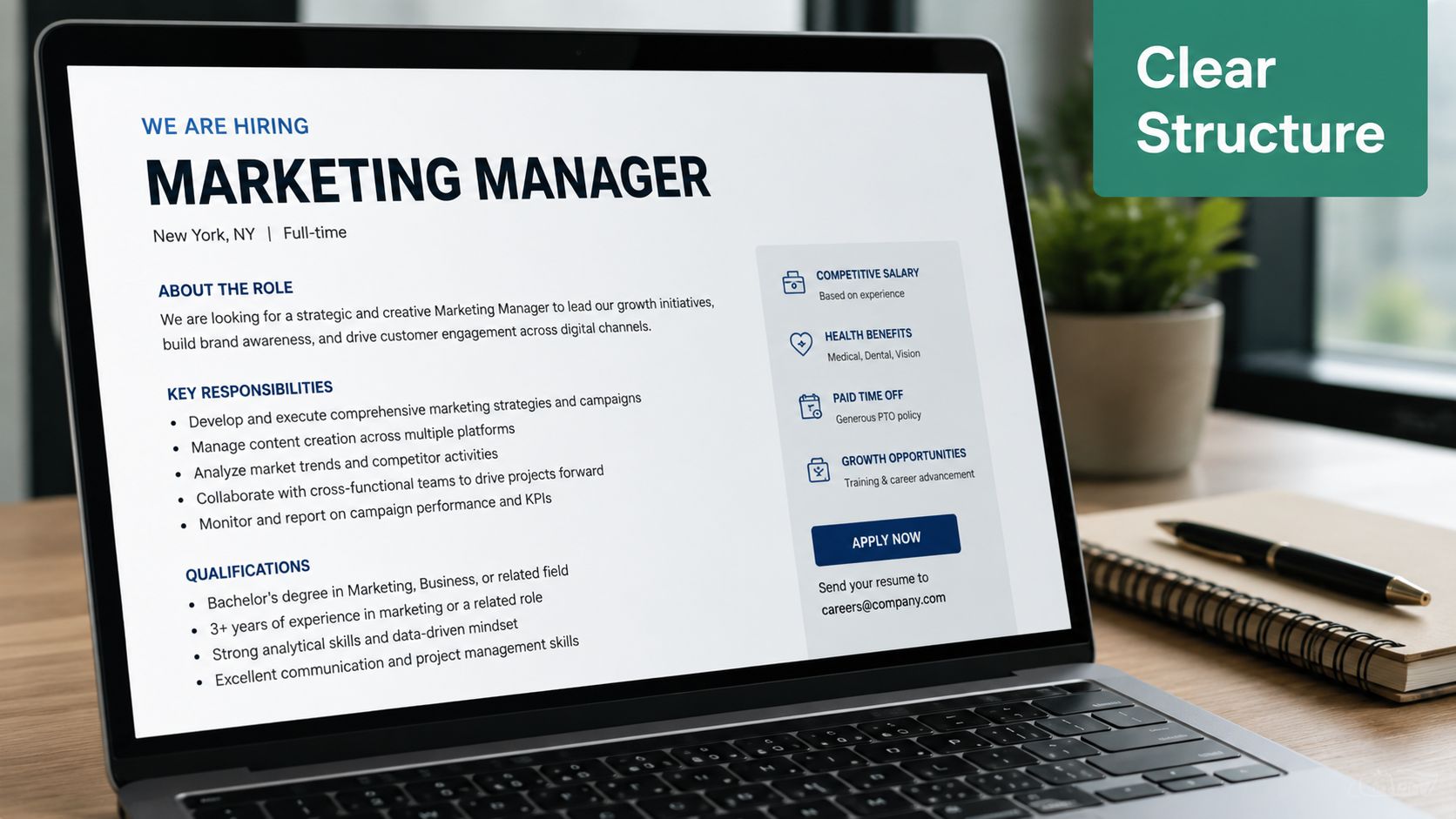
A job ad loses people fast when the first screenful is vague. Candidates scan the title, read the opening lines, and decide whether the role is worth their time. LinkedIn's job-ad guidance says to keep postings to less than 300 words and to use clear, specific titles, essential responsibilities, mission and values, relevant keywords, and prompt-application language (LinkedIn best practices). That does not mean every role has to fit into a tiny paragraph. It means every word has to justify itself, because the ad is doing funnel work as much as writing work.
A generic title like “Marketing Manager” makes search harder than it needs to be. A tighter version like “Performance Marketing Manager, Paid Social” tells candidates what the job is and helps job boards match it to real searches. The same logic applies across functions. A title should be specific enough to attract the right click and broad enough not to shrink the pool for no reason.
The opening summary should speak directly to the candidate. Use “you,” not a detached third person, and lead with what the person will do and why it matters. The candidate should be able to tell, within a few lines, whether the job fits the work they already do or the work they want to move into. A summary that reads like a short preview of the job performs better than one that reads like brand copy.
The responsibilities section should read like a ranked list, not a dump of duties. One best-practices guide recommends a summary that highlights roughly 8–10 key responsibilities, paired with separate required and preferred qualifications (Wolters Kluwer guidance). That is the right instinct. If the post has 12 vague bullets, the reader stops parsing. If it has 8 sharp ones tied to outcomes, the role becomes intelligible.
Here is the edit pass I use. Remove overlap. Cut internal jargon. Keep the high-frequency work. Leave out aspirational tasks that no one will own in month one. The goal is not to impress the hiring manager. The goal is to help a qualified applicant see the job clearly enough to self-select in or out, and to make the later screen and scorecard easier to build.
The structure matters because it changes both human reading and machine parsing. A posting that opens with a searchable title, then a candidate-first summary, then a short responsibilities list is easier for a person to read and easier for an ATS to process into downstream screening steps. That is the point of the format.
Use an equal opportunity hiring framework as a check on whether the title, summary, and responsibilities are written in a way that widens access instead of narrowing it.
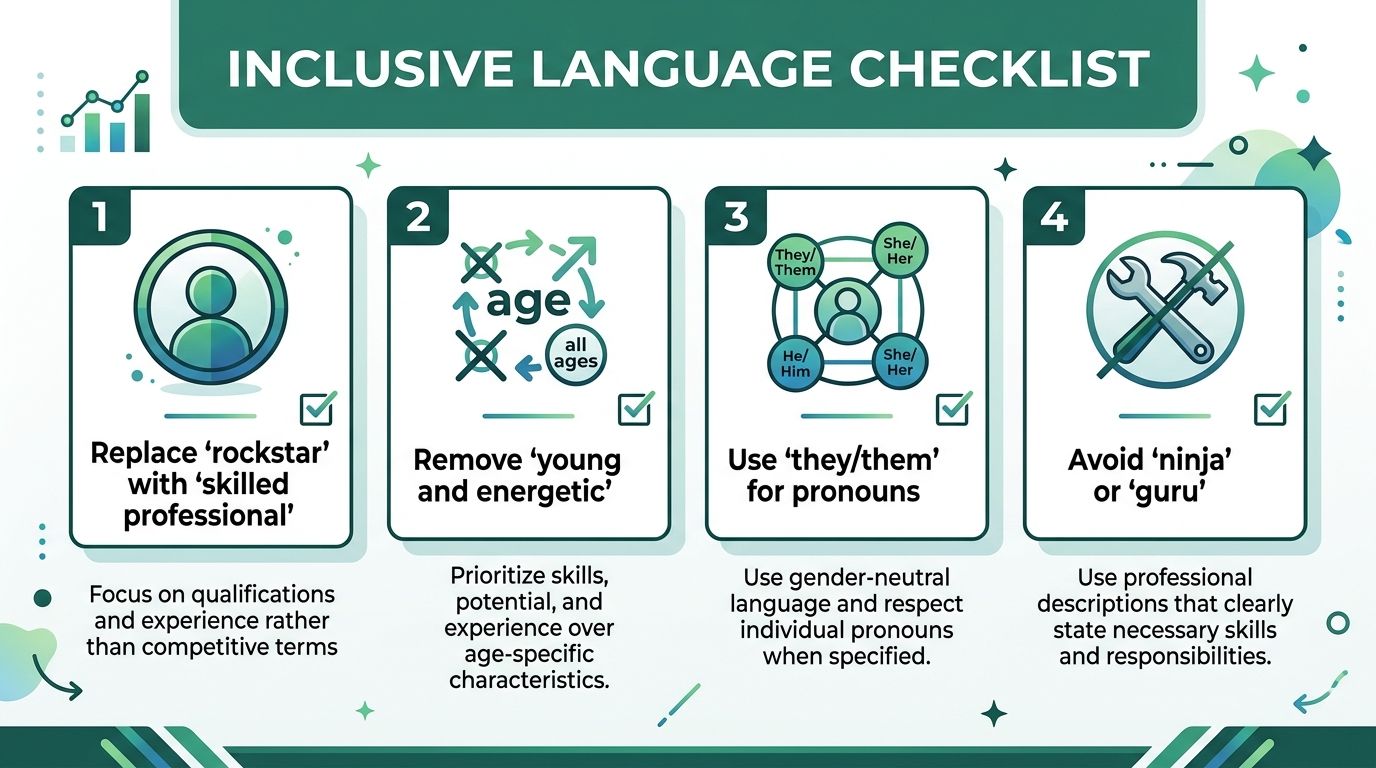
Inclusive copy does more than soften the tone. It keeps the posting from filtering people out before they ever reach the apply button, which matters because every extra point of friction changes who stays in the funnel. Mass.gov recommends including salary ranges, flexible or remote work options, and accommodation information because those details widen reach and reduce friction for candidates (Massachusetts guidance). That is compliance work, and it is also conversion work.
The first pass is usually a vocabulary audit. Words like “rockstar,” “ninja,” and “guru” add style, but they rarely add meaning. Phrases such as “young and energetic” carry age bias risk and can make the ad feel like a culture test instead of a job description. Plain language works better because it tells a qualified candidate what the work looks like without making them decode the brand voice.
Required and preferred qualifications need a hard line between them. When a nice-to-have slips into the must-have list, the posting can exclude people who would do the job well but do not match every preferred trait. Keep the criteria tied to the actual job analysis, and keep each requirement specific enough that a recruiter, a hiring manager, and an ATS can all treat it the same way. That makes the ad easier to defend and easier for applicants to judge.
Many employers still treat salary, location flexibility, and accommodation language like optional extras. In practice, those details are part of the candidate's decision tree. If the ad does not say whether the role is remote, hybrid, or on-site, or if it hides compensation entirely, people spend time guessing instead of applying. That slows the funnel and creates avoidable drop-off.
Direct rule: the more practical information you leave out, the more self-selection you force onto the applicant.
A clean editorial pass should check three things before the post goes live. Clear pay and location signals. Plain language without loaded terms. A visible accommodation statement and a transparent application path. Those choices also make the posting easier to support in an equal opportunity review, which is where a descriptive equal opportunity hiring framework becomes useful. If the role summary and application flow are also doing SEO work, the body copy still needs to stay readable for people who arrive from search, which is why many teams also use a separate step to win more clicks with better meta descriptions.
A job ad competes in search before it competes in interviews. Candidates search by title, tool, location, and sometimes by intent, like remote or hybrid. If those signals are fuzzy, the ad gets buried or shown to the wrong audience. I think of this layer as the difference between being visible and being findable.
The title is the first SEO decision. It should reflect how people look for the role, not just the internal org chart. Specific titles help with discovery on LinkedIn, Indeed, Google for Jobs, and the company careers page, while generic labels force candidates to do extra work. The opening lines matter too, because mobile previews often truncate the post quickly.
A useful habit is to check autocomplete and compare how similar roles are named on job boards. If the market consistently uses “Customer Success Manager” and you've called the job “Client Happiness Lead,” you've made it harder to find. Keep the visible fields consistent as well. Location phrasing, employment type, and salary band all affect whether the posting surfaces in filtered search.
| Channel | Title visibility | Open lines shown | Structured fields honored |
|---|---|---|---|
| High, but compact | Limited preview on mobile | Strong, especially title and role data | |
| Corporate careers page | Full title and full body | Often more of the opening copy is visible | Depends on site structure |
| Google for Jobs | Title and structured snippets | Truncated snippets vary | Strong when fields are labeled clearly |
The same ad can behave differently depending on where it appears. A careers page can carry more context, while a job board rewards sharper fields and cleaner structure. That's why I usually keep one canonical draft, then adjust the top lines and metadata for the channel.
For a useful analogy on how opening text affects click behavior, win more clicks with better meta descriptions from Polaris Marketing Solutions makes the point well. The logic is similar. The first visible words have to earn the click before the rest of the page gets a chance.
A strong job ad is the front end of the screening system, not a separate creative asset. If the criteria are crisp, they can feed a structured scorecard, a conversational screening flow, and the ATS fields that track the candidate through the pipeline. If the criteria are vague, the whole system becomes harder to trust. That's where a lot of hiring teams lose time.
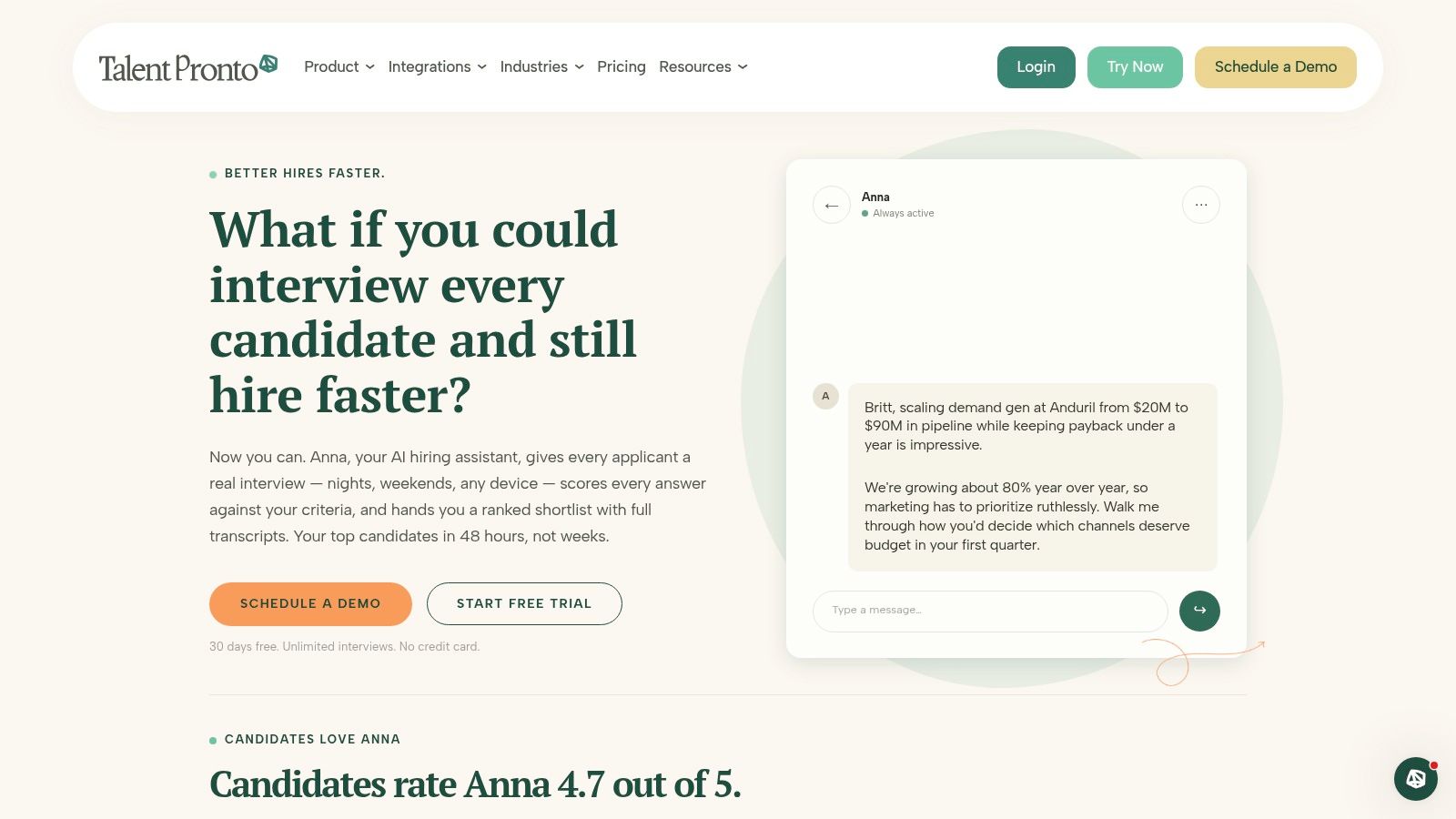
Talent Pronto's AI resume screening tool fits this kind of workflow because it depends on clear role criteria. If the ad says the applicant must have a certain tool, type of experience, or compliance background, those points can become consistent screening prompts. If the ad blends must-haves and preferences into one paragraph, the screening assistant has to guess what matters most.
That's the trade-off. Broad language feels flexible, but it creates noisy scorecards. Specific language feels stricter, but it produces comparable answers. When you're reviewing ten applicants, comparability is what saves time.
Modern ATS and HRIS integrations can sync statuses automatically, which means the ad has to define the right categories from the start. The candidate should see enough detail to self-select, the screener should have enough structure to compare answers, and the hiring manager should see a scorecard that reflects the actual job. Those pieces only work together when the posting is written as a schema, not a slogan.
The best ads create fewer arguments later because they answer the basic questions upfront.
That's especially true for high-volume hiring. If the posting is loose, the screening assistant returns inconsistent signals and the recruiter spends time normalizing answers by hand. If the posting is tight, the system can do its job without inventing criteria on the fly.
The easiest posting to write is the one you can reuse with discipline. A good template keeps the structure stable while letting the role details change. One version works for high-volume hourly hiring, where clarity and speed matter most. Another works for specialized professional roles, where the ad needs a little more context around scope, tools, and decision-making.
For hourly roles, keep the template lean. Start with the exact title, state the shift or schedule, list the core duties, then give pay, location, and how to apply. For professional roles, add a short summary of what success looks like in the first months, then separate required from preferred qualifications and include the application steps clearly at the end.
The microcopy around the application matters too. “Apply now” is functional, but “Submit your résumé and answer three short questions” is clearer. Confirmation text should tell people what happens next, not leave them waiting. If a candidate gets rejected, the wording should stay direct and respectful. That's not just good brand behavior, it keeps the funnel from feeling opaque.
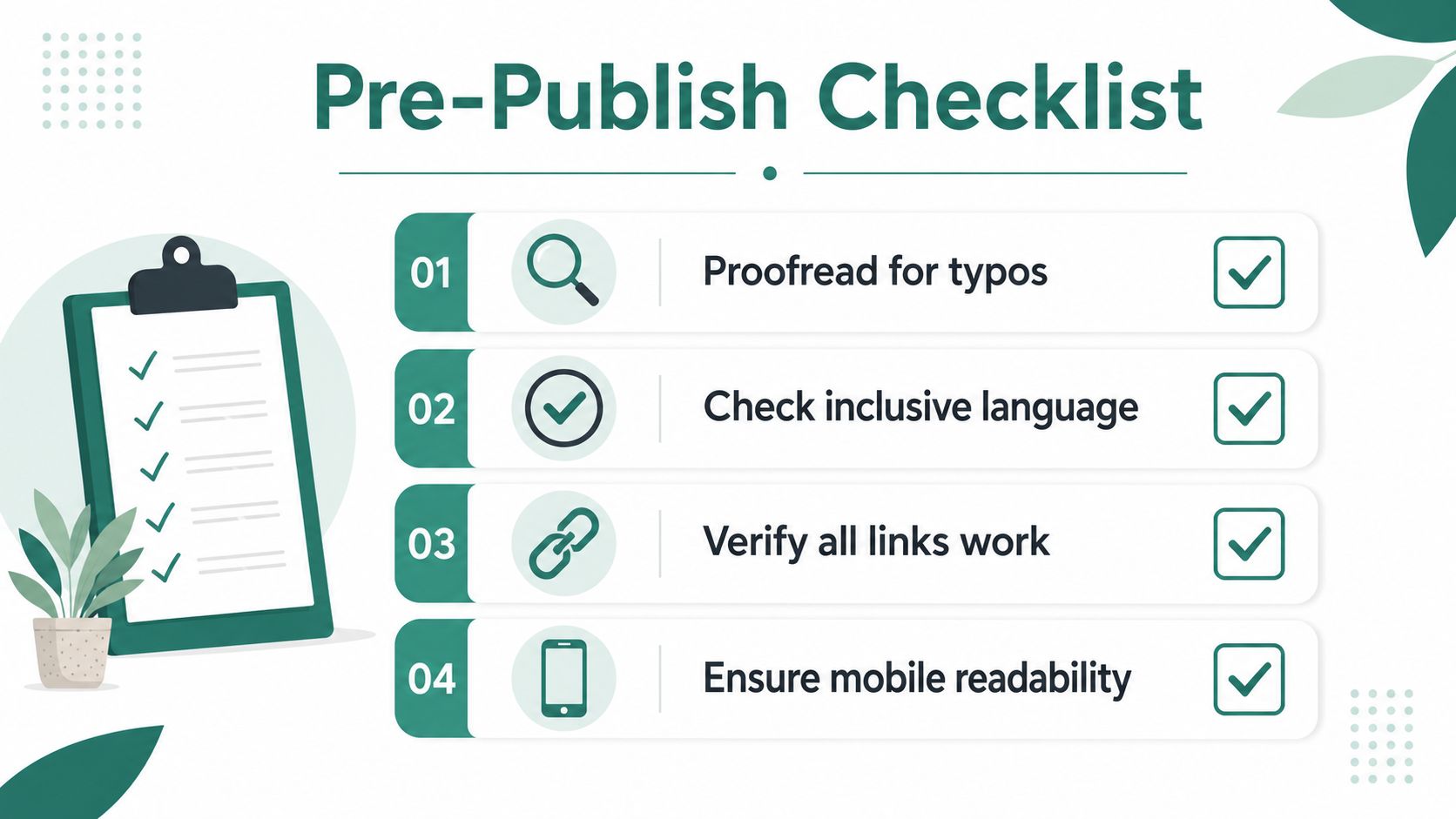
Run the posting through this quick check:
Read the ad aloud before publishing. If the top three applicants would self-select out because the role feels unclear, overloaded, or hidden behind jargon, the posting still needs work. A strong ad should make the right person feel informed, not interrogated.
If you want a job-ad process that holds up under real hiring pressure, Talent Pronto can help you connect the posting to conversational screening, structured scorecards, and ATS workflows instead of treating it as a standalone document. Visit Talent Pronto to see how that approach fits your next role, especially if you're trying to reduce noise in early-stage hiring and make every applicant response easier to compare.

Talent Pronto is an AI-powered hiring platform built around Anna, our intelligent AI that conducts 24/7 conversational screening, evaluates candidates against specific job requirements and compliance needs, and schedules interviews. Run everything on the Talent Pronto ATS, our all-in-one applicant tracking system with a branded careers site and Anna built in, or keep your existing ATS and let Anna integrate with Greenhouse, Ashby, iCIMS, Jobvite, Lever, Oracle, and more. Either way, we help organizations reduce time-to-hire and build stronger teams.