Discover the best interview tips videos from top career coaches. Our 2026 guide helps candidates and hiring teams improve interview performance and strategy.
You're probably staring at a laptop between meetings, trying to decide which interview tips videos are worth your time and which ones are just polished filler. That's the problem now, too much content, not enough signal. The best resources don't just make you feel more confident, they help you answer better, ask sharper questions, and build a repeatable interview process that hiring teams can standardize.
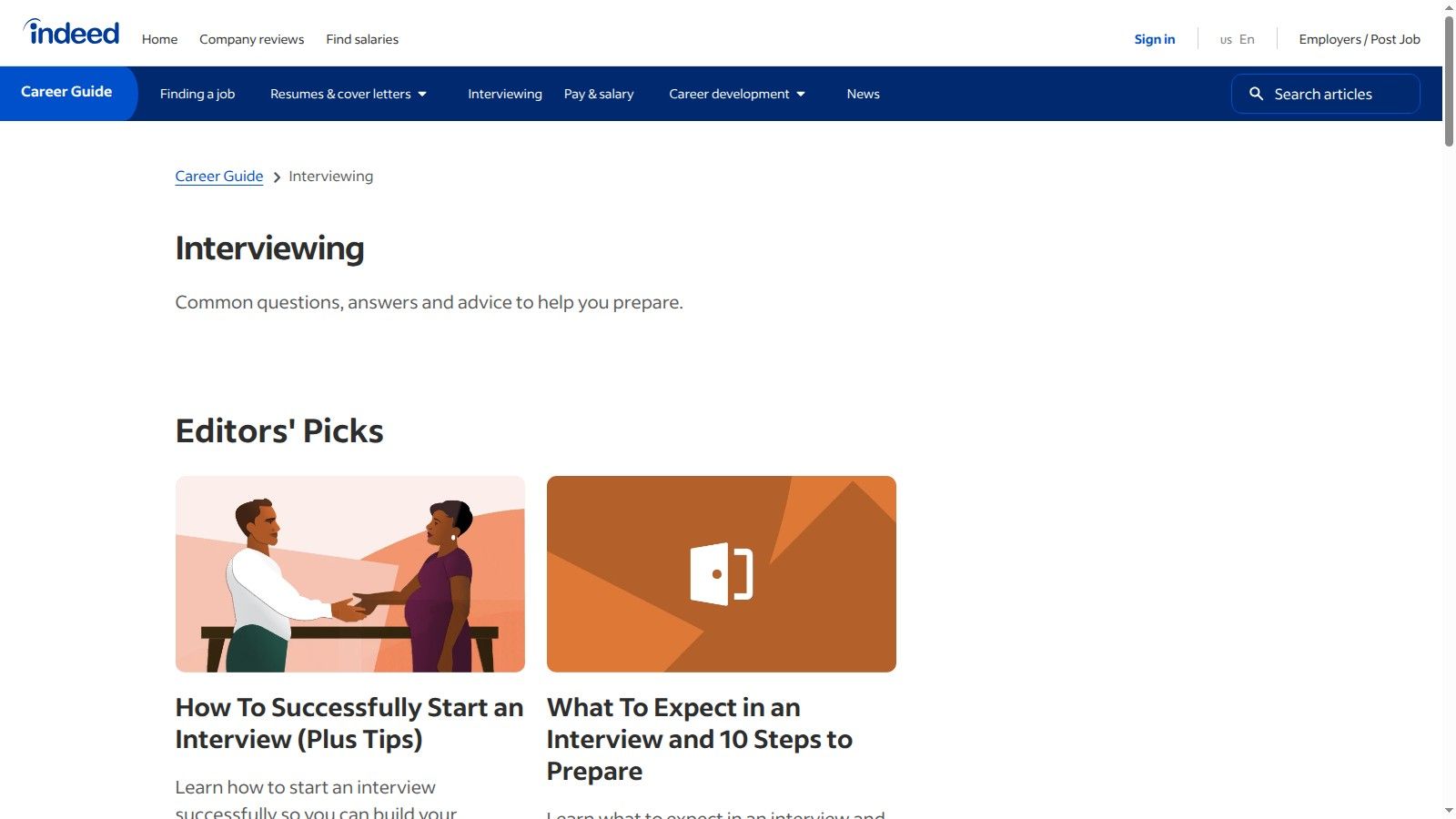
Indeed is the safest first stop if you want interview tips videos that don't assume you already know the jargon. The YouTube channel and the companion Indeed Career Advice interview hub stay close to the basics, which matters when you're preparing for behavioral questions, virtual setup, and follow-up without overcomplicating the process. The tone is beginner-friendly, but the examples are concrete enough to be useful for experienced candidates who need a quick reset.
The strength here is pairing video with written guidance. If a candidate watches a clip on common questions, they can move straight into sample answers and then compare their own response against the structure Indeed recommends. That makes it easier to build a prep routine instead of passively consuming advice.
Practical rule: use Indeed first when you need breadth. It's better at covering the full interview lifecycle than at teaching one narrow specialty.
For hiring teams, the value is different. Indeed's material is easy to adapt into candidate prep emails, onboarding content for recruiters, and internal reminders for interviewers who need a baseline standard. If you're using Talent Pronto, this kind of mainstream content also works well as pre-screening education, because candidates already recognize the brand and are more likely to engage with it.
What works - Clear setup guidance: useful for webcam and virtual interviews, especially for candidates who freeze on the tech layer. - Short-form explanation: good for people who need an answer fast, not a seminar. - Companion articles: ideal for candidates who learn better when they can read after watching.
What doesn't - Depth varies: some videos stay surface-level. - Mixed playlists: not every playlist is pure interview prep, so you have to curate.
For teams building candidate experience flows, this is the easiest resource to embed early. It pairs well with a structured process, especially when you want applicants to know what a good answer sounds like before they meet a recruiter. The candidate experience playbook fits neatly alongside this kind of content because the focus is practical, not theatrical.
LinkedIn Learning works best when you want interview tips videos that feel like a course, not a feed. The platform's interview preparation catalog sits inside a broader learning environment, so candidates can move from fundamentals into personal brand, recruiter collaboration, and role-specific practice without bouncing between random uploads on YouTube. That structure matters if you're coaching someone who needs a more disciplined path.
The production quality is strong, and that matters more than people admit. Clean audio, organized lessons, and instructor-led pacing make it easier to stay focused and finish the material. For candidates, the completion certificate can also help create a sense of momentum, especially when the job search feels scattered.
The trade-off is simple. This is not the place to hunt for free, snackable tips. It's a subscription platform, so it makes sense when someone is serious enough to want a repeatable training flow and doesn't mind paying for it.
LinkedIn Learning is strongest for job seekers who want a path, not a pile of advice. If someone is transitioning industries, interviewing after a layoff, or trying to rebuild confidence after repeated rejections, the course format can help them stop jumping from one random tactic to another.
For hiring teams, the platform is useful for internal development too. Recruiters, managers, and even people leaders can use it as a shared reference point, which reduces the mismatch between how interviewers think they're asking questions and how candidates experience the interview. That's a real issue in multi-stage hiring, especially when manager interviews are inconsistent.
Use it when you need - Role-based learning: good for targeted prep instead of generic advice. - Professional pacing: useful for candidates who prefer polished instruction. - Completion tracking: helpful in structured development programs.
Skip it when - Budget is tight: the subscription model won't fit every candidate. - Recency matters a lot: some courses are older, so release dates deserve a quick check.
For Talent Pronto workflows, this is a strong recommendation layer for candidates who need deeper prep after an automated screen. It's also useful as an interviewer refresher, because a shared course library can cut down on ad hoc coaching and keep early-stage interviews closer to the same standard.
Big Interview is the strongest option on this list if you want watching plus practice. The platform combines a video lesson library with AI mock interviews, which means candidates don't just hear advice about pacing, filler words, or eye contact, they get feedback on how they're performing. That's a meaningful difference, because passive viewing rarely changes behavior on its own.
The platform is especially useful for people who know they ramble under pressure. A candidate can watch a lesson, record a practice answer, review the coaching, and run it again. That loop is far more useful than listening to ten tips and hoping confidence appears on interview day.
It also fits specialized hiring better than many generalist resources. The structured practice sets and industry-specific question banks help candidates align their answers to role expectations instead of speaking in vague career slogans.
Big Interview is built for measurable rehearsal. That matters because interviews reward clarity, not just enthusiasm. If someone can see where their answer drifts, where they over-explain, or where their delivery gets flat, they can correct it before a recruiter ever sees them.
For hiring teams, this is the kind of resource that can reduce avoidable interview weakness. It won't make every candidate strong, but it can help serious applicants show up more prepared, which improves the quality of the early funnel. That is especially relevant in high-volume hiring, where weak preparation can mask real talent.
A good practice tool should make candidates easier to evaluate, not just more confident to watch.
Best use cases - Answer refinement: good for tightening stories and cutting filler. - Delivery coaching: useful when eye contact, pace, and confidence need work. - Structured repetition: ideal for candidates who improve by doing, not by reading.
The downside is cost, and it's not the right choice if you only want a few free tips. But for candidates who need a training environment and for teams that want a better-prepared applicant pool, it's one of the most practical interview resources available.
The interviewer training guide pairs naturally with this kind of platform, because good candidate prep and good interviewer calibration should rise together.
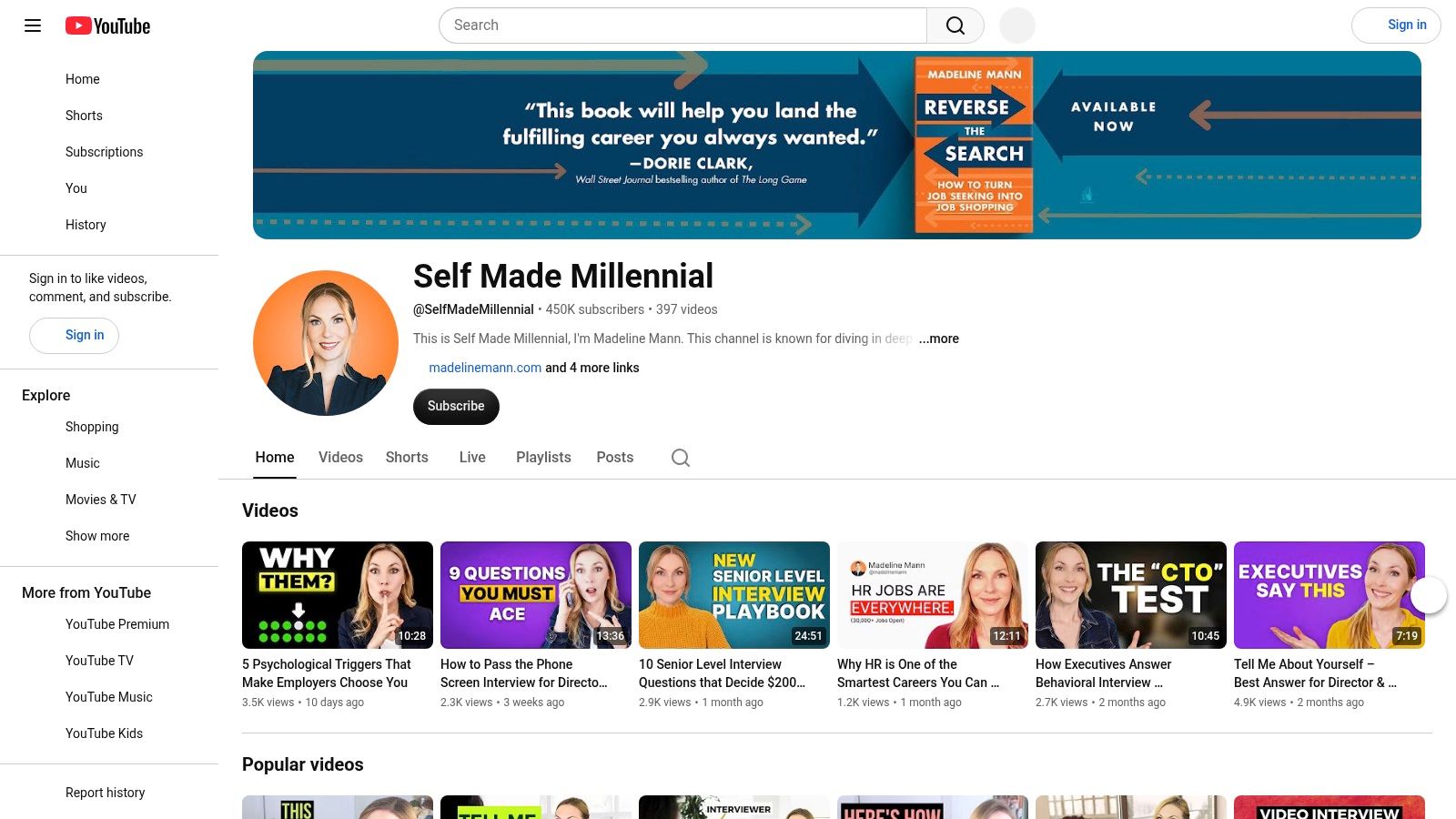
A candidate who freezes on behavioral questions usually does not need more motivation. They need a cleaner way to build the answer. Self Made Millennial is one of the strongest YouTube channels for story structure, and that is what makes it useful in real interviews, especially when the format is one-way, panel-based, or built around HireVue-style screens. Madeline Mann shows how to shape an answer so it stays focused, sounds natural, and lands with evidence instead of drift.
The channel works best for early- and mid-career candidates who have relevant experience but keep burying the point. The fix is not memorizing polished scripts. It is building a small set of adaptable stories and matching them to the question, which is a better use of prep time and usually produces better answers under pressure.
This channel respects how people respond when the clock is running. Candidates usually do not fail because they lack experience. They fail because the answer wanders, repeats itself, or never reaches a clear takeaway. The framework here helps them keep the story tight without sounding robotic.
For hiring teams, that is useful in a different way. If a candidate only performs well after heavy coaching, the prompt may be doing too little work. Structured screening gives applicants a fairer shot and gives reviewers cleaner signals, especially inside automated hiring workflows where the first pass depends on consistency. A good example is the interview prep and assessment flow described in video interviewing platforms, where the quality of the prompt and the quality of the response rise together.
Why candidates keep coming back - Behavioral frameworks: useful for turning vague experience into usable stories. - Question breakdowns: good for understanding what the interviewer is really asking. - Playlists for quick prep: helpful for last-minute refreshers before a screen.
The limitation is sequencing. This is not a linear course, so the viewer has to choose the right videos and follow a plan instead of clicking around at random. It works best when someone is deliberate about what they watch and then applies the structure to live interview practice.
For Talent Pronto, this matters because conversational screening works better when candidates have already learned to answer in compact, evidence-based stories. That makes the interview easier to assess on both sides, and it gives hiring teams better material for interviewer training as well.
CareerVidz is the channel I'd send to someone who needs sample answers fast and does not have time to build them from scratch. Richard McMunn produces a large volume of interview content, and the format stays direct, step by step, and easy to adapt. If a candidate needs a walkthrough for a competency question, a behavioral prompt, or a last-minute mock interview, this channel gets them moving quickly.
That volume is the main trade-off. There is plenty to choose from, which helps for finding a role-specific question set. It also means the viewer has to filter carefully and adjust the phrasing so the final answer does not sound memorized.
The UK-style framing shows up in places, but the value travels well. Most candidates care less about regional terminology than about whether the answer has a clear structure, a concrete example, and a confident finish.
Use CareerVidz first when time is short, then edit the answer until it fits the role and sounds natural in your own voice. That matters for job seekers, and it matters for hiring teams too, because a polished template can hide weak judgment if interviewers only listen for delivery. A well-structured answer is not the same thing as a real match.
For teams using a platform like video interviewing platforms, this channel is useful as a training reference. It shows how candidates learn to package responses under pressure, which makes it easier to coach reviewers on where to probe deeper and where to separate structure from substance.
Use the template, then make it yours. If the answer still sounds like a recording, the candidate has not finished the work.
CareerVidz works best as a quick prep tool for entry-level candidates, career changers, and anyone who wants a confidence boost before a real interview. It is also a practical resource for hiring teams building interview prep guidance, because it shows the kind of scripted language candidates often bring into the process.
Pros in practice - Large role library: useful across many industries and seniority levels. - Clear answer frameworks: helps candidates avoid rambling. - Frequent refreshes: better for people preparing against current formats.
Cons in practice - Can feel scripted: candidates need to rework the wording. - Some regional language: not every example fits every market.
This channel gives candidates raw material they can shape into a stronger answer, and it works well with structured scoring and follow-up in Talent Pronto. It will not replace real practice, but it can help candidates sound organized under pressure.
A candidate can have the right experience and still lose momentum in the interview. Linda Raynier is useful because she focuses on both message and delivery, which is where many strong applicants slip. Her advice covers what to say and how to say it, especially for people whose answers are sound but whose nerves make them seem rushed, flat, or overrehearsed. The free 3-part interview training gives job seekers a structured place to start without forcing an immediate paid commitment.
The best time to use her videos is before a live interview, then again after a practice run. Watch once for structure, then watch again for phrasing, tone, and pacing. That second pass matters more than most candidates expect, because small delivery habits often shape how confident and organized an answer feels. For hiring teams, this is useful for prep guides and mock-interview coaching, since it shows where candidates need clearer language rather than more content.
Her material also fits candidates who need stronger executive presence. That includes people stepping into leadership roles, professionals returning to the market after time away, and anyone who knows their expertise but has not yet learned to express it crisply. She gives language candidates can borrow, but the better use is to study how she frames confidence and control.
The video interviewing platforms angle matters here because camera-based interviews raise the bar on delivery. In that setting, hesitation, filler words, and uneven pacing are easier to notice, so the candidate's preparation has to cover more than content alone.
Linda Raynier is one of the better channels for candidates who need to sound more grounded. Her videos on nerves, “Tell me about yourself,” and concise storytelling are practical because they address the moments where people often lose control of the interview. That makes the content useful both for self-review and for coaching someone who already has strong qualifications.
Hiring teams should pay attention to the trade-off here. Delivery affects perception even when the answer is correct. A candidate who sounds organized and calm is easier to evaluate, while a candidate who sounds uncertain can be misread as less prepared. Interviewer training should account for presentation bias without pretending presentation does not matter.
Best uses - Nerve control: helpful for candidates who talk too fast or over-explain. - Concise storytelling: useful for tighter self-introductions and cleaner examples. - Executive presence: good for higher-stakes or leadership interviews.
Watch carefully for - Older uploads: some material predates 2020, so newer videos are often the better starting point. - Less frequent posting: not ideal if you want a constant stream of new content.
For candidates, this is one of the stronger resources for sounding polished without sounding fake. For hiring teams, it works well as a reference when building prep materials or reviewing answers in automated workflows. Used well, it helps candidates present their experience more clearly and gives interviewers a better foundation for judging the substance behind the delivery.
Andrew LaCivita is the best choice for people who learn well in a live, conversational setting. His weekly YouTube office hours cover interviewing, storytelling, and negotiation in a format that feels closer to a seminar than a tip reel. That makes the channel particularly useful for candidates who want follow-up, nuance, and real-time correction rather than prepackaged advice.
The live format also keeps the guidance grounded in what candidates are asking right now. That matters because interview anxiety often comes from current market realities, not just generic uncertainty. When a coach answers questions interactively, the advice tends to feel more usable for the moment you're in.
For hiring teams, his style is useful because it reinforces something that gets lost in a lot of video content, interviewing is a dialogue. Candidates who only rehearse scripted answers often struggle when the conversation changes direction. Live coaching helps them adapt.
Not everyone needs long sessions, but those who do often benefit more from them than from another short tip video. Andrew LaCivita's content rewards attention and reflection. It's especially good for candidates who want to understand interviewer psychology, not just memorize answer structures.
The associated Milewalk Academy resources add another layer for people who want more formal programs and written material. That makes the ecosystem useful for candidates who want both free live coaching and a deeper paid path when they're ready.
Best fit for - Interactive learners: good for people who want to ask questions as they come up. - Deep preparation: useful before important interviews or career transitions. - Long-form coaching: helpful when the issue is thinking, not just answering.
Limitations - Time commitment: the live sessions aren't built for quick hits. - Not ideal for micro-prep: if you have two minutes, this isn't the fastest option.
For Talent Pronto users, this is the kind of resource that can complement automated screening by helping candidates prepare for higher-value live conversations later in the funnel. That's where strong interview training pays off most.
| Resource & Complexity (🔄) | Speed & Efficiency (⚡) | Expected Effectiveness (⭐) | Ideal Use Cases (📊) | Key Advantages & Tips (💡) |
|---|---|---|---|---|
| Indeed Career Tips (YouTube) + Indeed Career Guide, Free, low setup; mostly short videos and articles | Fast to consume; ideal for quick prep | ⭐⭐⭐, practical baseline prep | Beginners, cross‑industry job seekers, virtual interview setup | Reputable, example‑driven; use playlists + companion articles for deeper dives |
| LinkedIn Learning – Interview courses, Subscription, structured course workflows | Moderate (course length); offline/mobile access helps efficiency | ⭐⭐⭐⭐, strong when completed end‑to‑end | Learners wanting structured paths, role‑specific credentialing | High production value and certificates; check course recency before relying |
| Big Interview, Paid platform with AI mock interviews and structured paths; moderate complexity to set up | Moderate speed (practice sessions take time) but efficient for measurable improvement | ⭐⭐⭐⭐⭐, strong measurable coaching and rehearsal feedback | Candidates needing hands‑on practice and delivery coaching | AI scoring on delivery and content; use industry question banks and repeat mocks |
| Self Made Millennial (Madeline Mann), Free YouTube, low complexity; playlist curation required | Very fast for targeted tips and templates | ⭐⭐⭐⭐, highly practical for behavioral answers | Early–mid career candidates, STAR/behavioral storytelling | Story Toolbox templates and example answers; self‑sequence playlists for a full plan |
| CareerVidz (Richard McMunn), Free, high volume of role‑specific videos; low complexity | Fast to find sample answers for specific roles | ⭐⭐⭐⭐, very actionable if customized | Role‑specific prep, competency questions, last‑minute refresh | Ready‑to‑adapt phrasing; be sure to personalize to avoid sounding scripted |
| Linda Raynier – YouTube + free 3‑part training, Mostly free; focus on delivery coaching | Moderate (delivery improvement needs practice) | ⭐⭐⭐⭐, especially for confident delivery and presence | Candidates focused on communication, executive presence, nerves | Emphasis on tone and concise storytelling; use the 3‑part training and newer videos |
| Andrew LaCivita (Live Office Hours) + Milewalk Academy, Live Q&A plus optional paid programs; moderate complexity | Slower per session (longer deep dives); live format gives immediate relevance | ⭐⭐⭐⭐, strong for current trends and negotiation/storytelling | Interactive learners wanting live feedback and recruiter insights | Weekly live Q&A and long seminars; attend live for up‑to‑date interviewer expectations and follow up with paid modules if needed |
The right interview tips videos can turn prep from guesswork into a repeatable process, but only if people use them deliberately. Candidates need to move from watching to practicing, then from practicing to refining stories, delivery, and follow-up. Hiring teams need the same discipline on their side, because a well-run interview process depends on consistency, not intuition alone.
The most useful pattern is simple. Candidates should start with broad, beginner-friendly resources, move into structured course-based learning, and then use practice tools or live coaching to stress-test their answers. That order keeps them from overcomplicating prep too early and helps them focus on the basics first, then the delivery, then the final polish.
For employers, the opportunity is bigger than candidate prep. Structured video content can be used to train interviewers on question consistency, note-taking, and scorecard discipline, which is where a lot of hiring quality lives or dies. If the interviewers don't know what good looks like, even highly prepared candidates can still get judged unevenly.
Automation makes a real difference. Platforms like Talent Pronto can deliver prep materials automatically, ask structured behavioral and technical questions, and create consistent scorecards so every applicant is evaluated against the same role-specific criteria. That makes the workflow fairer for candidates and easier to manage for teams that hire at scale across healthcare, manufacturing, retail, government, and tech.
The best interview systems don't just help someone look confident on camera. They help applicants answer clearly, help interviewers compare people fairly, and help hiring teams move faster without lowering the bar. That's the standard worth building toward.
If you want to turn these interview tips videos into a real hiring advantage, start by pairing candidate prep with structured screening. Talent Pronto helps teams engage applicants around the clock, ask role-specific questions, and score answers consistently, so the advice in this guide becomes part of a better hiring workflow, not just another tab in someone's browser.

Talent Pronto is an AI-powered hiring platform built around Anna, our intelligent AI that conducts 24/7 conversational screening, evaluates candidates against specific job requirements and compliance needs, and schedules interviews. Run everything on the Talent Pronto ATS, our all-in-one applicant tracking system with a branded careers site and Anna built in, or keep your existing ATS and let Anna integrate with Greenhouse, Ashby, iCIMS, Jobvite, Lever, Oracle, and more. Either way, we help organizations reduce time-to-hire and build stronger teams.